จำนวน Repository ( 39 )
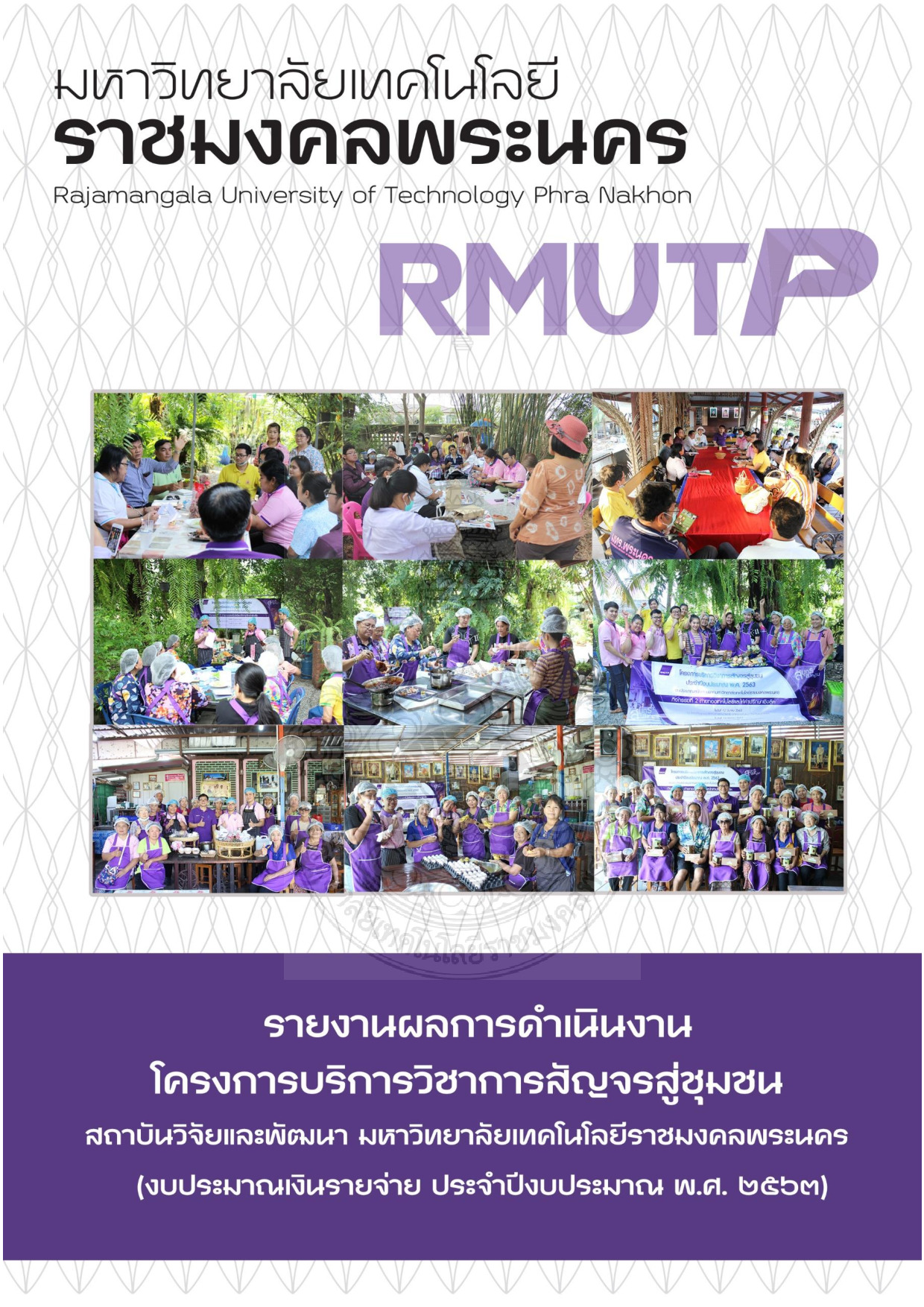

แนวทางการจัดการเรียนการสอน หลักสูตรคหกรรมศาสตร์บัณฑิต สาขาวิชาอุตสาหกรรมการบริการอาหาร
The objective of this research was to study the satisfactions of students attending Bachelor’s Degree in Home Economics Food Service Industry Program (2-year transfer program in cooperation with enterprises). To compare the satisfaction of teaching and learning genders exhibts and status before admission. To compare the satisfaction of work with the coporation genders exhibts and status before admission. The target population of this study is the students attending Bachelor’s Degree in Home Economics Food Service Industry Program (2- year transfer program in cooperation with enterprises) between 2013-2017 is 139 persons. This study use self-administered questionnaire. The statistical tools used in this study are Percentages Mean Standard Deviation t-test. The analysis of difference between the average satisfactions of teaching and learning not significantly different. The analysis of difference between status before admission satisfactions of teaching and learning not significantly different. The analysis of difference between the average satisfactions of work with the coporation significantly different. In the coordinator of the coaches. Environment and facilities And the benefits and benefits of the establishment. The analysis of difference between status before admission satisfactions of work with the coporation not significantly different. Teaching and Learning Approaches for Bachelor’s Degree in Home Economics Food Service Industry Program are 2 approaches: 1) Solutions for establishment of cooperation of enterprises. The establishment should cooperate with the educational institution. To get students to practice is to help the school. The establishment should cooperate with teachers and teachers. 2) The solution to create the cooperation of the school. Schools should establish relationships with establishments. The school should organize a seminar. And teachers to have a standard level in teaching as well. And develop the curriculum to meet the needs.
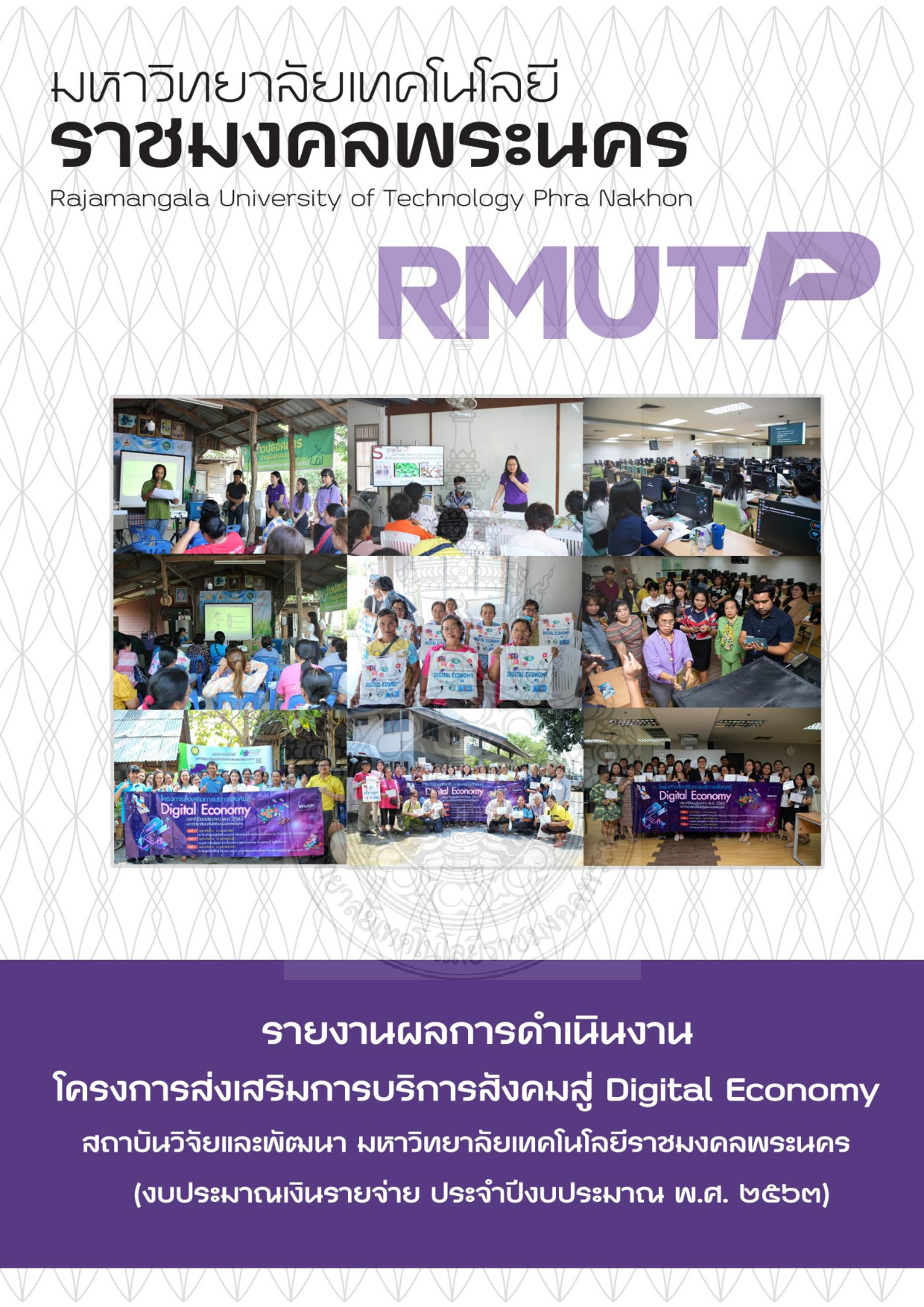
การพัฒนาต้นแบบหลักสูตรระยะสั้นเพื่อการบริการวิชาการของมหาวิทยาลัย เทคโนโลยีราชมงคลพระนคร ในการส่งเสริมการประกอบอาชีพในยุคดิจิตอล
From the Development of a Prototype of Rajamangala University of Technology Phra Nakhon’s Acedemic Outreach Service for Occupational Promoting in Digital Age. Found that Mostly female Percentage 89.27 Most of them are 31-35 years old or 32.88%. Most of them have experience in short courses in the period of 11-15 years or 33.91%. 98.62% of learners needs related to training course development. (1) The requirements for the development of training curricula were 274 (94.80%). Training Course (2) Reason for Studying: 163 students (56.40%) Want to apply knowledge to work in the amount of 43.60% who want to bring their knowledge to improve their skills. study Cake making was 30.10%. (4) The training period was mostly 2 days 42.91% (5). Most practice 50.17% (6) What you want to get after training is most needed. diploma 50.87% Satisfaction of learners on the training curriculum as a whole. In the aspect of training the satisfaction level (X = 4.04) was highest (X = 4.12). = 4.54). In terms of training services the overall satisfaction of the training services was very high (X = 4.09). The facilitation and service of staff (X = 4.51). Overall the lecturer provided the lecture. The knowledge level was high (X = 4.13). The highest mean score (X = 4.45). The content of the training curriculum was found to be satisfactory at the high level (X = 4.36). The content of the course can be used (X = 4.67). At the highest level (X = 4.24)
ความคิดเห็นและความต้องการบริการสวัสดิการสำหรับสมาชิกสหกรณ์ออมทรัพย์แห่งหนึ่ง
The purpose of this study was to study 1) opinions and needs of cooperative saving members towards the existing welfare services and their additional needs 2) to compare the opinions of members of the savings cooperative on the welfare services received and 3) to compare the demand for additional welfare services of the saving cooperative members. The personal factors were classified and a questionnaire was used as a tool to collect data. The data analysis statistics included percentage mean and standard deviation. The hypothesis was tested using t-test and one-way ANOVA was applied. The Scheffe pair test was used if the statistical significance was found at 0.05. The research disclosed that the majority of respondents were married males between the ages of 51-60 years old whose educational level was lower than the bachelor’s degree. They mostly worked as government employees with more than 10 years of service and earned monthly income of 20001-25000 Baht. Their existing welfare services are capital stocks followed by ordinary and emergency loans respectively. Different opinions in the comparative analysis were found among the individual factors of welfare services in terms of their gender age status and education. However they were similar in terms of the type of employment service term and monthly regarding to the welfare services received. As for the comparative analysis of individual factors it was revealed that there were different needs for welfare services because the members with different education levels required distinctive welfare services at the statistical significance of 0.05. However ง the personal factors including gender age status type of employment service term and monthly income were similar concerning their needs for additional welfare services.