จำนวน Repository ( 70 )

Study the user space of building and landscape design in Rajamangala University of Technology Phra Nakhon
This research was aimed to study the user space of build ing and landscape design in Rajamangala University of Technology Phra-Nakhon (RMUTP.) to help for make building or design landscaped in RMUTP. The samples group in this research consisted in 70 samples is directors teachers officials and 480 samples is students in RMUTP. All sample size is 550 samples. Random by Yamane table 95% ± 5% The questionnaires have 2 issue 1) have 3 parts used for collecting data. -part one is rating scale questionnaires. The directors teachers official needs space for collected the many documents and want to have the private space for working want to have the air condition and raised lighting in study rooms. The topics of Sport recreation area religion area and healthy area. They wanted club for teacher and official In-door stadium recreation a·ctivity areas and foods center for students They want to raise the toilet indoor and bath rooms and want to have locker or space for keeping the things before come in library copy service and raise the desk and table for reading. The workshops they want to have the locker for keep any things of students store room and raised the lighting. Last in the landscape design they wanted to develop the university signboard in front of RMUTP. they want cars motorbike bicycle parks want relaxing areas gardens and they want to develop the sign for directed anywhere in RMUTP.
Motivation to Participate in Student Development Activities of Rajamangala University ot Technology Students
A study on the motivation to participate in student development activities of the RMUTPs students was done with the objective to verify the level of the internal motivation (human relationship social service self - study for development and carrier path ) anf external motivations (location comfortable of travel a period of activites the content of activitiesinstructor and profit) and compare the differences of motivation rating scale base on personal factors : sexuallevel of studentfaculty GPA (grade point average) experience in participation and the information receiving. The study sample of 450 students was randomly selected from RMUTP. undergraduate students from 9 faculties.The data were collected by questionnaire (5 rating scales) and will be evaluated in frequency mean and standard deviation. T-test and one-way Anova used for comparing means at
การประเมินผลหลักสูตรประกาศนียบัตรบัณฑิต สาขาวิชาชีพครูคณะครุศาสตร์อุตสาหกรรม มหาวิทยาลัยเทคโนโลยีราชมงคลพระนคร
The purpose to this research was to assessment the graduate Diploma Program of Teaching Profession at Rajamangala University of Technology Phra Nakhon Faculty of Industrial Education of the curriculum used. Research population consisted of graduate students diploma degree graduate their superiors and instructors. Simple random sampling gave the sample size of 549 people were selected from purposive sampling. The research tools were a questionnaire and a focus group discussion recording form. Data analysis employed basic statistics of frequency mean and percentage including content analysis for qualitative data. The findings of this research were as follows: 1) Primary components of the curriculum were suitable at high level. 2) Course structure and content was suitable at high level. 3) Characteristics of lecturers were suitable at high level.4) Instructional and evaluation activities were suitable at high level. 5) Factors contributing to the teaching of the course were also found suitable at high level. On the contrary Journals related to inadequate service and problems of withdrawal teaching materials. However the curriculum development should be updated to suit the needs of society and science is always developing.
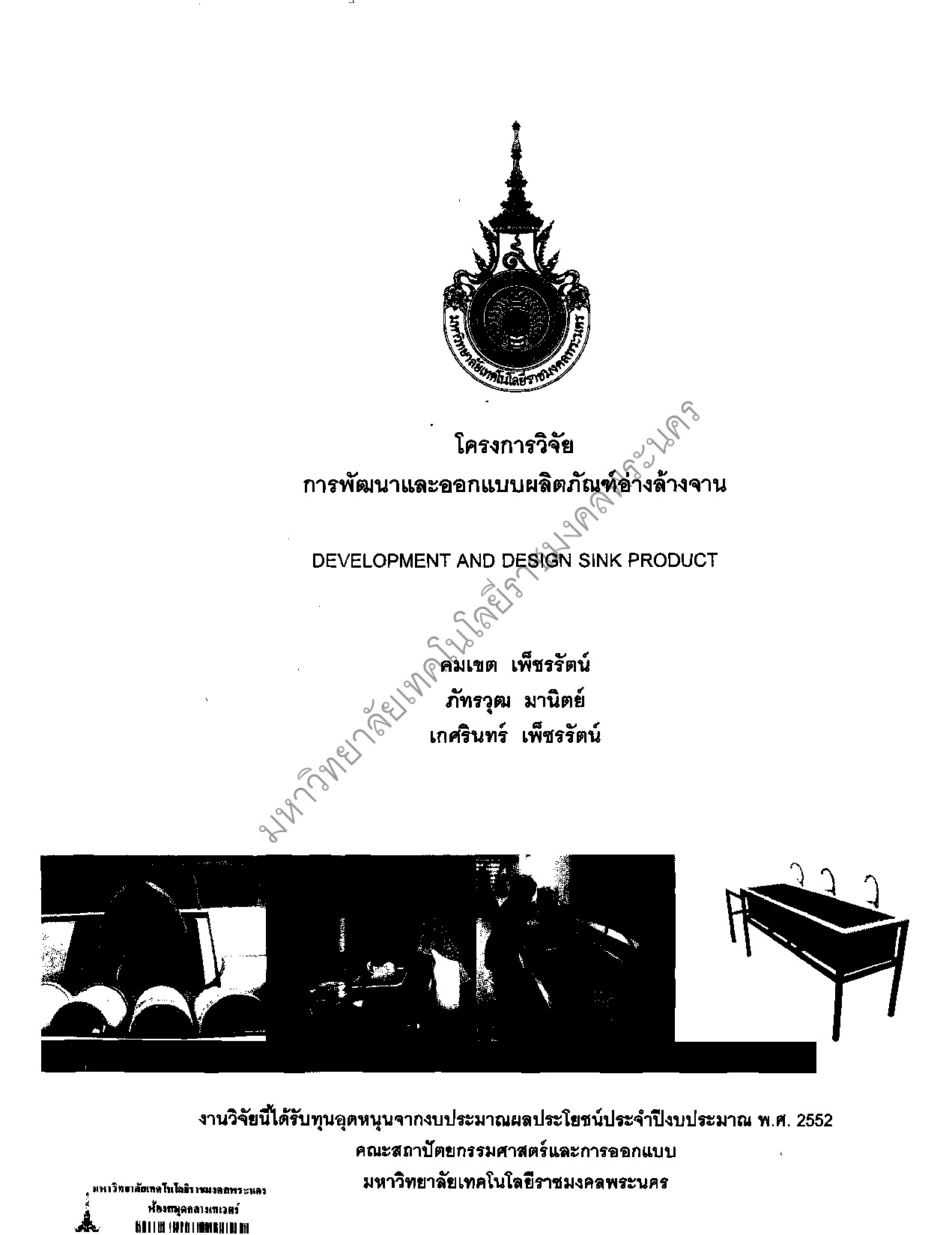
Development and Design Sink Product
The main objective of the study was to explore The relationship of cleaning the container behavior with sink space guide line for sink product. This research an integration of field survey and quasi-experimental techniques were utilized to people who live in condominium in Bangkok and preference assessment of Thai sink product by ninety seven users. This research based on work triangle and evaluation environment for cooking in condominium by experimental. And attitudes expectation of Thai sink product prototype. Variables were used in the framework of this study: size and spatial characteristics of each area understudied for washing in sink. The sizes of areas which could optimally accommodate such activities were derived from eleven cases of experimentation. Other than body size and the extent of disability the study also found that variation in area size was determined by additional factors such as types of activities approach to the area and the individuals skill for that particular activity. Intervening variables such as fatigues after prolonged and repeated tests were found partially affected the results of experiments and attitudes toward the environment and the extent of difficulty to perform each task. The final analysis of the attitude toward the suggested sink product modification was done using data collected from ninety seven users respondents accompanying the disabled. The sink product modification to accommodate all users inclUding the disabled members of the family in accordance with the former environment. The study found however that the extent of intimacy with the disabled significantly determined towards sink product modification. In conclusion the study suggested that conditional application of sink production modification according to the nature of the disabled-in terms of social psychology familial background the extent of disability and the specific needs required by each of the canteen.
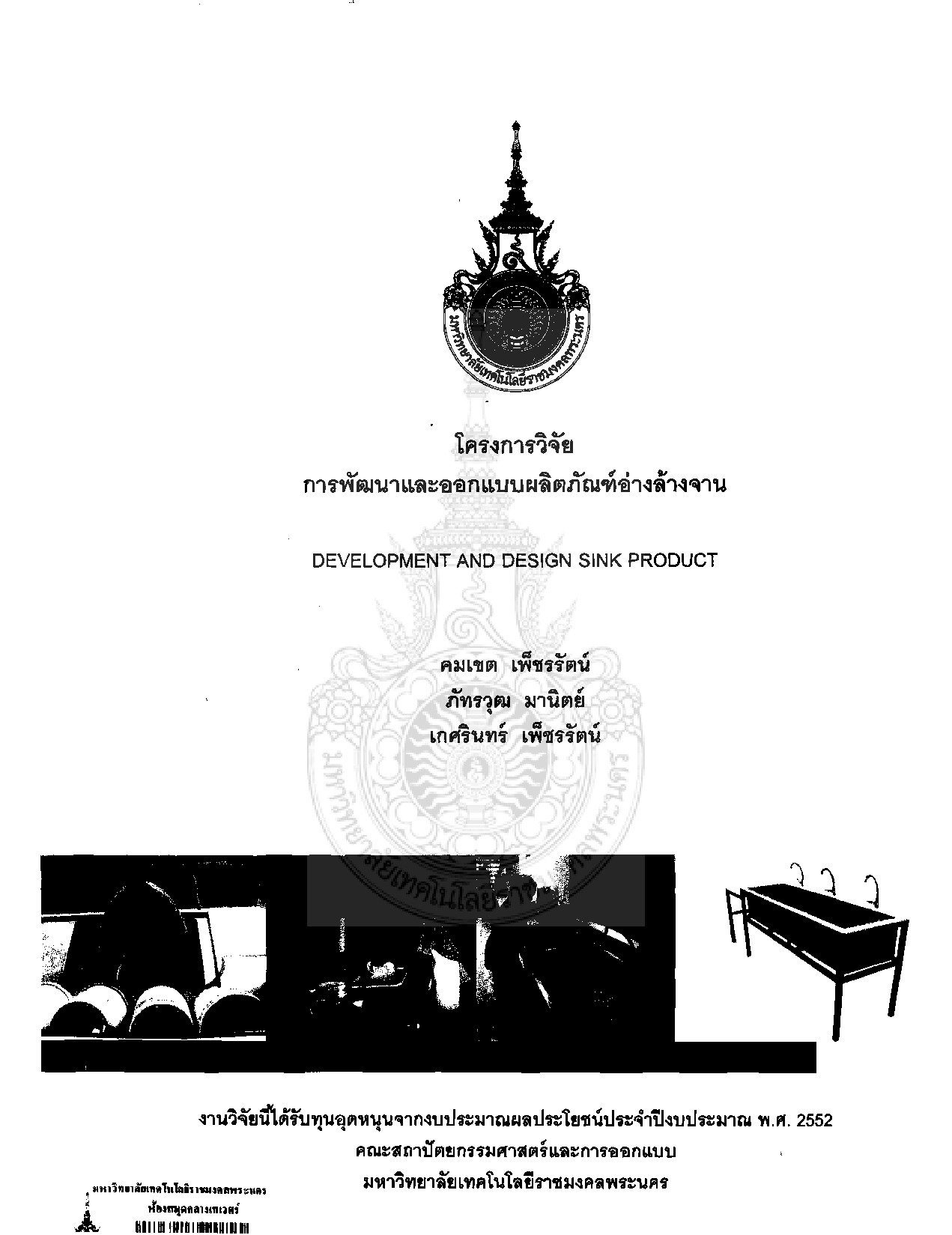
Development and Design Sink Product
The main objective of the study was to explore The relationship of cleaning the container behavior with sink space guide line for sink product. This research an integration of field survey and quasi-experimental techniques were utilized to people who live in condominium in Bangkok and preference assessment of Thai sink product by ninety seven users. This research based on work triangle and evaluation environment for cooking in condominium by experimental. And attitudes expectation of Thai sink product prototype. Variables were used in the framework of this study: size and spatial characteristics of each area understudied for washing in sink. The sizes of areas which could optimally accommodate such activities were derived from eleven cases of experimentation. Other than body size and the extent of disability the study also found that variation in area size was determined by additional factors such as types of activities approach to the area and the individuals skill for that particular activity. Intervening variables such as fatigues after prolonged and repeated tests were found partially affected the results of experiments and attitudes toward the environment and the extent of difficulty to perform each task. The final analysis of the attitude toward the suggested sink product modification was done using data collected from ninety seven users respondents accompanying the disabled. The sink product modification to accommodate all users inclUding the disabled members of the family in accordance with the former environment. The study found however that the extent of intimacy with the disabled significantly determined towards sink product modification. In conclusion the study suggested that conditional application of sink production modification according to the nature of the disabled-in III terms of social psychology familial background the extent of disability and the specific needs required by each of the canteen. IV