จำนวน Repository ( 127 )

Low Rate Wireless Sensor Network Green Computing for Flood Monitoring System
This paper presents the development of a low rate and low power consumption wireless sensor network. Wireless sensor networks are cheap and comprised of a small fully autonomous processing communication and sensing devices. The purpose of this study is to develop the system for monitoring and flood warning. They will work with wireless sensor network (WSN) system. WSN has been restricted power supply communication distance and low computing power. But they will work with network in vast area send and receive raw data from each sensor node. It has the ability to cooperatively collect data and retransmit in order to process or alert. The first step of the experiment is creating main node and sub node in flooding area and finds transmission of data between them. When sensor node is not receiving or transmitting data the module can be switched into the sleep mode low power consumption mode

Applying Genetic Algorithms for Inventory Lot-Sizing Problem with Supplier Selection under Storage Capacity
Genetic algorithms are applied to the multiple products and multiple periods inventory lot-sizing problem with supplier selection under storage capacity. The objective of this research is to calculate the optimal inventory lot-sizing for each supplier and minimize the total inventory cost which includes joint purchase cost of the products transaction cost for the suppliers and holding cost for remaining inventory. It is assumed that demand of multiple products is known over a planning horizon. The problem is formulated as a mixed integer programming and is solved with genetic algorithms. Finally numerical example is provided to illustrate the solution procedure. The results determine what products to order in what quantities with which suppliers in which periods.
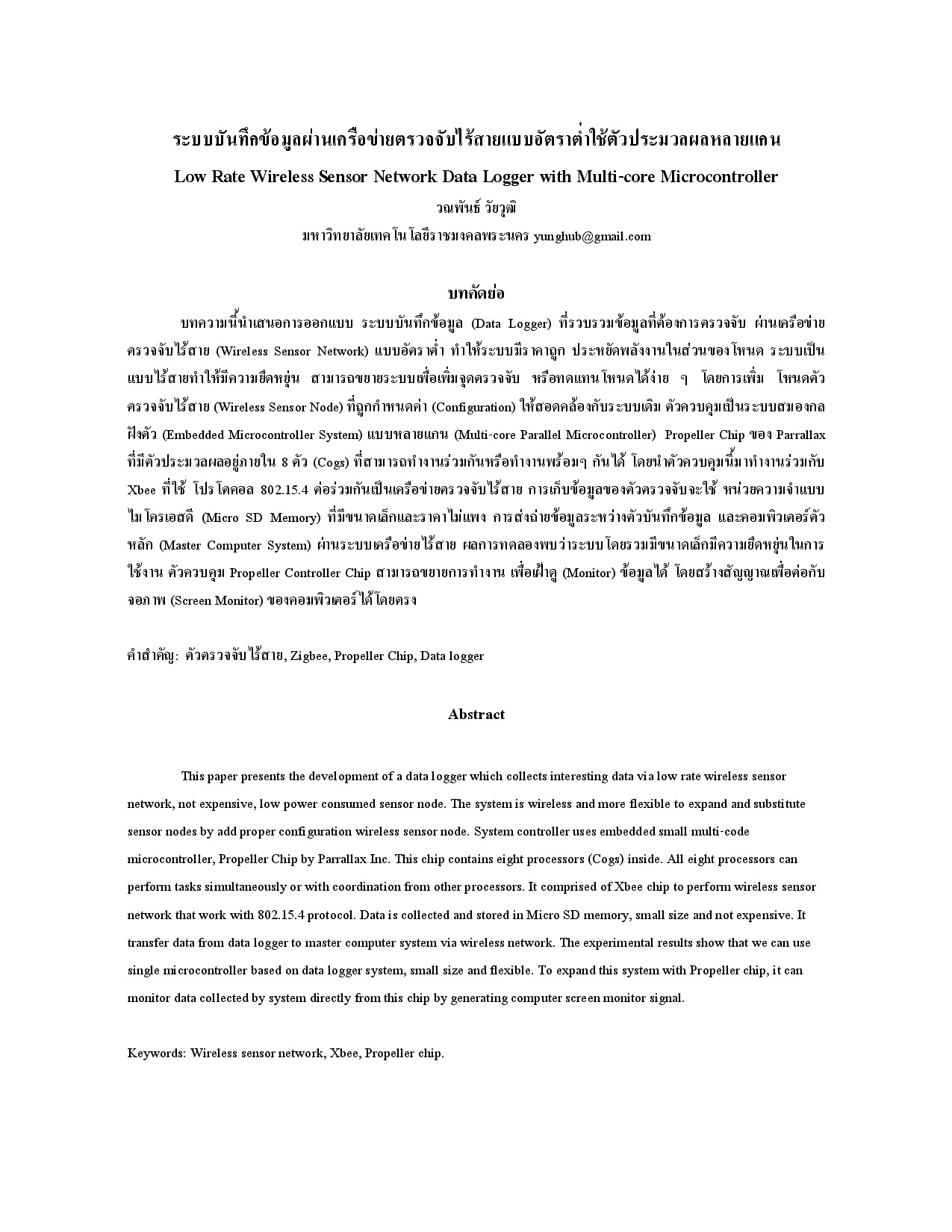
Low Rate Wireless Sensor Network Data Logger with Multi-core Microcontroller
This paper presents the development of a data logger which collects interesting data via low rate wireless sensor network not expensive low power consumed sensor node. The system is wireless and more flexible to expand and substitute sensor nodes by add proper configuration wireless sensor node. System controller uses embedded small multi-code microcontroller Propeller Chip by Parrallax Inc. This chip contains eight processors (Cogs) inside. All eight processors can perform tasks simultaneously or with coordination from other processors. It comprised of Xbee chip to perform wireless sensor network that work with 802.15.4 protocol. Data is collected and stored in Micro SD memory small size and not expensive. It transfer data from data logger to master computer system via wireless network. The experimental results show that we can use single microcontroller based on data logger system small size and flexible. To expand this system with Propeller chip it can monitor data collected by system directly from this chip by generating computer screen monitor signal.
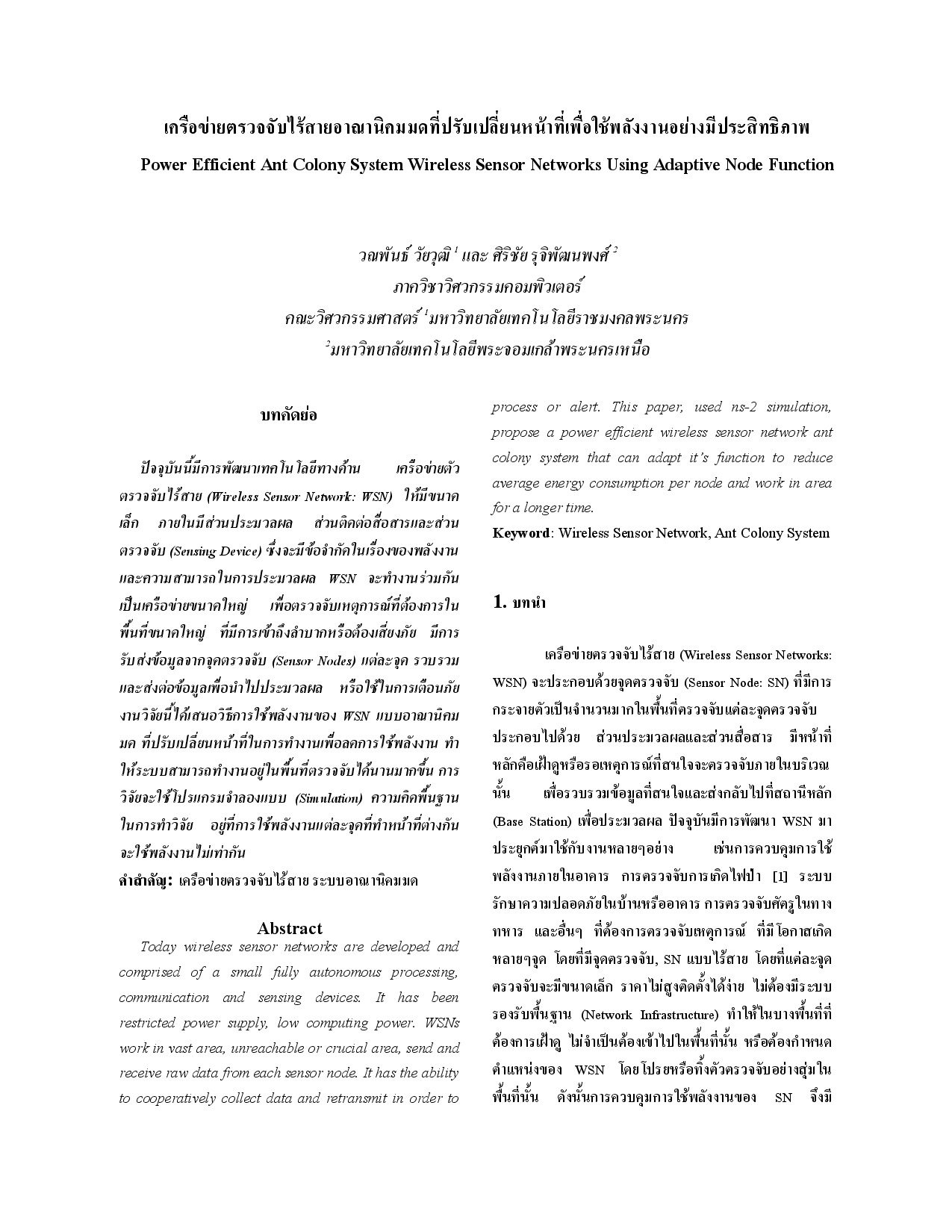
Power Efficient Ant Colony System Wireless Sensor Networks Using Adaptive Node Function
Today wireless sensor networks are developed and comprised of a small fully autonomous processing communication and sensing devices. It has been restricted power supply low computing power. WSNs work in vast area unreachable or crucial area send and receive raw data from each sensor node. It has the ability to cooperatively collect data and retransmit in order to process or alert. This paper used ns-2 simulation propose a power efficient wireless sensor network ant colony system that can adapt it’s function to reduce average energy consumption per node and work in area for a longer time.
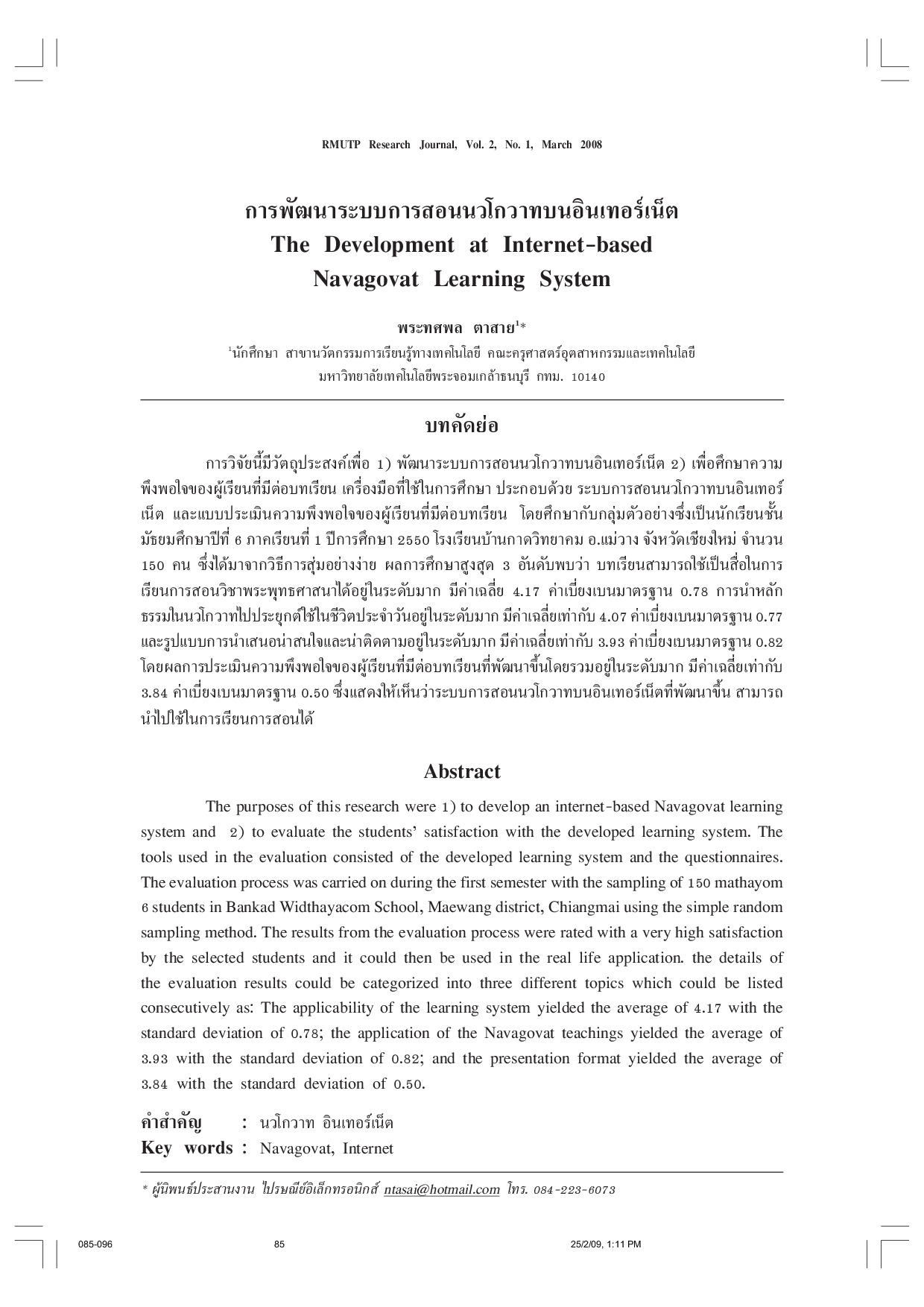
The Development at Internet-based Navagovat Learning System
The purposes of this research were 1) to develop an internet-based Navagovat learning system and 2) to evaluate the students’ satisfaction with the developed learning system. The tools used in the evaluation consisted of the developed learning system and the questionnaires. The evaluation process was carried on during the first semester with the sampling of 150 mathayom 6 students in Bankad Widthayacom School Maewang district Chiangmai using the simple random sampling method. The results from the evaluation process were rated with a very high satisfaction by the selected students and it could then be used in the real life application. the details of the evaluation results could be categorized into three different topics which could be listed consecutively as: The applicability of the learning system yielded the average of 4.17 with the standard deviation of 0.78; the application of the Navagovat teachings yielded the average of 3.93 with the standard deviation of 0.82; and the presentation format yielded the average of 3.84 with the standard deviation of 0.50.