จำนวน Repository ( 8 )

Effect of bottom ash as fine aggregate on strength of concrete
This research was aimed to study the effect of bottom ash (BA) as fine aggregate in fly ash concrete and cement-only concrete on strength of water-cured and uncured concrete. The water to binder ratios were 0.35 and 0.55 to represent high strength and normal strength concrete respectively. The weight percentages of replacement of cement by fly ash were 0 and 30%. The replacement ratios of bottom ash as fine aggregate were 0 10 and 30% by volume of fine aggregate. The results indicated that the slump and setting time of concrete increased with the increase of bottom ash content. In contrast the compressive and tensile strength decreased with the increase of bottom ash content. From the curing sensitivity index it was showed that the fly ash concrete required longer curing period than cement-only concrete. In case of high strength concrete the use of bottom ash in fly ash concrete can reduce curing sensitivity of concrete
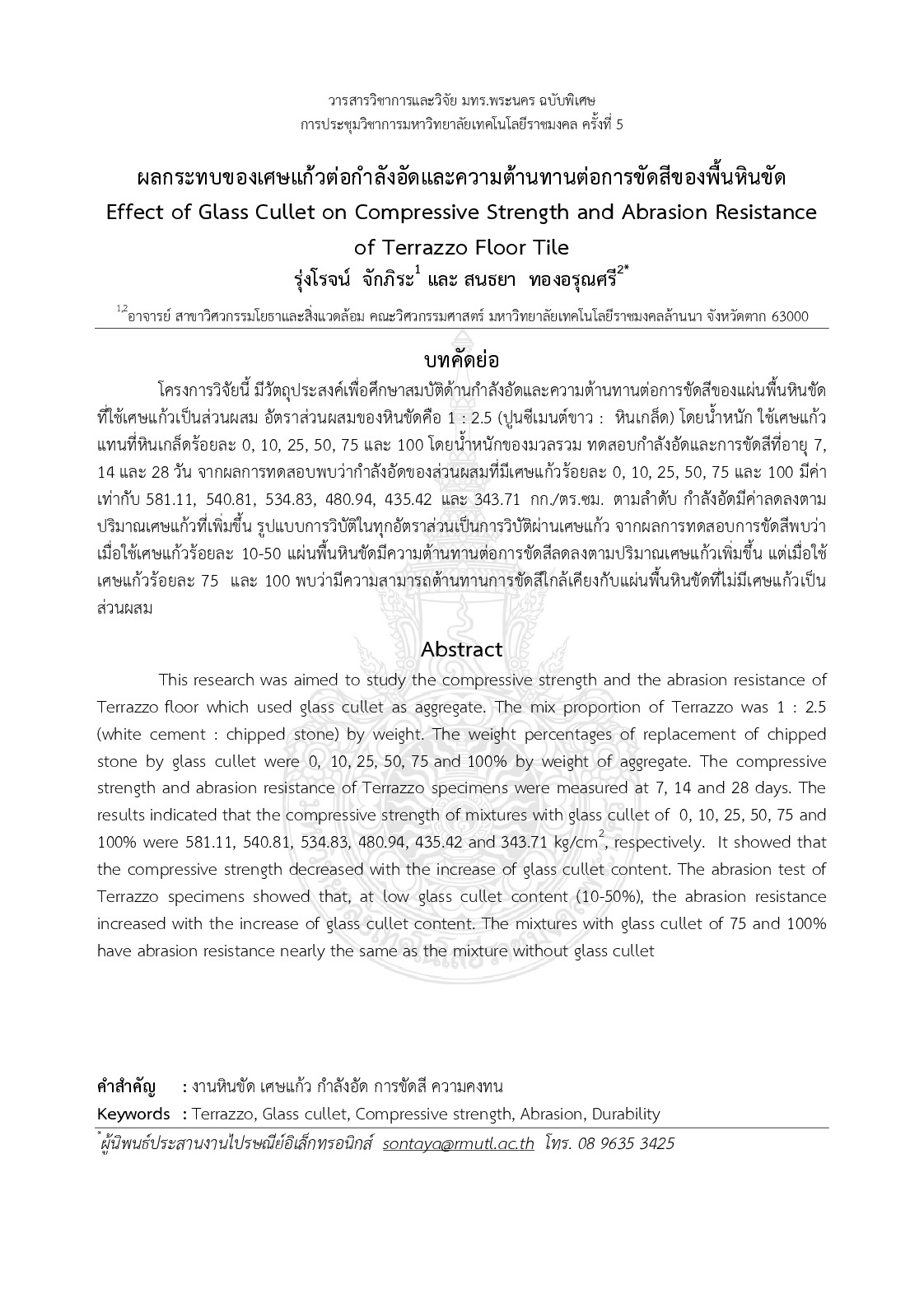
Effect of glass cullet on compressive strength and abrasion resistance of terrazzo floor tile
This research was aimed to study the compressive strength and the abrasion resistance of Terrazzo floor which used glass cullet as aggregate. The mix proportion of Terrazzo was 1 : 2.5 (white cement : chipped stone) by weight. The weight percentages of replacement of chipped stone by glass cullet were 0 10 25 50 75 and 100% by weight of aggregate. The compressive strength and abrasion resistance of Terrazzo specimens were measured at 7 14 and 28 days. The results indicated that the compressive strength of mixtures with glass cullet of 0 10 25 50 75 and 100% were 581.11 540.81 534.83 480.94 435.42 and 343.71 kg/cm2 respectively. It showed that the compressive strength decreased with the increase of glass cullet content. The abrasion test of Terrazzo specimens showed that at low glass cullet content (10-50%) the abrasion resistance increased with the increase of glass cullet content. The mixtures with glass cullet of 75 and 100% have abrasion resistance nearly the same as the mixture without glass cullet
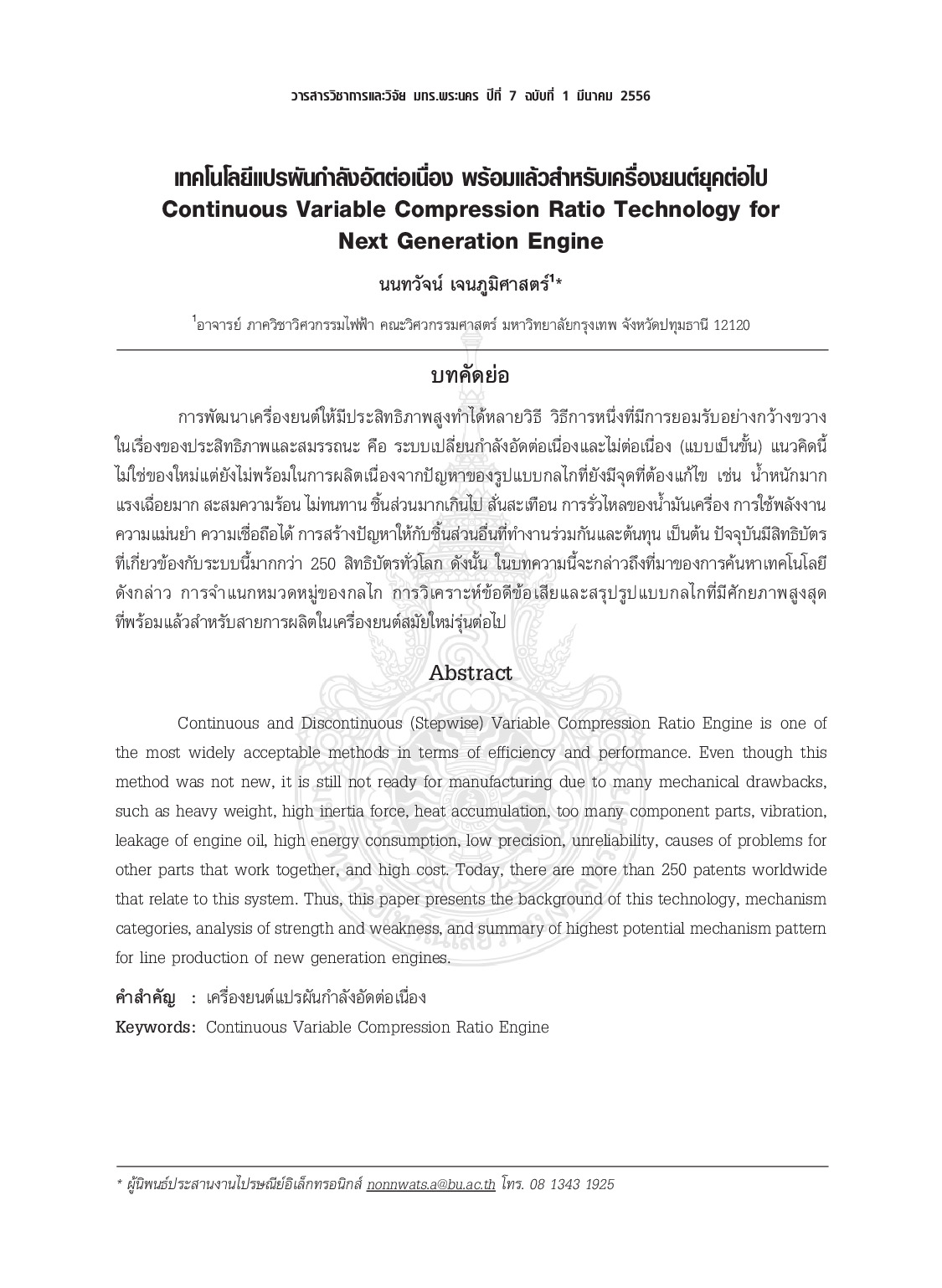
Continuous variable compression ratio technology for next generation engine
Continuous and Discontinuous (Stepwise) Variable compression Ratio Engine in one of the most widely acceptable methods in terms of efficiency and performance. Even though this. method was not new. it is still not ready for manufacturing due to many mechanical drawbacks such as heavy weight high inertia force heat accumulation too many component parts vibration leakage of engine oil high energy consumption low precision causes of problems for other part that work together and high cost. Today there are more than 250 patents worldwide the relate to this systim. Thus this paper presents the background of this technology mechanism categories analysis of strength and weakness and summary of highest potential mechanism pattern for line production of new generation engines.