จำนวน Repository ( 199 )
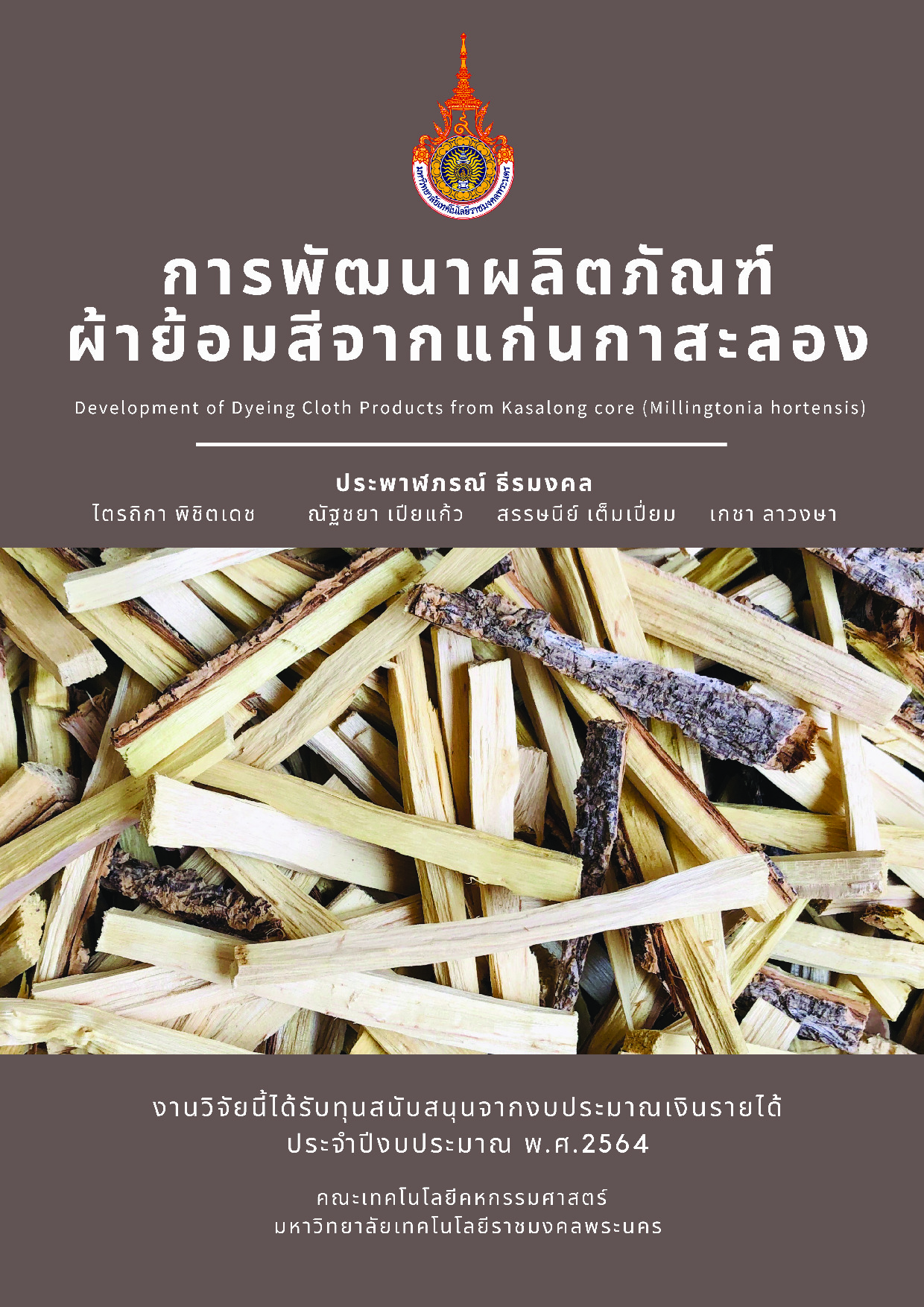
การพัฒนาผลิตภัณฑ์ผ้าย้อมสีจากแก่นกาสะลอง
Promotion of handicrafts in the field of natural dyes in the country. Increase the potential of the community and use the strengths of the cultural community. way of life and wisdom by finding ways to develop textile products by using creative textile innovations based on local wisdom in sustainable community areas To add added value to products in the ECO PRODUCT and ZERO WASTE product groups from the aforementioned concept To conserve plant genetics that exist throughout the country. The researcher therefore studied the process of dyeing fabrics by natural methods. By taking natural ingredients that are locally available and transforming them into environmentally friendly home products. This research is to study the natural dyeing of cotton fabric from Kasalong core. have a purpose Study on the effect of dyeing and the use of adjunctive agents in natural dyeing from Kasalong kernels. To develop dyed fabric products from Kasalong core and to pass on the knowledge and technology of developing dyed fabric products from Kasalong core for the general public. The result of dyeing cotton with natural dyes from Kasalong core. Four types of adhesives were used at a concentration of 20 percent as tamarind juice lime juice lime juice ash water and to test the washing fastness and sunlight resistance with the AATCC standard. The results can be summarized as follows. 1. The results of the study found that from the extraction of color from Kasalong kernels and then filtered with cloth. The color water extracted from Kasalong essence is brown. and when left for 24 hours the water color is dark brown and in this research using hot dyeing methods. 2. The result of dyeing cotton with natural dyes from Kasalong core without mordant using was found to yellow-brown but after washing the color intensity on the fabric fades slightly. 3. The result of dyeing cotton with natural color from Kasalong core. It was found that after washing the color intensity on the fabric was moderately fading. 4. The color measurement L* a* b* found that when the dye was measured in the CIELab system L* = 26.81 a* = 33.33 b* = 45.69 dL = 0.36 and dE*ab = 0.85 water. The resulting color from Kasalong will be reddish yellow. 5. Make the research prototypes as 10 of bag products. 6. Conducting technology transfer by organizing workshops dyeing course and sewing durating of the workshop for students and the general public was 1 day. Most of the participants had the highest level of satisfaction in all questions.
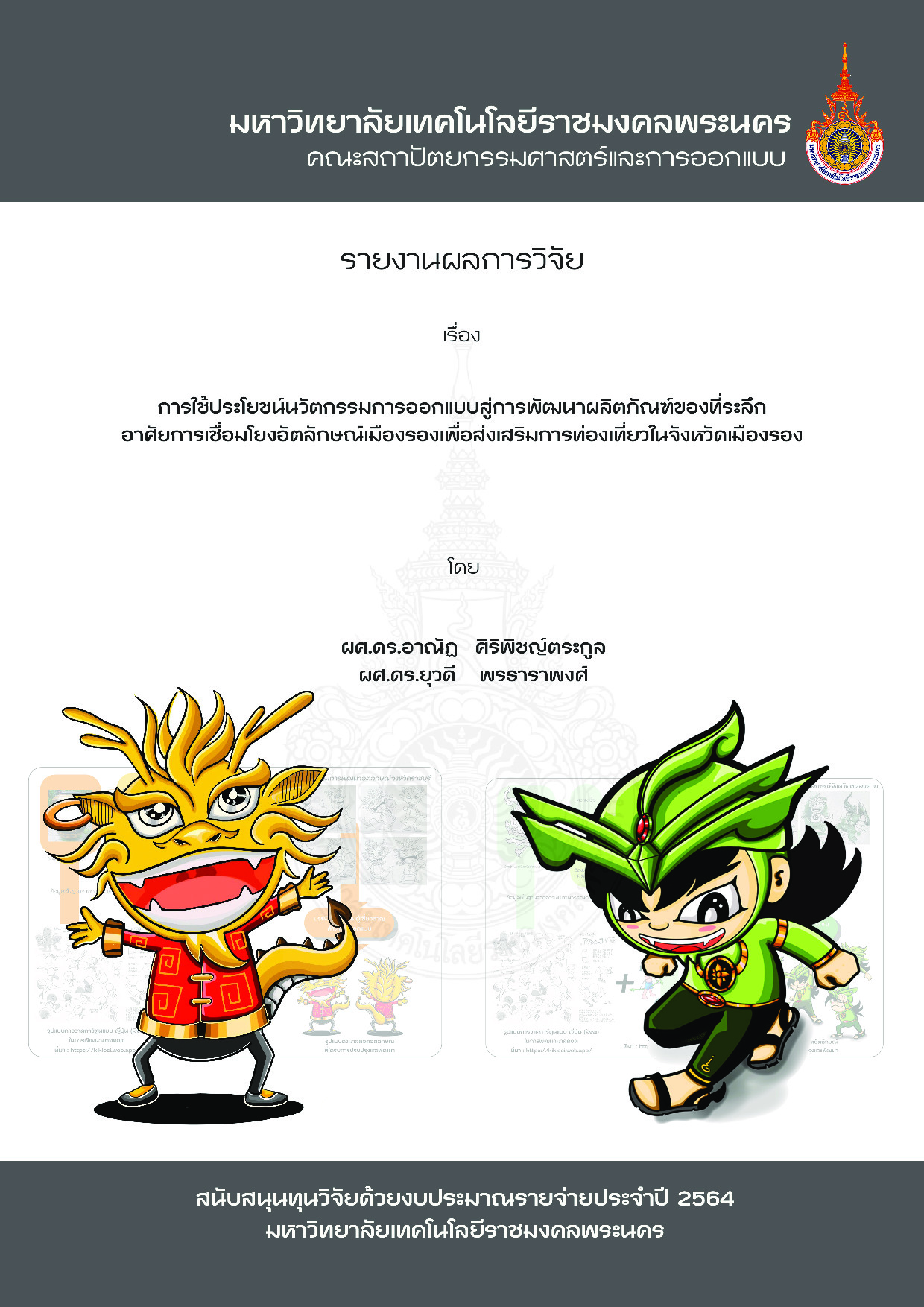
การใช้ประโยชน์นวัตกรรมการออกแบบสู่การพัฒนาผลิตภัณฑ์ของที่ระลึกอาศัยการเชื่อมโยงอัตลักษณ์เมืองรองเพื่อส่งเสริมการท่องเที่ยวในจังหวัดเมืองรอง
A research project on the utilization of design innovations into souvenir product development based on linking secondary city identities to promote tourism in secondary city provinces. It is a project that has objects to study the identity of a secondary city to be used to design souvenirs packaging public relations materials. to stimulate tourism in secondary cities which is in line with tourism strategies In a research project that has a design and development process Using technology to assist in product design and development Creation of identity from cultural capital in secondary cities. which the results of each aspect are at a very good level. by using the design of the secondary city area in Nong Khai Province and Ratchaburi which is a province with identity and culture by the researcher make character development souvenir products public relations media Characters show theidentity of the city. to create a memory for tourists and create an identity for the provinces of secondary cities
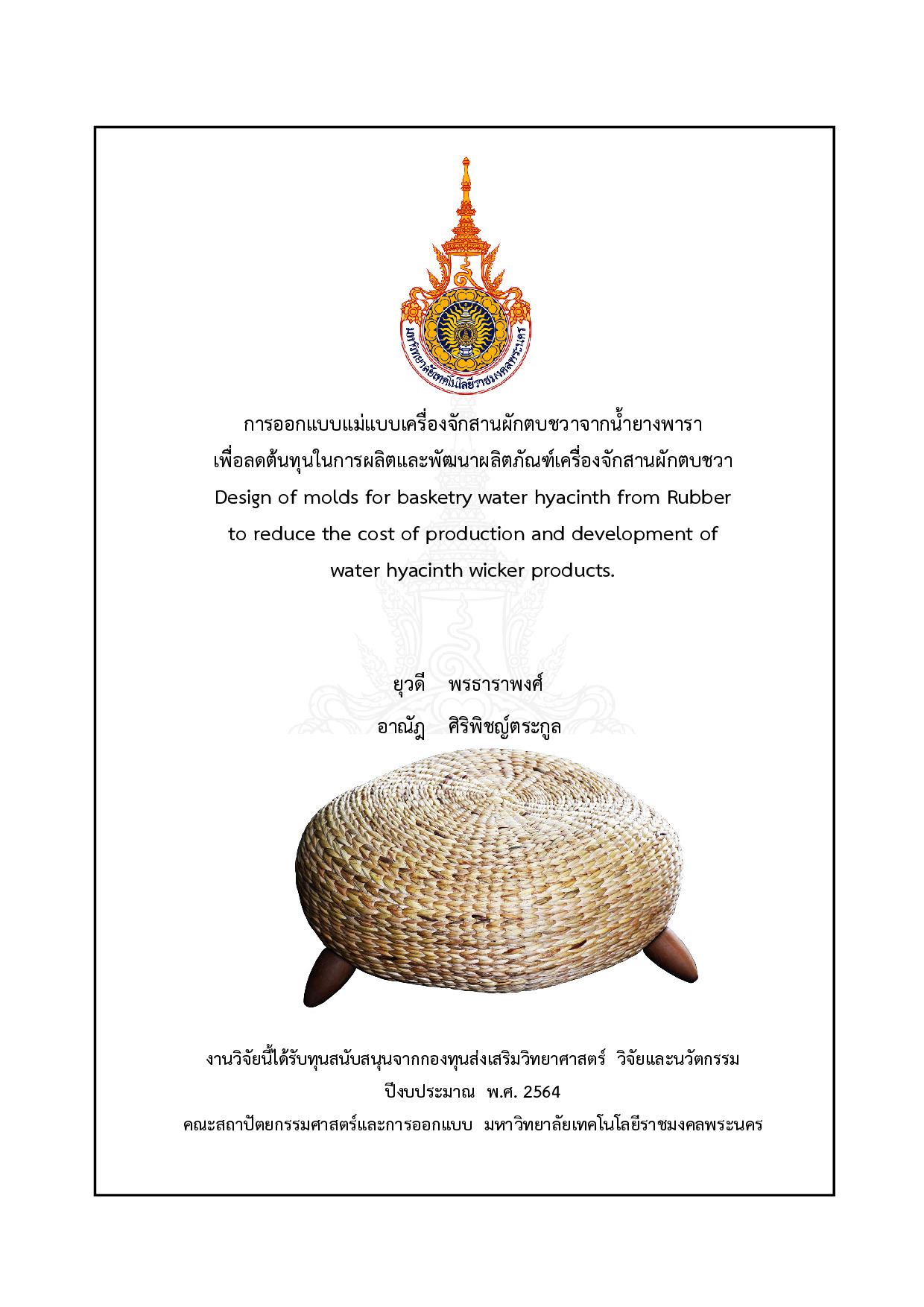
การออกแบบแม่แบบเครื่องจักสานผักตบชวาจากน้ำยางพาราเพื่อลดต้นทุนในการผลิตและพัฒนาผลิตภัณฑ์เครื่องจักสานผักตบชวา
The objectives of this research were 1) to study the design and experiment of materials for producing water hyacinth basketry templates from para rubber 2) to test the water hyacinth basketry templates from para rubber 3) to create a body of knowledge in the development of water hyacinth basketry templates. from rubber latex to the community The process of operation is to design the shape of a water hyacinth basketry to suit the use of the product first after that create a water hyacinth basketry template from para rubber by experimenting with a formula mixed with natural rubber latex and experiment with weaving vegetables. water hyacinths to find the best techniques and styles Results from research on the design of water hyacinth wicker templates from rubber latex and testing of water hyacinth wicker template designs from rubber latex. The aim is to invent materials to solve the problem of replacing the old wicker template. From the research it was found that the water hyacinth basketry model was made from rubber latex. There are two techniques for creating new templates: removable templates and removable templates. and non-removable templates Removable latex coated wicker template can produce many pieces easy to weave The wicker template part is coated with rubber latex. Non-removable or weave cover It can be used to weave as a furniture product with the properties that were discovered that it has a long service life. It is durable strong and durable. Flexibility to reduce shock during weaving. and can be a tool in the profession Can reduce the cost of producing water hyacinth handicrafts Model development part There is a design template for water hyacinth basketry which is a water hyacinth wicker product that has a shape that is exotic modern beautiful and useful according to the products unique characteristics and is a valuable work that can decorate the house beautifully.
ศึกษาและพัฒนาผลิตภัณฑ์จากวัสดุพื้นถิ่นด้วยวัฒนธรรมโนรา เพื่อเพิ่มมูลค่า สู่ระดับสากล “ชุมชนวิถีพุทธคลองแดน จังหวัดสงขลา”
This research 1] is to study the identity of Nora cultural art for developing the product values and promoting the products to international level and 2] to synthesize and develop the prototype pattern of the products by studying the material relationship between handicraft context and community and Nora cultural art. The research tools are questionnaire observation survey and focus group interview of total 150 people and conducting satisfaction surveys of 420 people such as people in Klong-Dan community tourists specialists and designers before designing the draft pattern by 1] evaluating purchasing factors of souvenir from Klong-Dan community identity in Songkhla province and 2] satisfaction level of graphic pattern and summarize using percentage and standard deviation as follow; The study has founded that 1] the most popular handicraft among tourists is the products from sedge (Krajood) weaving. The weaving processing principally concerns utility which can be made into cloths and costume products. The natural processing from sedge (Krajood) together with Nora cultural identity will made it well known among tourists in appearances colorful dressing from other materials mixing design and 2] the character of the pattern on the products from the satisfaction survey shows that the design of the pattern Nora-6 has total average of 4.25 the detail of graphic design has total average of 4.33 (SD =0.77) the pantone using in the handicraft has total average of 4.25 (SD=0.77) the handicraft detail has total average of 4.27 (SD = 0.74) the relationship and the importance of mind has total average of 4.25 (SD = 0.71) the product having symbols indicating communication elements has total average of 4.21 (SD = 0.76) and the pattern suitability has total average of 4.18 (SD = 0.72). The result of the pattern development will be another identity storytelling and the social context in the present together with the development of the local product could continue to commercial world
การจัดการความรู้รูปแบบการพัฒนาผลิตภัณฑ์ชุมชนภูมิปัญญาท้องถิ่นของกลุ่มวิสาหกิจชุมชนอำเภอกระทุ่มแบน จังหวัดสมุทรสาคร ตามศาสตร์พระราชาสู่การพัฒนาที่ยั่งยืน
This study aims to examine the knowledge management in the development of community products from the local wisdom of the community enterprise Amphoe Krathum Baen in Samut Sakorn according to the king’s philosophy to create sustainable development. Three main objectives were: 1) To explore the knowledge management in community product development based on the local wisdom of Amphoe Krathum Baen in Samut Sakorn 2) To find out the form of product development based on the local wisdom of Amphoe Krathum Baen in Samut Sakorn that applied the Sufficiency Economy Philosophy (SEP) to sustainable development. 3) To empower the community through the development of community products based on the king’s philosophy to sustainable development according to government policy. The methodology used for data collection involved constructing a questionnaire and collecting data in small meetings sessions. The participants in the study were general people associated with the community enterprise of Amphoe Krathum Baen in Samut Sakorn. The sample consisted of 20 participants drawn from the simple random sampling. The questionnaire was used as a research instrument in this study. The data were then analyzed by using descriptive statistics: percentage mean (x ) and standard deviation (S.D.). The results of the study can be summarized as follows: The results present the knowledge management in the development community products based on local wisdom in Amphoe Krathum Baen Samut Sakhorn following the king’s philosophy to sustainable development. This knowledge was managed systematically according to family beliefs the relationship between family members and the transmission of knowledge in local wisdom from one to others to inherit this local wisdom treasure. Overall the knowledge management of local wisdom was at the moderate level. For the development of community products based on local wisdom the results shows that the participants paid attention to the form of packaging according to geographic indicator that was available in their local area at the highest level. In addition to strengthening the community these community products allowed the community to generate profitable income by building commercialization and setting up a community enterprise rather than doing business within the family. When considering all these items the results show that all items were at a high level.