จำนวน Repository ( 361 )
แนวทางการพัฒนารูปแบบการจัดการเรียนการสอนสาขาวิชาออกแบบแฟชั่นผ้าและเครื่องแต่งกายคณะเทคโนโลยีคหกรรมศาสตร์ มหาวิทยาลัยเทคโนโลยีราชมงคลพระนคร
The aims of this Guidelines for the Development of Teaching and Learning Models in the Department of Fashion and Apparel Design Faculty of Home Economics Technology Rajamangala University of Technology Phra Nakhon were to compare the department of fashion and apparel designs teaching and learning outcomes and to find guidelines for the development of teaching and learning management styles in the department of fashion and apparel design. To gather feedback on teaching and learning satisfaction from current students enrolled in the 2020 academic year faculty members and alumni a convenient random sampling of 104 people willing to participate in the online survey was used. Cronbachs alpha coefficient was 0.980 which was quite confident. Four external experts provide feedback on the training. The frequency percentage and mean were used to analyze the data. The results were summarized as follows: The majority of those who responded were alumni (50.96 %). The average degree of satisfaction in teaching was at its highest (mean 4.23). Other components of the situation were excellent. (mean 4.12) curriculum (mean 4.11) learning facilities and infrastructure (mean 4.03) and educational aid were the averages (mean 3.85). In the department of Fashion and Apparel Design the average satisfaction with teaching and learning was compared. There was no variation in classification based on the respondents status. The findings of the data analysis based on respondents feedback and course reviews Department of Fashion and Apparel Design Bachelor of Home Economics (Course revised 2017) from external experts It was used as a guideline for the development of teaching-learning management styles in the field of study by: (1) the curriculum the name of the curriculum the adjustment of the philosophy objectives and the addition of elective courses in the curriculum for students to choose according to their interests; (2) Instructors adjust the use of teaching methodologies evaluation course content and teaching media knowledge exchange team teaching and online teaching are all options learner-centered teaching activities are critical and devise a self-improvement strategy. (3) in terms of educational aid to sign an MOU contract with the establishment obtaining a budget for the purchase of learning equipment and maintenance to be in good working in order to be used. (4) learning facilities and infrastructure provide books that are relevant to the subject. Improve the computer system and internet signal utilized in teaching. And (5) other areas such as the number of channels available for the courses public relations efforts. Collaboration with former students Follow-up on scholarship recipients participation in activities Field trips and study tours Suggestions for future study The findings should be analyzed using the principles for developing teaching and learning management styles. every academic year to provide the findings in order to develop the curriculum further.
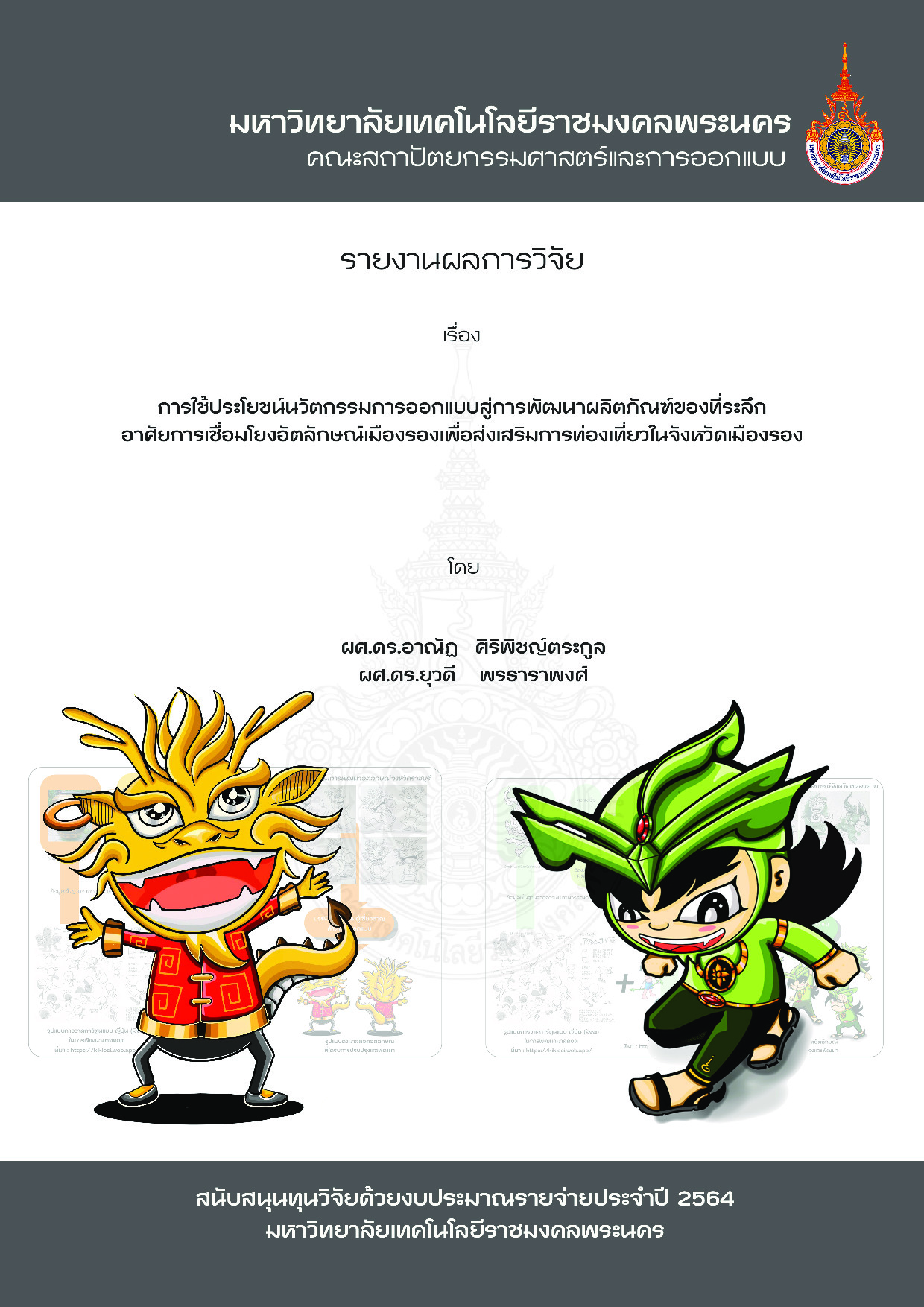
การใช้ประโยชน์นวัตกรรมการออกแบบสู่การพัฒนาผลิตภัณฑ์ของที่ระลึกอาศัยการเชื่อมโยงอัตลักษณ์เมืองรองเพื่อส่งเสริมการท่องเที่ยวในจังหวัดเมืองรอง
A research project on the utilization of design innovations into souvenir product development based on linking secondary city identities to promote tourism in secondary city provinces. It is a project that has objects to study the identity of a secondary city to be used to design souvenirs packaging public relations materials. to stimulate tourism in secondary cities which is in line with tourism strategies In a research project that has a design and development process Using technology to assist in product design and development Creation of identity from cultural capital in secondary cities. which the results of each aspect are at a very good level. by using the design of the secondary city area in Nong Khai Province and Ratchaburi which is a province with identity and culture by the researcher make character development souvenir products public relations media Characters show theidentity of the city. to create a memory for tourists and create an identity for the provinces of secondary cities
แนวทางในการออกแบบพื้นที่สาธารณะและพื้นที่สำหรับการสัญจร ทางบกภายในชุมชนไร้แผ่นดิน ตำบลบางชัน อำเภอลุง จังหวัดจันทบุรี
Guidelines for designing public spaces and land traffic areas in the landless village Bang Chan Subdistrict Khlung District Chanthaburi Province This research is to propose guidelines for the design and construction of public spaces for various activities and areas for use in land traffic in the landless village. To create a village identity in both the physical environment and the way of life of the people in the village. This can be a selling point for sustainable tourism and also to improve the quality of life of the people in the village providing space for recreation and joint activities within the village. This will encourage strength within the village and lead to a livable village. By the way of conducting research It starts with collecting data which is divided into 2 steps: document gathering and related research. To build a body of knowledge on issues related to the research topic. And field data collection To obtain information based on the reality of the area that is current. The data was then analyzed based on the research objectives. Which consists of Physical characteristics of the environment and village characteristics and forms of existing public spaces within the village. And the nature of the use of public spaces of the people in the village After that conditions and factors influencing the design of public spaces and land traffic areas within the village were determined. And to establish guidelines for the design of public spaces and areas for land traffic within this landless village according to the above conditions and factors. To be consistent with the physical characteristics of the area and the public space behavior of the people in the village. From conducting research it was found that Guidelines for designing public and land traffic areas in the researched landless village It can be summarized as two main points to consider the first being the public space within the village There is only one place in the landless village that has been conducted this research which is a shrine at the entrance of the village. It consists of the area of the shrine building. Public restrooms for visitors And a multi-purpose outdoor patio area Which if there will be additional public space construction in the village It should be in a close position and can be connected primarily to the original shrine area. This will lead to better support of social activities within the village than by distributing the area to other parts of the village. This may cause public areas to be inactive as they should and may result in them becoming wasteful areas in the future. Coupled with the immediate vicinity of the shrine in front of the village entrance There is a wooden bridge across the brackish water canal. Which was used as a walkway to and from each other between houses on both sides of the canal And is also considered a destination that is beautiful and unique in the village. This is another factor that will help promote the appropriate public spaces located in this area in terms of the quality of the public spaces. And in terms of accession and usability. For the second issue of guidelines for designing public spaces and land traffic areas within the landless village the study should be taken It is a matter of land thoroughfare that is used as a main pedestrian route to connect the front of each house within the village. May be constructed from precast concrete slabs bamboo other types of timber that can be easily procured locally. Or made from other materials not mentioned here But it must be materials that will not affect the environment in the area both during the process of material transportation to the area construction process use process after construction is completed. Until the process of maintenance reuse or disposal after the end of their service life.
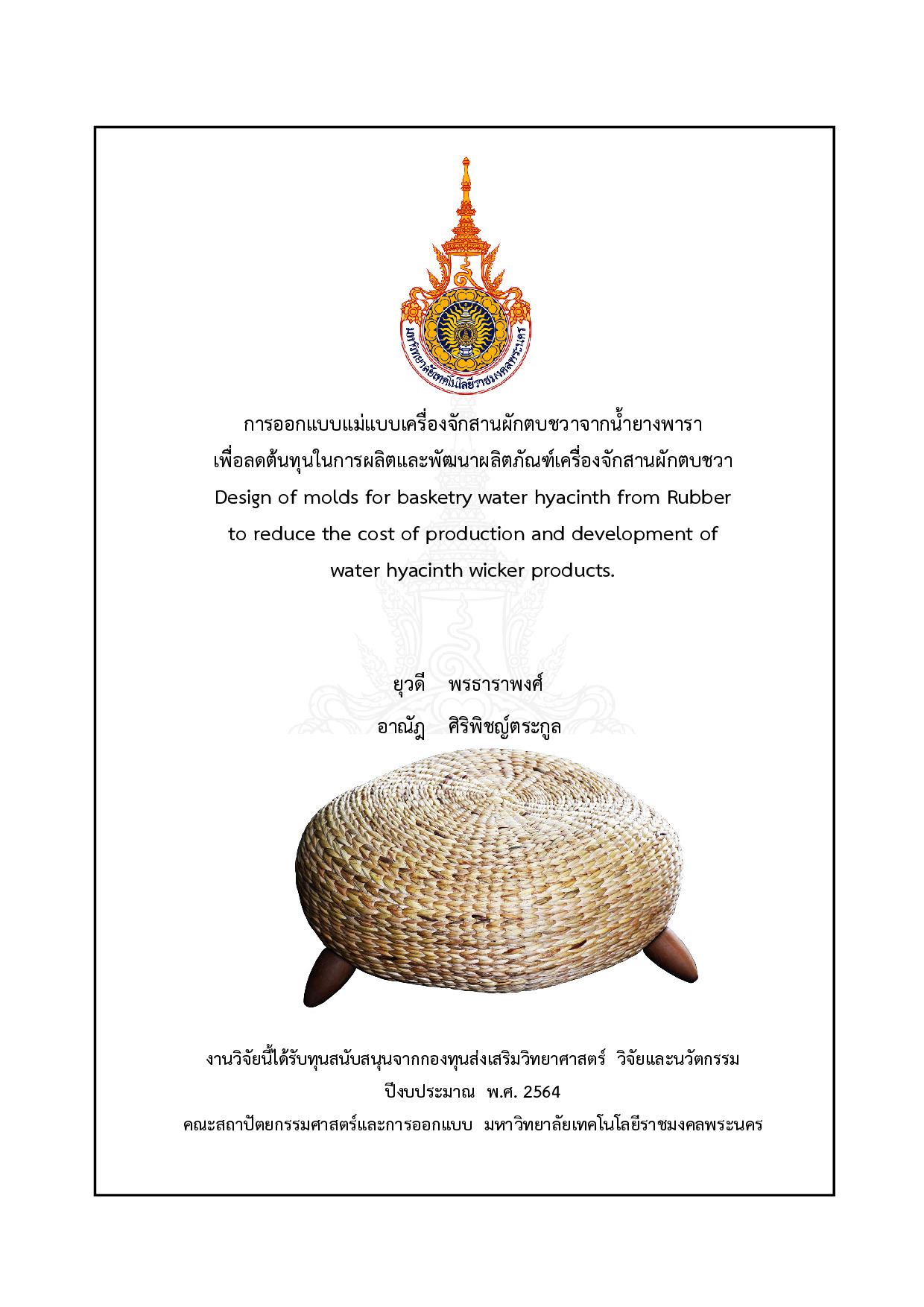
การออกแบบแม่แบบเครื่องจักสานผักตบชวาจากน้ำยางพาราเพื่อลดต้นทุนในการผลิตและพัฒนาผลิตภัณฑ์เครื่องจักสานผักตบชวา
The objectives of this research were 1) to study the design and experiment of materials for producing water hyacinth basketry templates from para rubber 2) to test the water hyacinth basketry templates from para rubber 3) to create a body of knowledge in the development of water hyacinth basketry templates. from rubber latex to the community The process of operation is to design the shape of a water hyacinth basketry to suit the use of the product first after that create a water hyacinth basketry template from para rubber by experimenting with a formula mixed with natural rubber latex and experiment with weaving vegetables. water hyacinths to find the best techniques and styles Results from research on the design of water hyacinth wicker templates from rubber latex and testing of water hyacinth wicker template designs from rubber latex. The aim is to invent materials to solve the problem of replacing the old wicker template. From the research it was found that the water hyacinth basketry model was made from rubber latex. There are two techniques for creating new templates: removable templates and removable templates. and non-removable templates Removable latex coated wicker template can produce many pieces easy to weave The wicker template part is coated with rubber latex. Non-removable or weave cover It can be used to weave as a furniture product with the properties that were discovered that it has a long service life. It is durable strong and durable. Flexibility to reduce shock during weaving. and can be a tool in the profession Can reduce the cost of producing water hyacinth handicrafts Model development part There is a design template for water hyacinth basketry which is a water hyacinth wicker product that has a shape that is exotic modern beautiful and useful according to the products unique characteristics and is a valuable work that can decorate the house beautifully.
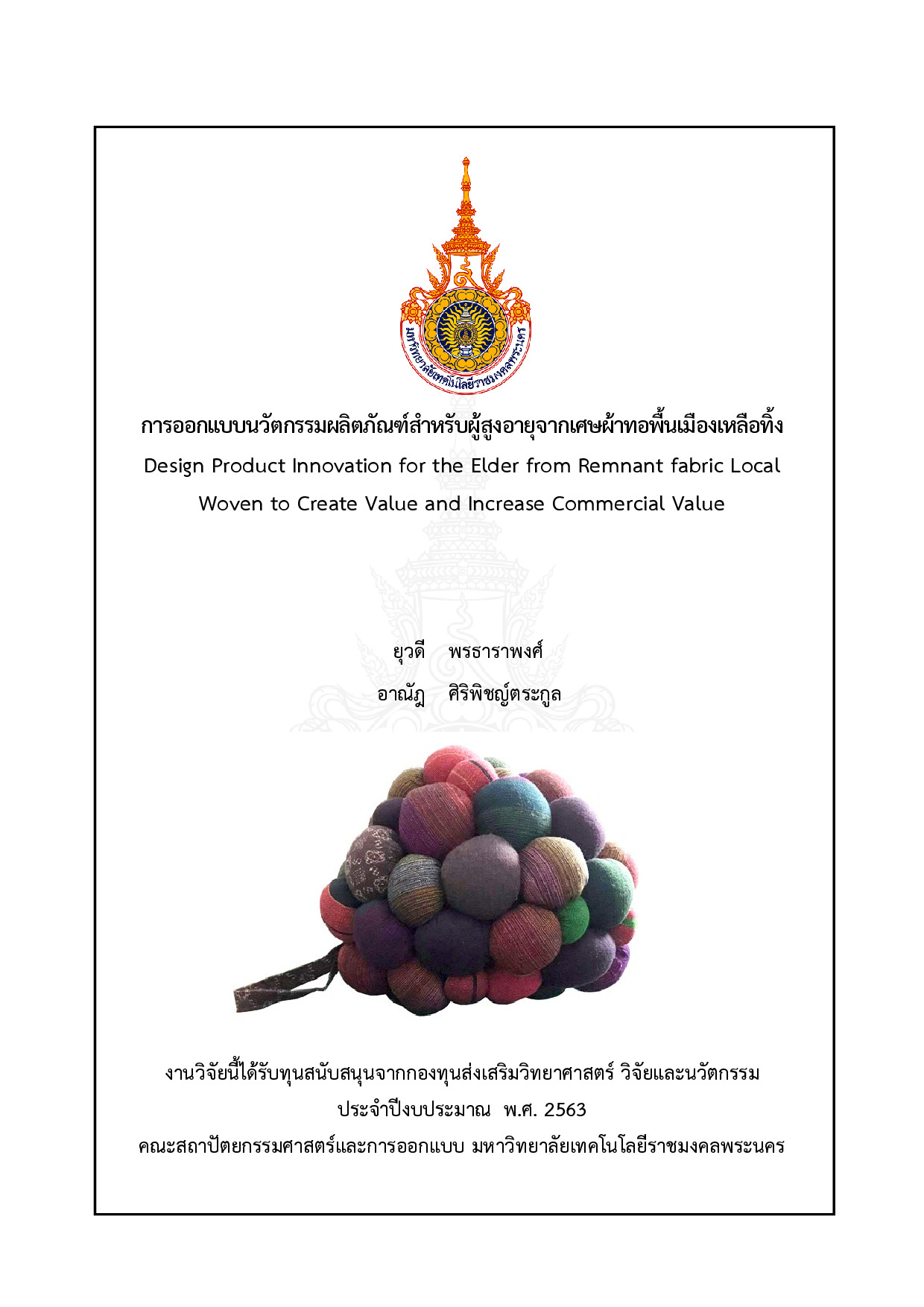
การออกแบบนวัตกรรมผลิตภัณฑ์สำหรับผู้สูงอายุจากเศษผ้าทอพื้นเมืองเหลือทิ้ง
The objectives of this research are: 1. to design innovative products for the elderly from local woven fabric scraps left over from sewing that can help and promote health in their lives; 2. to create product guidelines for the elderly from woven fabric scraps. Native leftovers from tailoring that are unique create value and add commercial value. From the study of rags from local woven cloth left over from sewing Weaving indigenous fabrics which are local wisdom. Has been used to process various products such as clothing bags guards there will be a discarded part that is not used Therefore in this research the rag was used to develop the design of products for the elderly. There is a worthwhile use of local fabric scraps. focus on style Techniques for creating curved surfaces Embossed into a ball to create a texture and pressure. In terms of shape design it can be used with the elderly. can help and promote health in life Characteristics of the product is a product that can be administered to muscles. parts of the body of the elderly. The results of the experiment by bringing innovative products for the elderly from the waste of local woven cloth were tested on 22 elderly people in terms of form beauty function use. It was found that the elderly were satisfied with the innovative products for the elderly. with an average of 4.51 is the most innovative product for the elderly from various forms of local woven fabrics It is designed to be a guideline for application. production for sale This will result in the community learning to design products related to the elderly. Community can develop potential Community products and products for the elderly resulting in the creation of local product identity It is a process of creating a body of knowledge and extending local wisdom for benefits.