จำนวน Repository ( 3447 )
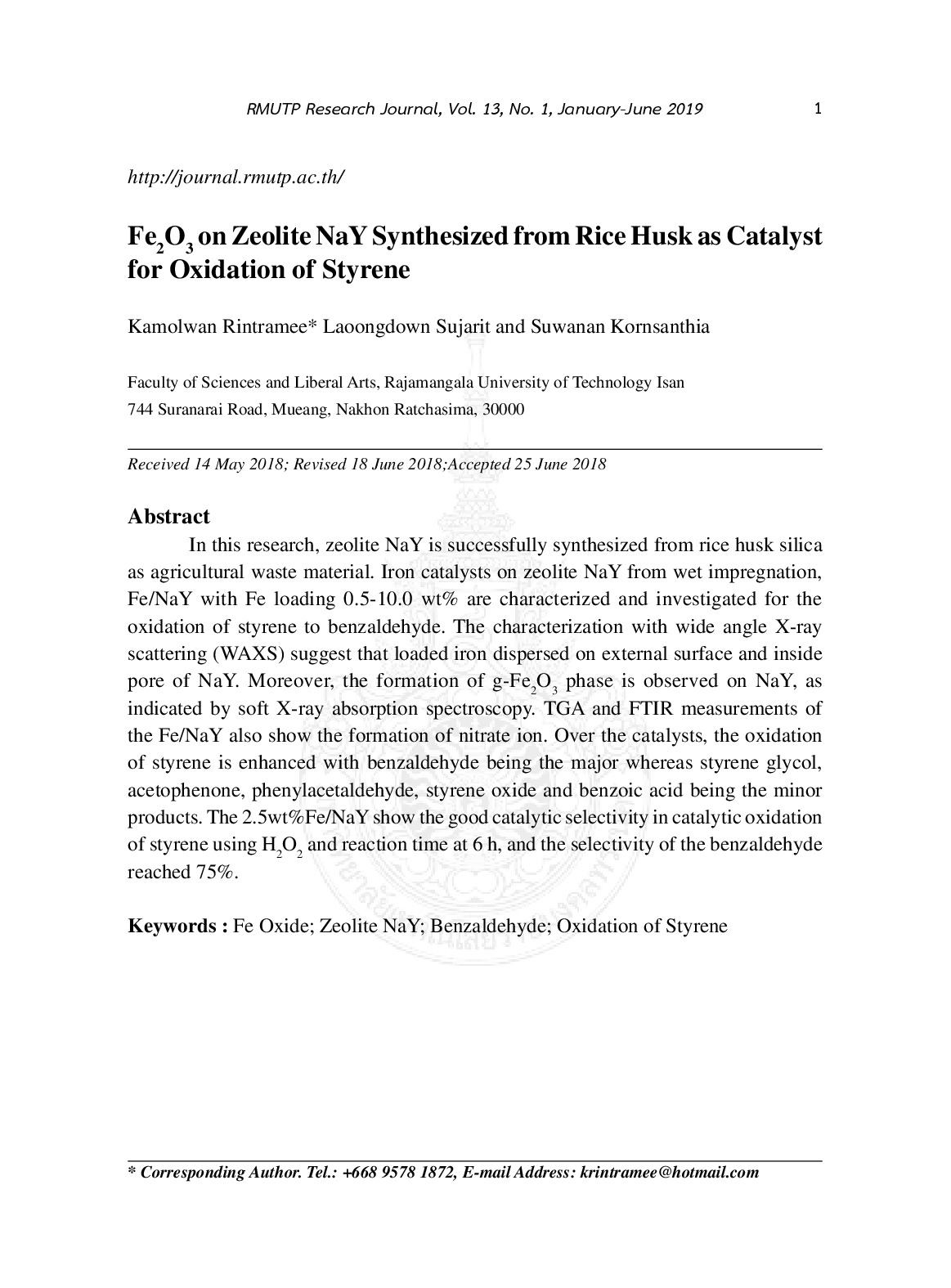
Fe2o3 on zeolite nay synthesized from rice husk as catalyst for oxidation of styrene
In this research zeolite NaY is successfully synthesized from rice husk silica as agricultural waste material. Iron catalysts on zeolite NaY from wet impregnation Fe/NaY with Fe loading 0.5-10.0 wt% are characterized and investigated for the oxidation of styrene to benzaldehyde. The characterization with wide angle X-ray scattering (WAXS) suggest that loaded iron dispersed on external surface and inside pore of NaY. Moreover the formation of g-Fe2O3 phase is observed on NaY as indicated by soft X-ray absorption spectroscopy. TGA and FTIR measurements of the Fe/NaY also show the formation of nitrate ion. Over the catalysts the oxidation of styrene is enhanced with benzaldehyde being the major whereas styrene glycol acetophenone phenylacetaldehyde styrene oxide and benzoic acid being the minor products. The 2.5wt%Fe/NaY show the good catalytic selectivity in catalytic oxidation of styrene using H2O2 and reaction time at 6 h and the selectivity of the benzaldehyde reached 75%.
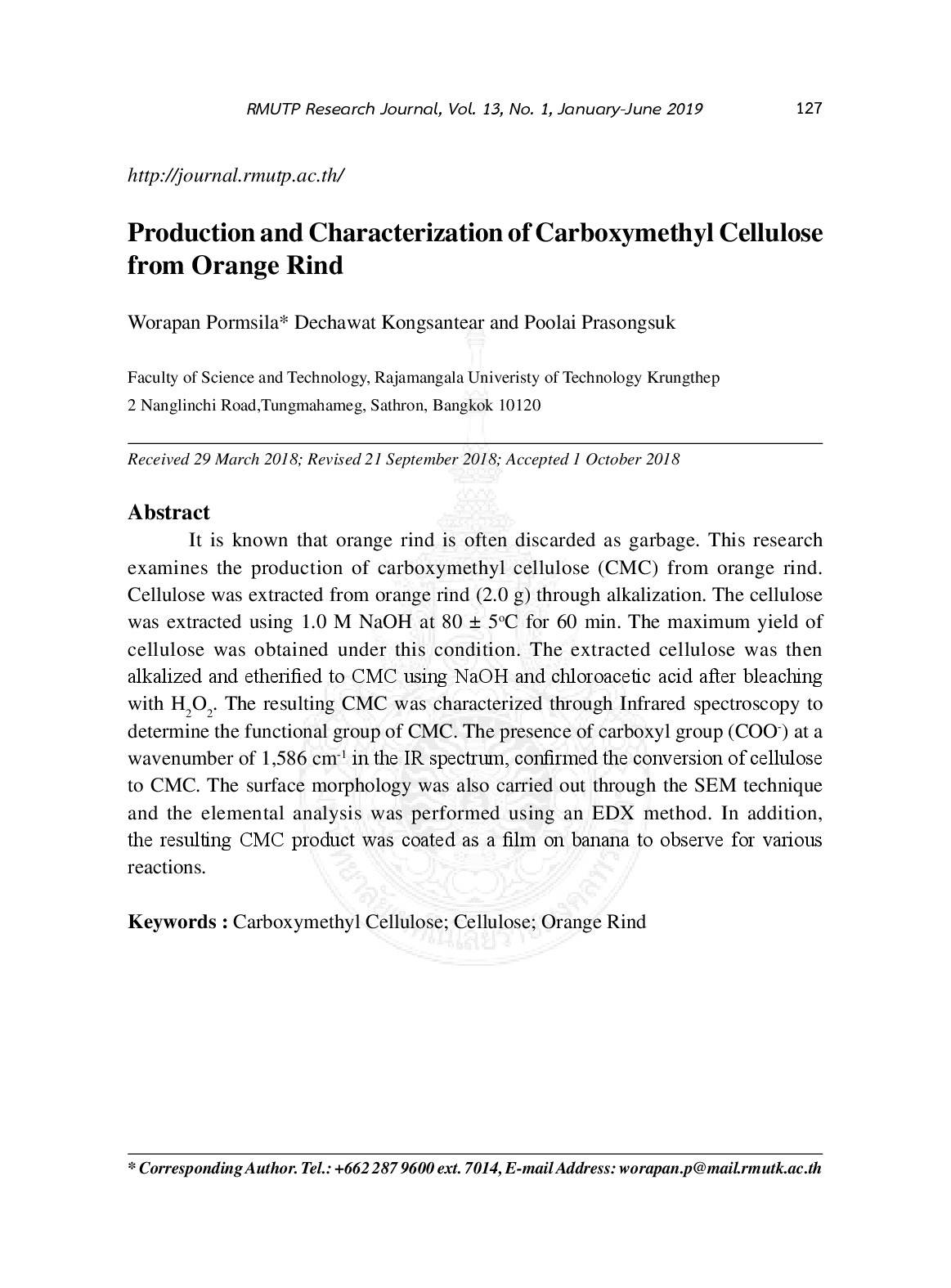
Production and characterization of carboxymethyl cellulose from orange rind
It is known that orange rind is often discarded as garbage. This research examines the production of carboxymethyl cellulose (CMC) from orange rind. Cellulose was extracted from orange rind (2.0 g) through alkalization. The cellulose was extracted using 1.0 M NaOH at 80 ± 5oC for 60 min. The maximum yield of cellulose was obtained under this condition. The extracted cellulose was then alkalized and etherified to CMC using NaOH and chloroacetic acid after bleaching with H2O2. The resulting CMC was characterized through Infrared spectroscopy to determine the functional group of CMC. The presence of carboxyl group (COO-) at a wavenumber of 1586 cm-1 in the IR spectrum confirmed the conversion of cellulose to CMC. The surface morphology was also carried out through the SEM technique and the elemental analysis was performed using an EDX method. In addition the resulting CMC product was coated as a film on banana to observe for various reactions.
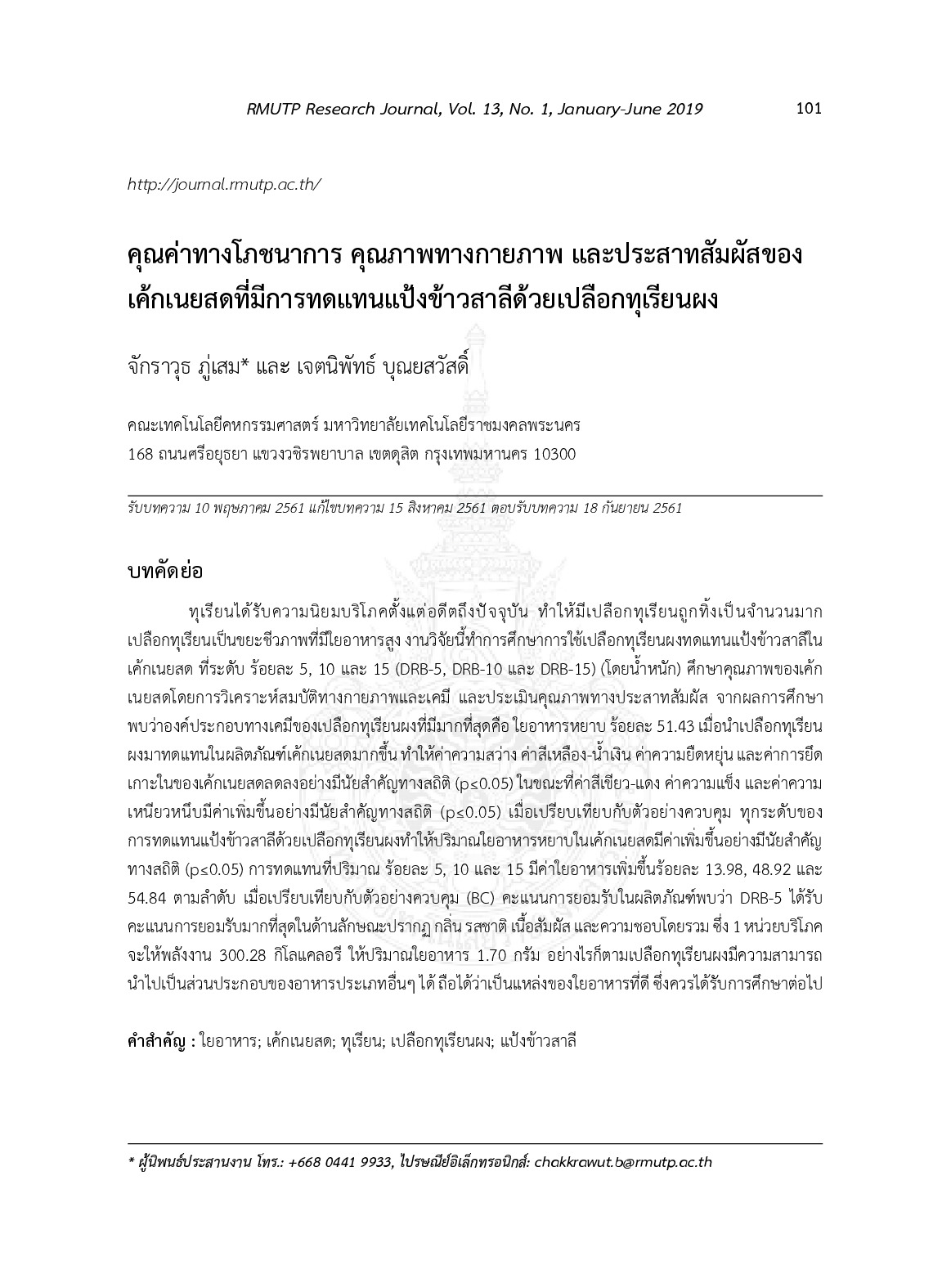
คุณค่าทางโภชนาการ คุณภาพทางกายภาย และประสาทสัมผัสของเค้กเนยสดที่มีการทดแทนแป้งข้าวสาลีด้วยเปลือกทุเรียนผง
Durian has been very popular not only local people but also tourists. As a result there are many durian peels wasted so this research is explored the utilization of durian peels. Durian rind is a biological waste but contains high amount of crude fiber. This research aims to study using durian rind powder to replace wheat flour in butter cakes at 5 10 and 15 % (w/w) (DRB-5 DRB-10 and DRB-15). Physical properties chemical composition and sensory evaluation of the butter cakes were analyzed. The results showed that durian rind powder contained 51.43 % of crude fiber. Increasing of durian rind powder in butter cakes showed significant decreasing of lightness (L*) blue–yellow component (b*) springiness and cohesiveness values while green–red component (a*) hardness and gumminess values were significantly higher than the control sample (BC) (p≤0.05). Dietary fiber content of the products shown significantly increased by 13.98% for DRB-5 48.92 % for DRB-10 and 54.84% for DRB-15 as compared with BC (p≤0.05). The acceptance scores of DRB-5 including appearance odor taste texture and overall liking scores were highest. There are 300.28 kcal for 1 serving of butter cake which contain 1.70 gram of dietary fiber. However durian rind powder can be used as a food ingredient and source of dietary fiber in other food recipes for further studies.
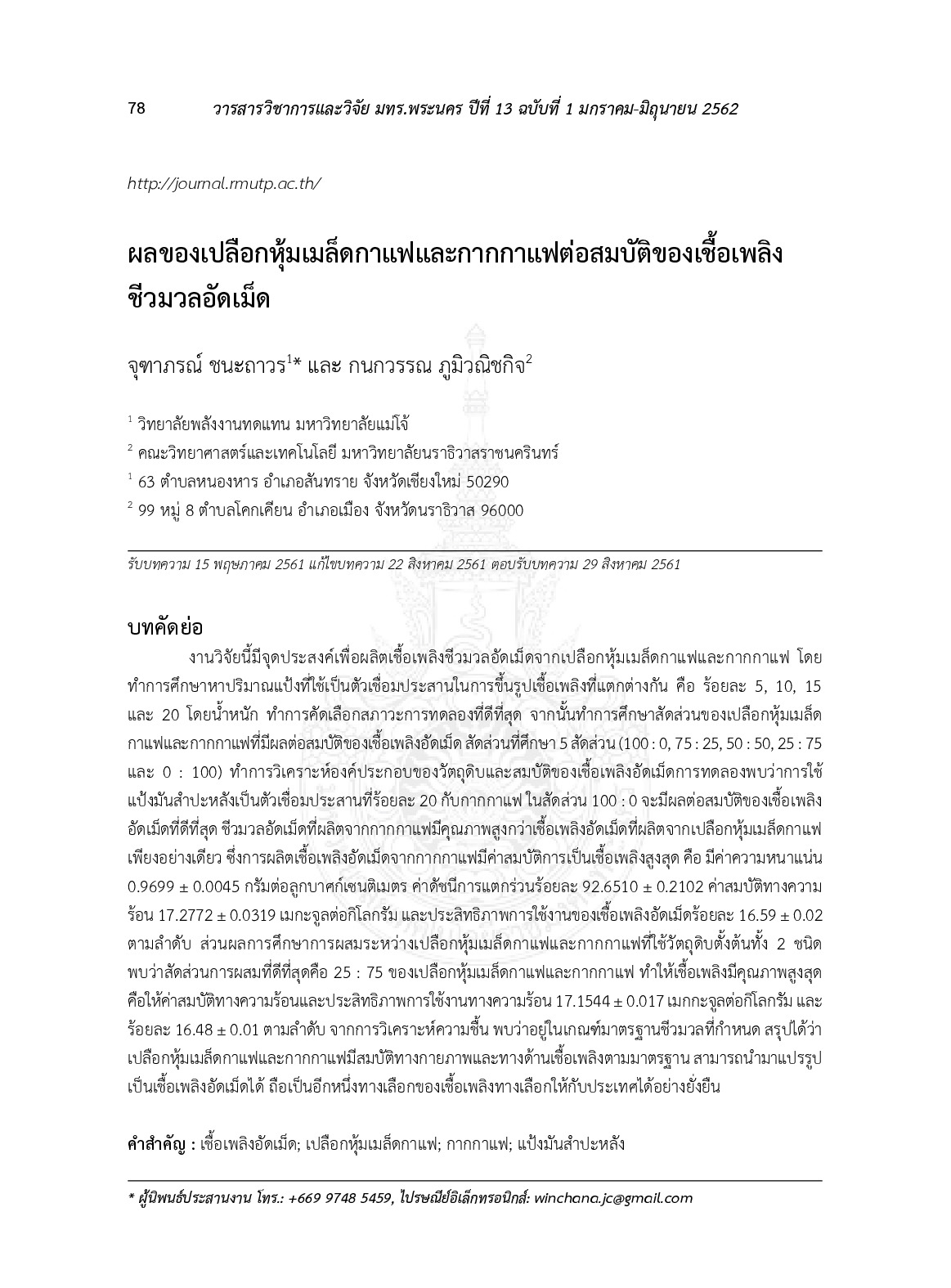
ผลของเปลือกหุ้มเมล็ดกาแฟและกากกาแฟต่อสมบัติของเชื้อเพลิงชีวมวลอัดเม็ด
The objective is to produce the biomass pellet fuel from coffee silverskin and spent of coffee grounds. To study the percentage of cassava powder as binder was mixed at 5 10 15 and 20% by weight and the best condition was chosen. Then to study the ratio of coffee silverskin and spent of coffee grounds was 5 ratios (100 : 0 75 : 25 50 : 50 25 : 75 and 0 : 100) on propertied of biomass pellet fuel. Characteristics and properties of raw materials and biomass pellet fuel were analyzed. The results found that the highest property of the biomass pellet fuel was 20% of cassava powder as binder. The biomass pellet from spent coffee grounds as main component was higher quality than coffee silverskin. The biomass pellet from spent coffee grounds was the maximum fuel property. The bulk density was 0.9699 0.0045 g/ cubic cm shatter index was 92.6510 ± 0.2102% heating value was 17.2772 ± 0.0319 MJ/kg and heat utilization efficiency was 16.59 ± 0.02%. The results from the part of coffee silverskin and spent of coffee grounds ratio showed that the best ratio from 2 raw materials was 25 : 75 that gave the highest quality. The heating value was 17.1544 ± 0.017 MJ/kg and heat utilization efficiency was 16.48 ± 0.01%. In addition the study also discovered that the biomass pellet had moisture contents in the levels acceptable under biomass standards. Thus in summary the coffee silverskin and spent coffee grounds had physical property and fuel property according to the standardization to be made into biomass pellet fuel. It considered to be one of alternative fuels in country permanently.
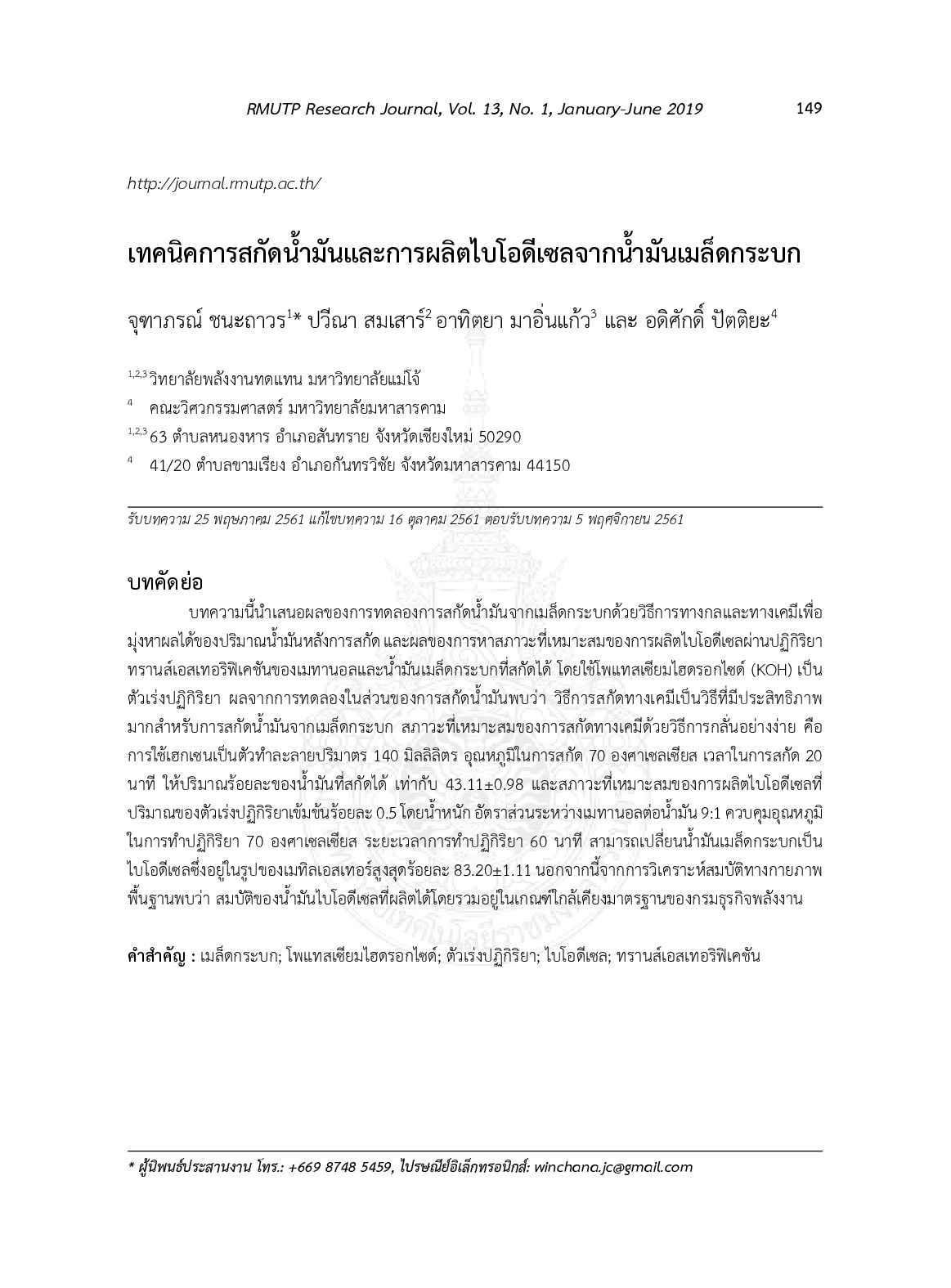
เทคนิคการสกัดน้ำมันและการผลิตไบโอดีเซลจากน้ำมันเมล็ดกระบก
This paper presents the experimental results of the oil extraction process from wild almond seeds by mechanical and chemical methods. The optimum conditions for the biodiesel production from the extracted oil via transesterification reaction using methanol and potassium hydroxide (KOH) are reported. Chemical extraction was found to be an effective technique for wild almond oil extraction. Simple distillation was used as oil extraction unit applying 140 ml of n-hexane as solvent at 70ºC for 20 min. The oil yield was 43.11±0.98%. This extracted oil was used as raw material for biodiesel production with the maximum yield of 83.20±1.11%. The optimum conditions for biodiesel production were the catalyst loading of 0.5 wt% and 9:1 molar ratio of methanol to oil in a controlled reaction temperature of 70ºC for 60 min. Finally the properties of biodiesel were analyzed and most properties met the requirements of the department of energy business standard.