จำนวน Repository ( 156 )
การวิจัยและพัฒนาโลหะเงินเจือสีชมพูเพื่อผลิตตัวเรือนเครื่องประดับด้วยการหล่อระบบเหวี่ยง
This paper discusses the mixed alloy silver pink by spending innocent Alloy capital ratio of 58.00% and check the analysis of color against Silver 925 under the metal content of about 58.40% alloy 41.60% result. According to the study the researchers used to hold above ingredients prototype to develop a mixture of silver to feature pink by analyzing the color (Color Analysis) tested the color of silver mixed pink capital ratio of 116.80 alloy. 83.20 wt.% has a shiny bright color space the L 67.17 a = 9.60 b = 2.04 a compound that can be used to produce silver mixed pink. In the manufacturing industry has for the user.
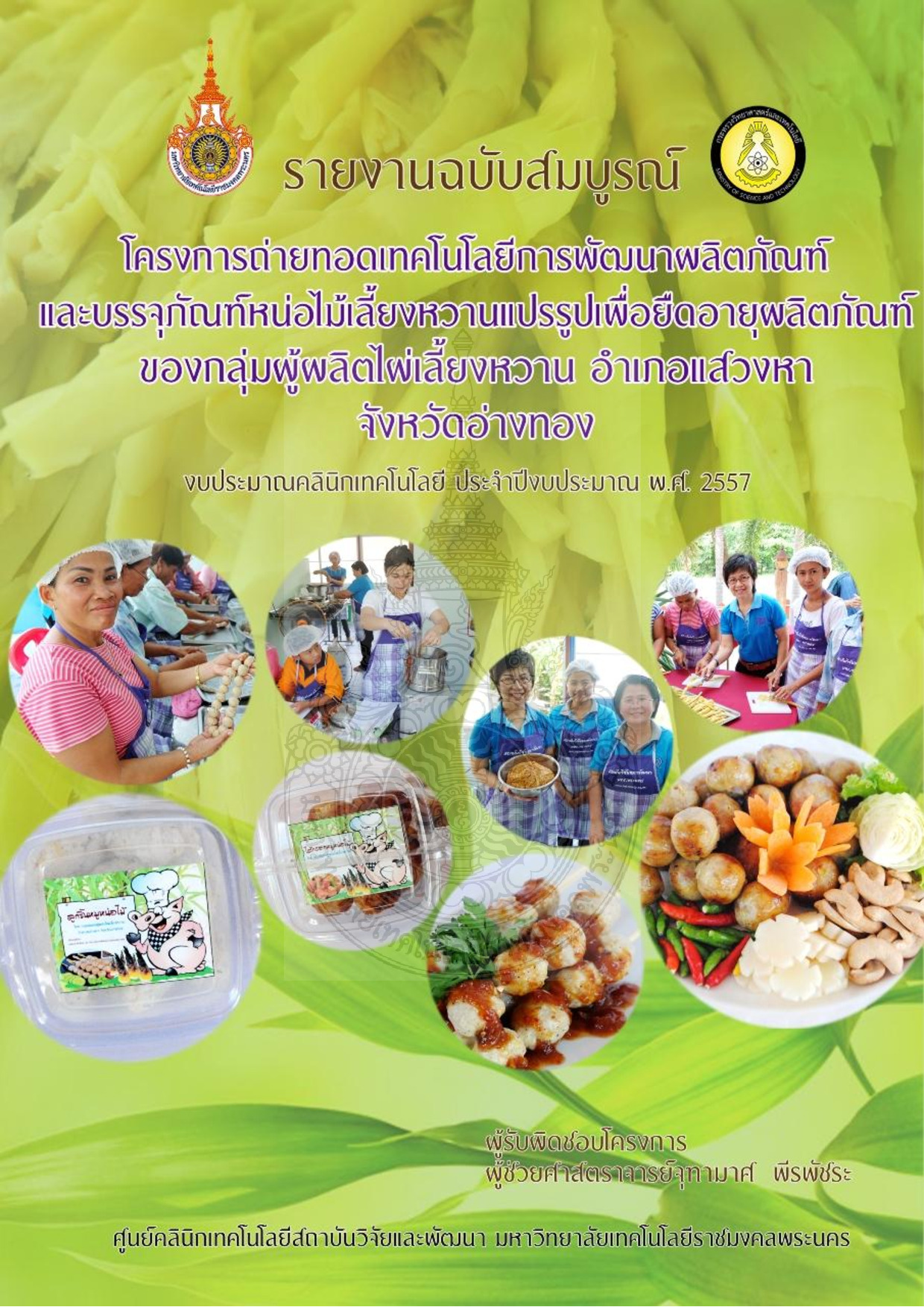
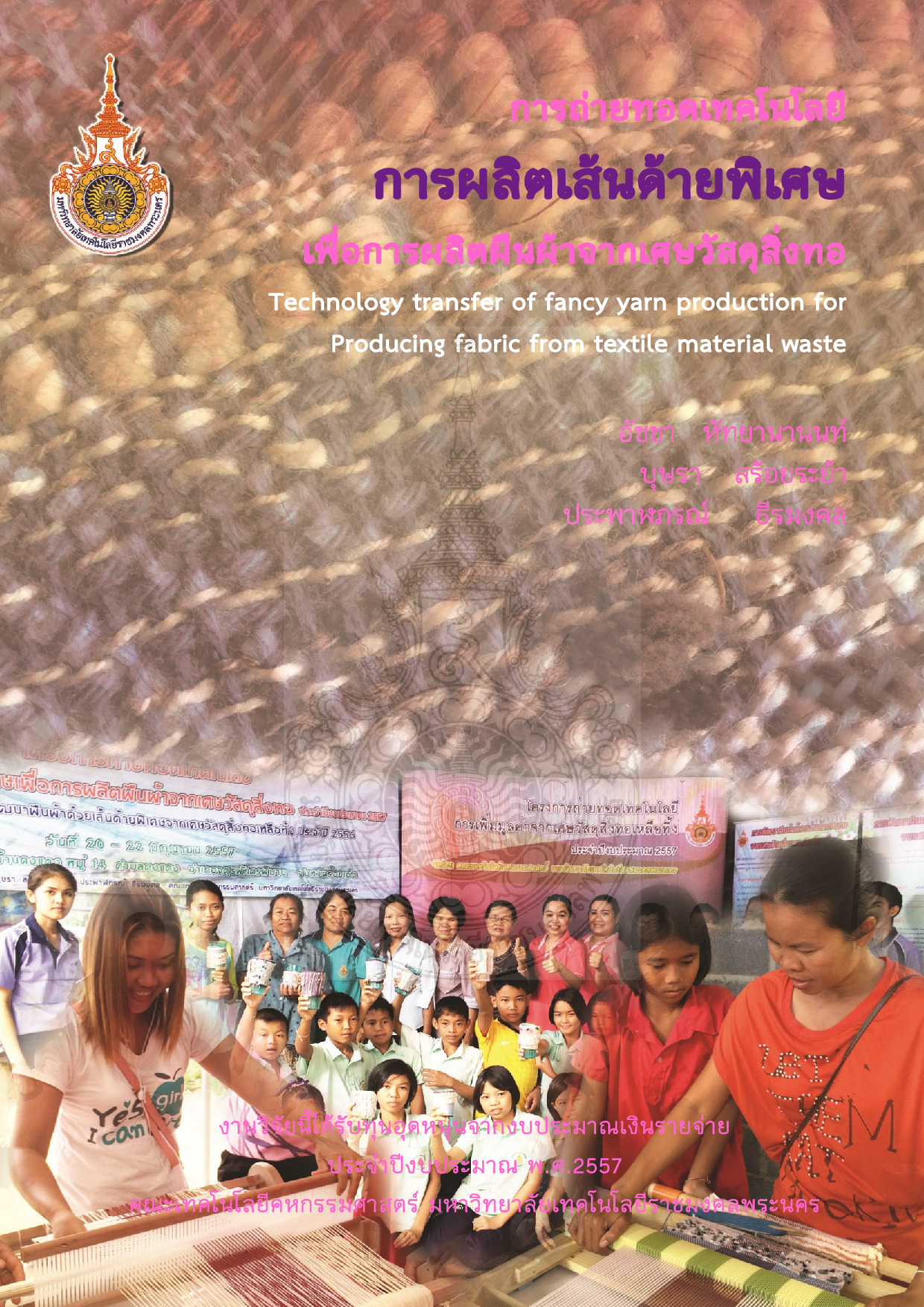
การถ่ายทอดเทคโนโลยีการสร้างตราสินค้าและบรรจุภัณฑ์เพื่อเพิ่มมูลค่าผลิตภัณฑ์จากเศษวัสดุสิ่งทอเหลือทิ้ง
The research aimed to Technology transfer of fancy yarn production for producing fabric from textile material waste. The purpose is to technology transfer of fancy yarn production for producing fabric to people and community and to evaluate of technology transfer of fancy yarn production for producing fabric. The procedures were as follows target population for the transfer of knowledge and technology as Small and Micro community Enterprise--SMCE and individuals interested in Dang Dong sub-district Bang Bon district at Roi-Ed province. A total of 34 peoples and two days on 20 - 21 June 2557 and a satisfaction survey with a questionnaire after training. The data were analyzed using frequency percentage and mean. The results that general Information are female and younger than 21 years of education in elementary education as a student. A question that asking about their satisfaction with the course and to divide into three aspects: the purpose of the project The course structure and the contents of the course. The majority were satisfied with the very best. The purpose and the content are high level of satisfaction. In relation to technology transfer of fancy yarn production for producing fabric from textile material waste divided into three aspects: the process provides trainers and facilities was found that were satisfied at all of the 3 parts. The participants are mainly used to provide benefits to themselves for one month to apply the knowledge gained after the training. The participants modified using a new material and used local materials applied accordingly. Moreover a focus will be capped by the school to take courses and workshops and to teach another one for working out or as part of the courses taught at the school. Satisfaction with the benefits of technology transfer and utilization. Satisfaction at the highest level. The comments and suggestions of the participants found that they need for re-training again. They would like to have a longer period of training in order to gain more knowledge. All lecturer can transfer knowledge during the training as well.

Dry reforming of methane reaction for hydrogen and syngas production using cobalt catalysts and nickel-cobalt bimetallic catalysts
The cobalt catalysts (cobalt content by weight: 7% 10% and 15%) and cobalt-nickel bimetallic catalysts (cobalt-nickel content by weight: 3.5%-3.5% 5%-5% and 7%-7%) were studied in dry reforming of methane for hydrogen and syngas production. All catalysts were synthesized by the wetness impregnation method. The dry reforming of methane was carried out at 700oC atmosphere pressure using a mixture; CH4 and CO2 in ratio 1:1. The result showed that the good activity and stability depend on metal content in catalysts and the combined 2 metals as bimetallic catalysts. The optimum amounts of catalysts are 10wt% Co for mono-metallic catalysts 75%CH4 and 75%CO2 conversion and 7wt% Ni-7wt% Co for bimetallic catalysts 87%CH4 and 89%CO2 conversion.