จำนวน Repository ( 270 )
ผลการใช้นาโนเทคโนโลยีของเครื่องแต่งกายเชฟที่มีผลต่อความปลอดภัยในอาหาร
The research regarding effect of nanotechnology use in making chef apparel on safety of food had the objectives to study about the result of using nano materials coating on yarn and fabric; to study about the use of nano materials which are suitable for fabric to be sewn for being chef apparel and to study the effect of using of nanotechnology for chef apparel on smell and the inhibition of pathogenic bacteria growth using three types of nano materials including Zinc oxide nano Silver nano and Titanium dioxide nano to be coated on four samples including cotton thread T/R thread cotton fabric and T/R fabric. The researcher tested the fabric sample for inhibiting growth of pathogenic bacteria and found that Zinc oxide nano and Silver nano were not different in inhibiting growth of pathogenic bacteria. But the coating on the fabric is more convenient and cheaper. And effective against Gram-positive bacteria. A bacterium that is often found in personal hygiene unclean conditions better than or equal to SS.S3%. Then Four kinds of fabric were sewn to be chef apparel. Actual chef tried wearing to test effectiveness in resisting bacteria. When the apparel was used for two times it was found that T/R fabric which was coated with Zinc oxide nano and Silver nano had different ability to resist gram-positive bacteria and gram-negative bacteria. Fabric T/R Silver nano coating remains effective against bacteria as well and proper to be sewn as chef apparel.
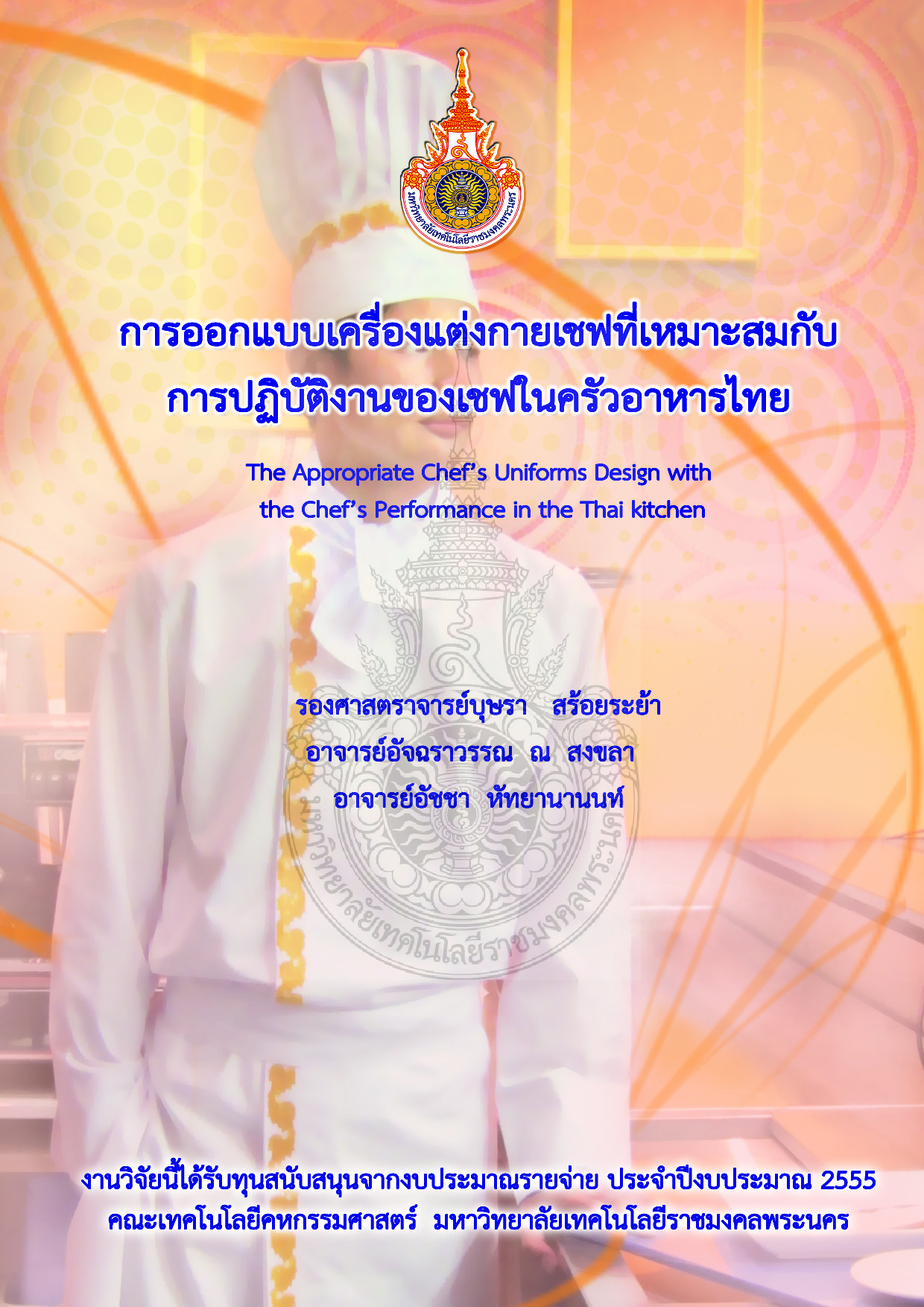
การออกแบบเครื่องแต่งกายเชพที่เหมาะสมกับการปฏิบัติงานของเชฟในครัวอาหารไทย
This research is the designing of chef apparel in order to appropriate with their tasks in Thai kitchen. The objective of this research are to design the appropriate chef apparel to work in the Thai kitchen and study the consumer satisfaction of apparel designing for the chef in Thai kitchen. Starting from sketching chef outfits. There are 60 styles from 15 styles of each category. For example hat chef jacket scarf and napkin. There are 5 sketches selection of each category by specialist. Therefore researchers set in to five outfits for sewing and survey the satisfaction amount 200 random sampling using 100 customers at Central Pinklao and 100 Thai kitchen chefs or Thai food business investor. The assessment and questionnaire was analyses through statistical and percentage to demonstrate in table. The study result in consumers’ satisfaction with regard the designing of chef apparel in order to appropriate with their tasks in Thai kitchen found that were mostly 59.5 percentages’ samples as male and 39 percent in an age range between 46 years. There are 50 percent of samples was professional chef sample with 47.5 percent of Bachelors degree and 33 percent of receiving monthly income from 30001 baht upwards. From the mostly research of consumer used to take the service in restaurant with a chef uniform was 90 percent. The 94 percent of opinions about Thai identity not show in chef uniform and also they agree with Thai identity in chef uniform 96 percent. The analysis of the satisfaction of consumers to the appropriate chef’s uniforms design with the chef’s performance in the Thai kitchen The analysis results showed that the overall images of all design as follow the first design is number 2 average in 31.04 in the highest level of satisfaction. Next the second design is number 3 average in 4.16 in the satisfaction level. Then the third design is number 4 average in 4.15 in the highest level of satisfaction. The fifth design is number 5 average in 3.92 in the high level of satisfaction and the last design is number 1 average in 3.29 satisfaction level was moderate.
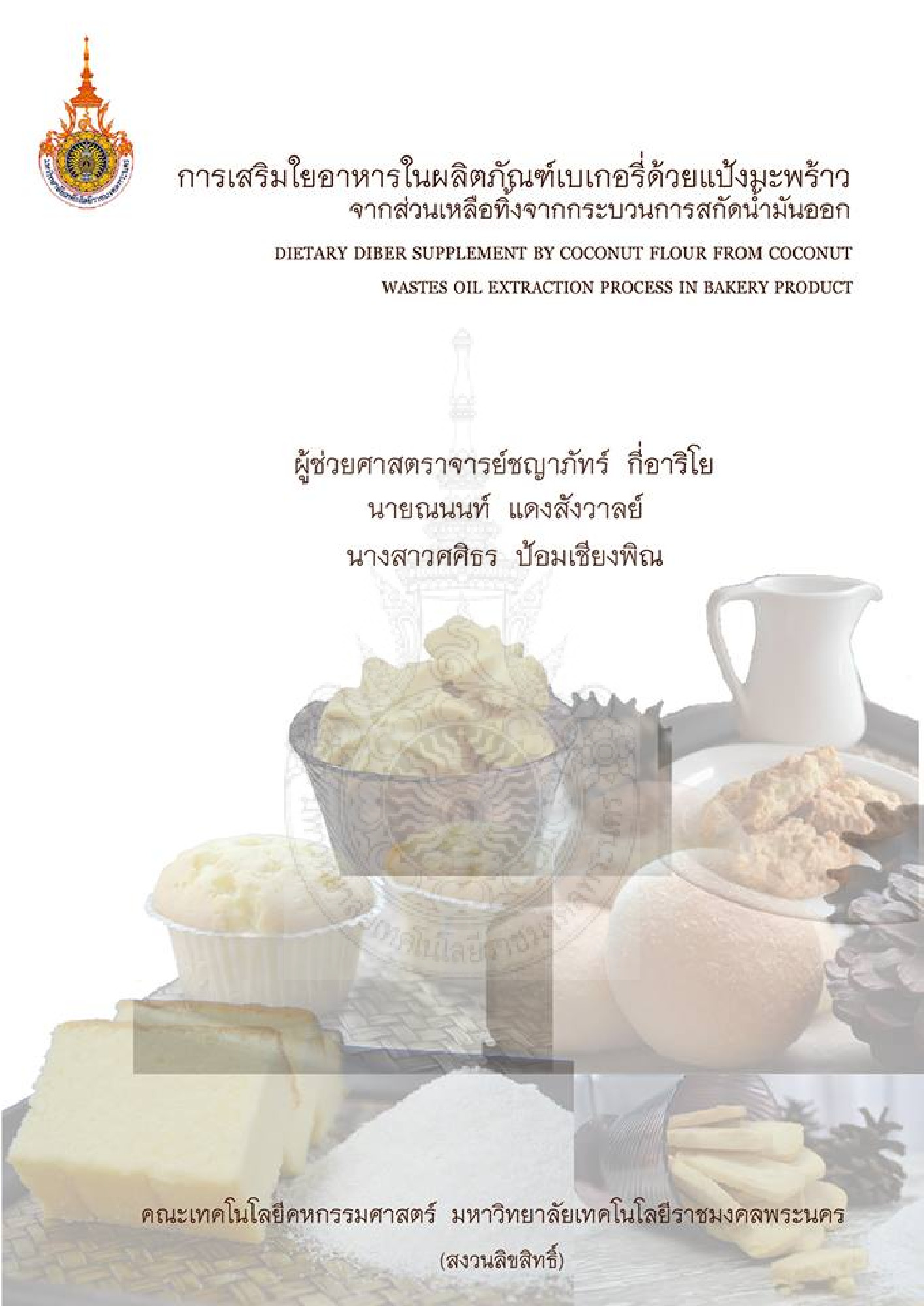
การเสริมใยอาหารในผลิตภัณฑ์เบเกอรี่ด้วยแป้งมะพร้าวจากส่วนเหลือทิ้งจากกระบวนการสกัดน้ำมันออก
The studies of Dietary Fiber Supplement by coconut flour from coconut Wastes Oil Extraction process in Bakery Product was investigated Production of coconut flour from coconut wastes oil extraction drying at 55 ° C for 12 hours and then grinding to powder gave the off-white fine powder. The chemical compositions of coconut flour were 57.70 % carbohydrate 29.4 % fat 6.23 % moisture 5.20 % protein and 1.48 % ash by dye weigh. Butter cake making experiment by substitution of wheat flour with coconut flour at 5 % of wheat flour weigh which has the highest sensory scores comparing butter cake with the control found that increase dietary fiber 1.34 g. /100 g. The majority of the tested consumers (92%) accepted butter cake with 5 % of coconut flour substitution. Muffin making experiment by substitution of wheat flour with coconut flour at 15 % of wheat flour weigh which has the highest sensory scores comparing muffin with the control found that increase dietary fiber 2.34 g /100 g. The majority of the tested consumers (81%) accepted muffin with 15 % of coconut flour substitution. Cornflake cookie making experiment by substitution of wheat flour with coconut flour at 20 % of wheat flour weigh which has the highest sensory scores comparing cornflake cookie with the control found that increase dietary fiber 3.54 g. /100 g. The majority of the tested consumers (94 %) accepted cornflake cookie with 20 % of coconut flour substitution. Butter cookie making experiment by substitution of wheat flour with coconut flour at 10 % of wheat flour weigh which has the highest sensory scorescomparing butter cookie with the control found that increase dietary fiber 3.04 g. /100 g. The majority of the tested consumers (94 %) accepted Butter cookie with 10 % of coconut flour substitution. Frozen cookie making experiment by substitution of wheat flour with coconut flour at 20 % of wheat flour weigh which has the highest sensory scores comparing cookie with the control found that increase dietary fiber 4.02g. /100 g. The majority of the tested consumers (93 %) accepted 20 % of coconut flour substitution. Butter bread making experiment by substitution of wheat flour with coconut flour at 15 % of wheat flour weigh which has the highest sensory scores comparing butter bread with the control found that increase dietary fiber 2.22 g. /100 g. The majority of the tested consumers (75 %) accepted 15% of coconut flour substitution. Whole wheat bread making experiment by substitution of wheat flour with coconut flour at 15 % of wheat flour weigh which has the highest sensory scores comparing whole wheat bread with the control found that increase dietary fiber 2.09 g. /100 g. The majority of the tested consumers (79 %) accepted 15 % of coconut flour substitution. Pie crust making experiment by substitution of wheat flour with coconut flour at 15 % of wheat flour weigh which has the highest sensory scores comparing pie crust with the control found that increase dietary fiber 2.91 g. /100 g. The majority of the tested consumers (82 %) accepted 15 % of coconut flour substitution.
การเสริมใยอาหารในผลิตภัณฑ์มาการองด้วยรำข้าวสังข์หยด
The objective of this research to study the three formula basic of macarons amount of Sangyod Rice Bran usage in macarons product and nutritional composition of macarons product. The sensory evaluate of three formula of macarons the second and the third formula basic macarons non-significant in odor liking ( P< ) . However the three formulas are significant in appearance color liking odor liking taste liking texture liking a nd overall liking ( P> ). When consideration in average score 3rd formula of macarons acceptable that the most one formula. Therefore the third formula used to determine the proper amount of Sangyod Rice Bran to add on macarons in the next step. For the Enhancing of Sangyod Rice Bran in macarons. The three levels as follow; added Sangyod Rice Bran for % % and % of all total weight. The taster remains to accept all sample of Sangyod Rice Bran in macarons. Especially at the % of Sangyod Rice Bran to added in macarons to the highest acceptance . However the resulted of added Sangyod Rice Bran at % to decrease in the appearance and overall liking of macarons .Therefore supplementation of fiber in macarons product with Sangy od Rice Bran is not affectin macarons. Furturemore spicies and amount of other bran for macarons production should be intensive studied.
การเสริมใยอาหารในผลิตภัณฑ์มาการองด้วยรำข้าวสังข์หยด
The objective of this research to study the three formula basic of macarons amount of Sangyod Rice Bran usage in macarons product and nutritional composition of macarons product. The sensory evaluate of three formula of macarons the second and the third formula basic macarons non-significant in odor liking (P<). However the three formulas are significant in appearance color liking odor liking taste liking texture liking and overall liking (P>). When consideration in average score 3rd formula of macarons acceptable that the most one formula. Therefore the third formula used to determine the proper amount of Sangyod Rice Bran to add on macarons in the next step. For the Enhancing of Sangyod Rice Bran in macarons. The three levels as follow; added Sangyod Rice Bran for % % and % of all total weight. The taster remains to accept all sample of Sangyod Rice Bran in macarons. Especially at the % of Sangyod Rice Bran to added in macarons to the highest acceptance. However the resulted of added Sangyod Rice Bran at % to decrease in the appearance and overall liking of macarons. Therefore supplementation of fiber in macarons product with Sangyod Rice Bran is not affect in macarons. Furturemore spicies and amount of other bran for macarons production should be intensive studied.