จำนวน Repository ( 30 )
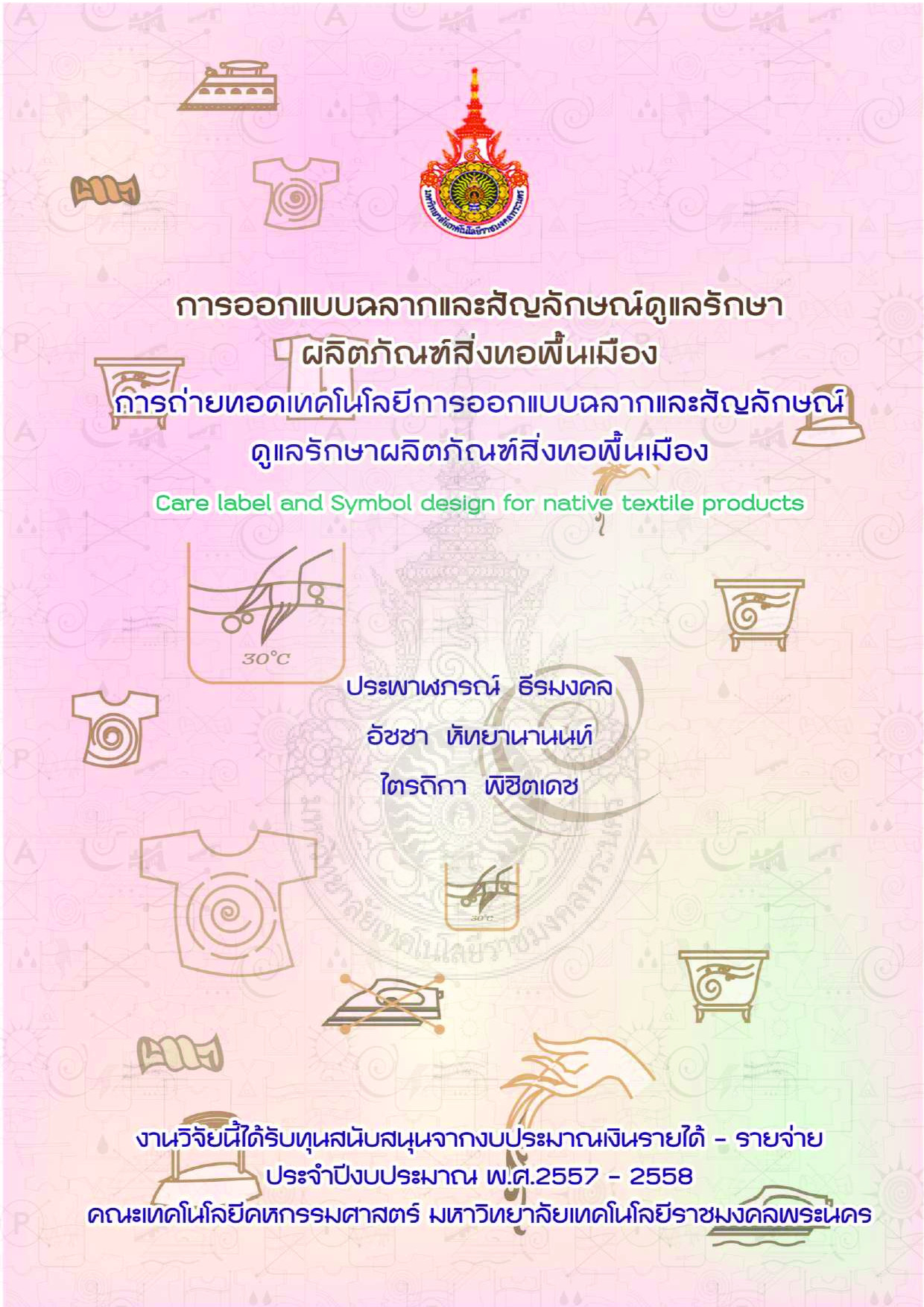
การออกแบบฉลากและสัญลักษณ์ดูแลรักษาผลิตภัณฑ์สิ่งทอพื้นเมือง
This research is Care label and Symbol design for native textile products. The purpose of this research were 1) to study and design the care label and symbol design of native textile products. 2) to design the care label and symbol design of native textile products and 3) to assessment the consumers satisfaction towards the care label and symbol design for native textile products. 4) to transfer knowledge towards the SMEs production communities about the care label and symbol design for native textile products. 5) to assessment the consumers satisfaction towards the care label and symbol design for native textile products. The research instruments used to collect data: 1) a draft care label and symbol design of native textile products of 6 types (10 prototypes) as 60 prototypes of washing bleaching spinning twisting and drying ironing and colour dropping. 2) Questionnaire of expert opinion and selective drafts for 3 models as 18 prototypes. 3) Questionnaire of consumers satisfaction towards the care label and symbol design for native textile product of 100 people: buyers sellers manufacturers and those interested in native textiles. The evaluation data was analyzed by using SPSS program in frequency mean and percentage. All in conclusion as table and descriptive. In the second research year the process are focus group people for transfer knowledge as SMEs community Enterprise OTOP production communities and other that it is interesting in this research : MEA-LA small enterprise in Singburi province PAMONT Hand-woven Communities in Ratchaburi province and Thai SONG-DUM Woven Ban-Sa-Kee-Rai in Nakhompathum province. To plan the schedule and set the date place amount of participate and lectures 102 people on 12 22 and 28 July 2015 and asking for consumer satisfaction of the curriculum and lecture for “transfer knowledge the care label and symbol design for native textile product” by Questionnaire of participate satisfaction. Last the evaluation data was analyzed by using SPSS program in mean and percentage. The First year’s research showed that mostly respondents were male at 59 percent aged 46 years at 52 percent and also being the entrepreneurs / business owners at 45 percent. 48 percent as bachelors degree and their income were an average of 20001 - 25000 baht at 46 percent. The analysis of consumers satisfaction can be concluded that the first types of care label and symbol design for native textile product at highest levels satisfaction is Colour dropping at 4.46. The next types is bleaching at 4.44 Washing at 4.42 Ironing at 4.38 Twisting and Drying at 4.32 and the last types is at least levels satisfaction is Spinning at 4.28 but all have been satisfied at maximum average and highest level of satisfaction. The research in the second year found that mostly participates were female aged 51 – 60 years old finished the secondary school and also there are farmer. The participates are their income under 5000 baht and They are moderately understanding symbol and care label but they are not make for their products. In relation to technology transfer of “the care label and symbol design for native textile product” divided into 3 parts it is also the curriculum and lecture for this research. The analysis of participate satisfaction It have been satisfied at maximum average and highest level of satisfaction in facilities. The participants are mainly used to provide benefits to themselves for one month to apply the gained after the training. The participants used care and symbol label for their products. Moreover a focus will be capped by the other communities to teach another one for working out. Satisfaction with the benefits of technology transfer and utilization. Satisfaction at the highest level. The comments and suggestions of the participants found that they need for re-training again. They would like to have a longer period of training in order to gain more knowledge. All lecturer can transfer knowledge during the training as well.

การทอผ้าขีดลายไทยเพื่อออกแบบและพัฒนารูปแบบผลิตภัณฑ์สิ่งทอ
The objective of this study was to khet design by using Thai pattem created on cotton clothes using Thai Khet creation: warp yarn in thousand comb with tightly strengthened cloth while welf yam with hardness together Thai Khet on Thai cotton pattern Traditional Thai Khet waving machine to be adapted by adding front floating hardness pattern hardness wood stepping new pattern weaving plan plotting Thai pattern and making color signals on graph prior khet pattern creation which one graphs column replaces one warp yarn when khet designing have been finished then the following step is desinged plane weaving. The results of the study showed that: there is suitable continuing Thai pattern on cotton cloth: Kanook pattern follows Krajang Ta Ooy pattern and Prajamyam pattern to be combined as graceful delicacy pattern and innovation transferred into Danchang District Supanburi Province.
การพัฒนาผลิตภัณฑ์สิ่งทอจากเส้นใยตะไคร้
A study on developing textile products from fiber lemongrass has been carried out aimed at processing yarn from lemongrass fiber developing textile fabrics such as clothing hats and shoes and teaching product design and technology to a community. Lemongrass leaves were processed with chemicals to produce a fiber lemongrass then spun to 100% lemongrass yarn with large unsmooth surfaces the used to produce handbag hats and shoes. However for garment fabrics the researchers developed the lemongrass yarn for weaving by mixing cotton in a 60:40 ratio to produce hand-woven cloth. Using hand-woven folk wisdom the Takfa community in Nakhon Sawan produced natural dyes from Bengal Almond leaves a performed surface finishing for a smoother touch. After weaving lemongrass fiber cloth gives off a lemongrass odor but this fades gradually. The physical properties of lemongrass fiber cloth are then tested for strength resistance and abrasion. Processing lemongrass cloth fiber to textile products enables us to produce various products such as clothes bags and hats. In passing technology to the community the residents recognized the advantages and benefits of using the fabric. Further research should investigate mixing lemongrass fibers with other natural fibers improved fiber durability luster of the fiber to increase fiber value or using lemongrass fiber for household products.
การออกแบบลวดลายผ้าทอแบบร่วมสมัยเพื่อการประยุกต์ใช้กับผลิตภัณฑ์เคหะสิ่งทอ ชุมชนทอผ้าวัดไผ่หูช้าง อำเภอบางเลน จังหวัดนครปฐม
งานวิจัยฉบับนี้มีวัตถุประสงค์เพื่อการออกแบบลวดลายผ้าทอแบบร่วมสมัยสาหรับการประยุกต์ใช้กับผลิตภัณฑ์เคหะสิ่งทอ ชุมชนทอผ้าวัดไผ่หูช้าง อำเภอบางเลน จังหวัดนครปฐม ที่สอดคล้องกับภูมิปัญญา และศักยภาพทางการผลิตของชุมชน ซึ่งประชากรกลุ่มตัวอย่างในงานวิจัยเรื่องนี้คือ ชุมชนทอผ้าวัดไผ่หูช้าง อำเภอบางเลน จังหวัดนครปฐม ผลการวิจัยเรื่องนี้พบว่า ประชากรส่วนใหญ่ประกอบอาชีพเกษตรกรรมเป็นอาชีพหลัก และทอผ้า พื้นเมืองเป็นอาชีพรอง กลุ่มชุมชนทอผ้าวัดไผ่หูช้าง มีความต้องการพัฒนารูปแบบตามแนวคิดลวดลายผ้าทอแบบร่วมสมัย ผู้วิจัยได้ใช้วิธีการวิจัยเชิงปฏิบัติการแบบมีส่วนร่วมโดยการแลกเปลี่ยนความคิดเห็นปฏิบัติงานร่วมกันระหว่างกลุ่มทอผ้ากับผู้วิจัยเพื่อส่งผลให้เกิดการวิเคราะห์ปัญหาและแสวงหาแนวทางในการแก้ปัญหา ซึ่งพบว่าลวดลายผ้าทอแบบร่วมสมัย ต้องมีรูปแบบที่ผลิตง่ายไม่ซับซ้อน มีลักษณะการทอผ้า เป็นลายขัดที่เหมาะสมกับการทอผ้าพื้นบ้านของชุมชน และบ่งบอกถึงเอกลักษณ์ของชุมชน ลักษณะลวดลายของผ้าทอใช้แนวคิดการออกแบบลวดลายเน้นแนวคิดด้านการใช้ชีวิต หรือถิ่น กำเนิดของรากเหง้าชุมชน ประกอบไปด้วย ลวดลายเฉียง ลวดลายเกร็ดปลา ลวดลายดาว ลวดลายน้า ลวดลายภูเขา โดยเน้นเอกลักษณ์ที่เด่นของผ้า “ลายแตงโม” ของกลุ่มทอผ้าพื้นเมืองตำบลไผ่หูช้าง ในลักษณะการมัดหมี่ โดยการมัดด้ายพุ่งเพื่อสร้างช่วงของสีต่างๆให้เกิดขึ้นในเส้นด้ายพุ่ง โดยใช้สีดาหรือสีกรมท่า เป็นสีหลักในการออกแบบลวดลาย

The Operations and Potentiality Development of Community Enterprises: A Case Study of Textile Product and Apparel Phathumthanee Province
การศึกษาเรื่องการดำเนินงานของกลุ่มวิสาหกิจชุมชนผลิตภัณฑ์ผ้าและเครื่องแต่งกาย จังหวัดปทุมธานี มีวัตถุประสงค์เพื่อทราบถึงการดำเนินงาน ปัญหาและอุปสรรคในการดำเนินงานของกลุ่มวิสาหกิจชุมชน โดยศึกษากลุ่มวิสาหกิจชุมชนผลิตภีณฑ์ผ้าและเครื่องแต่งกาย จังหวัด ปทุมธานี จำนวน 8 กลุ่ม ผลการศึกษาพบว่าส่วนใหญ่เป็นการรวมตัวกันเป็นกลุ่มและเปิดให้บุคคลในชุมชนไดเข้ามาศึกษาเรียนรู้เพื่อนำไปประกอบอาชีพแก่ครอบครัว และร่วมในการผลิตผลิตภัณฑ์ของกลุ่ม ปัญหาการดำเนินงานของกลุ่มผู้ปรระกอบการกลุ่มวิสาหกิจชุมชน ผลิตภัณฑ์ผ้าและเครื่องแต่งกาย จังหวัดปทุมธานี ส่วนใหญ่เกิดจากผู้ประกอบการไม่มีความรู้ ความชำนาญในการบริหารจัดการ การผลิตยังคงยึดภูมิปัญญาท้องถิ่นแต่มีการประยุกต์เทคโนโลยสมัยหม่บ้าง เพื่อพัฒนารูปแบบและเป็นการเพิ่มมูลค่าของผลิตภัณฑ์ ภาครัฐขาดการสนับสนุนอย่างต่อเนื่อง ทั้งนี้เนื่องจากกลุ่มไม่มีรูปแบบการบริหารกลุ่มหรือการทำงานกลุ่ม เต็มรูปแบบส่งผลให้การสนับสนุนจากภาครัฐมีน้อย ส่วนปัจจัยที่ส่งผลให้กลุ่มผู้ประกอบการ วิสาหกิจ ชุมชนประสบผลสำเร็จ คือ นโยบายของรัฐบาลที่เปิดโอกาสให้มีการสร้างงาน สร้างรายได้ แก่คนในชุมชนและความร่วมมือขององค์กรในการร่วมคิด รว่มวางแผน ร่วมปฏิบัติ ร่วมติดตามประเมินผล รวมทั้งการมีภาวะผู้นำของผู้นำกลุ่ม ผนวกกับความเข้มแข็งของชุมชนที่ เกื้อกูลการขับเคลื่อนกลุ่ม ส่วนข้อเสนอแนะจากการศึกษาครั้งนี้ สำหรับภาครัฐควรให้การสนับสนุนกิจ กรรมการดำเนินงานของกลุ่มผู้ประกอบการอย่างต่อเนื่อง ไม่ว่าจะเป็นด้านเงินทุน ความรู้ในด้านการบริหารจัดการ การพัฒนาผลิตภัณฑ์ การส่งเสริมการตลาด และการประชาสัมพันธ์ ส่วนด้านผู้ประกอบการวิสาหกิจชุมชน ควรมีการวางแผนการตลาด การจัดทำแผนธุรกิจ และสำรวจความต้องการของลูกค้า ซึ่งจะส่งผลให้ การดำเนินงานผลิตสินค้ากลุ่มวิสาหกิจชุมชนมีคุณภาพมีมาตรฐานผลิตภัณฑ์ที่สามารถส่งออกจำหน่ายยังตลาดต่างประเทศและสามารถอยู่ได้อย่างยั่งยืน