จำนวน Repository ( 192 )
พฤติกรรมและการรับรู้ของชุมชนที่มีความสัมพันธ์กับการดำเนินกิจกรรมการรับผิดชอบต่อสังคม (CSR) ของเขตประกอบการอุตสาหกรรมดับบลิวเอชเอ สระบุรี
The research objective is to study the behavior and community perceptions related to Corporate Social Responsibility (CSR) activities of WHA Industrial Zone Saraburi. The population is the 400 samples from the communities surrounding WHA Industrial Estate Saraburi consisting of four sub-districts namely Nong Pla Mo Sub-district Nong Pling Sub-district Bua Loi Sub-district and Kochasit Sub-district Nong Khae District Saraburi Province. The questionnaire was used as a tool to collect data. The statistics used were descriptive statistics including frequency percentage mean standard deviation. Inferential statistics were also used. The results showed that most of the respondents were female aged 20-30 years with married status a bachelors degree holder or equivalent a private company employee with the average monthly income of 20001 - 30000 baht and 4-6 family members. On the community behavior it was found that the aspect with the highest average of the community behavior towards Corporate Social Responsibility (CSR) activities of the sample group was acceptance with the mean of 3.55. On the communitys perception of Corporate Social Responsibility (CSR) activities it was found that the aspect with the highest average of the communitys perception of Corporate Social Responsibility (CSR) activities of the sample group was the information perception of CSR activities with the mean of 3.50. The hypothesis testing results revealed that the communitys behavior and perception were highly positively correlated with the CSR activities of WHA Industrial Zone Saraburi with statistical significance at 0.01.

การบูรณาการองค์ความรู้ในการพัฒนาศักยภาพผลิตภัณฑ์อาหารจากสับปะรด เพื่อเพิ่มมูลค่าทางการตลาด และความยั่งยืนเชิงพาณิชย์ระดับชุมชน
งานวิจัยนี้ได้ศึกษาการพัฒนาศักยภาพสับปะรดตกเกรดในการผลิตผลิตภัณฑ์อาหารแปรรูป ผลการศึกษา มีดังนี้ ศึกษาการสำรวจพฤติกรรมผู้บริโภคถึงผลิตภัณฑ์ที่ทำจากสับปะรดตกเกรด ที่ผู้บริโภคนิยมรับประทานถ้าจะนำสับประรดไปแปรรูปเป็นผลิตภัณฑ์ที่มีอยู่แล้วในท้องตลาด 3 ลำดับแรก ได้แก่ ขนมสับปะรด (ค่าเฉลี่ย 4.57) ข้าวเกรียบ (ค่าเฉลี่ย 4.30) และสับปะรดแผ่น ปรุงรส (ค่าเฉลี่ย 4.20) ตามลำดับ ศึกษากรรมวิธีการแปรรูปสับปะรดจากผลการสำรวจผลิตภัณฑ์ของผู้บริโภค กากสับปะรดเพิ่มในส่วนผสมของผลิตภัณฑ์ข้าวเกรียบ 40% ผู้ชิมให้การยอมรับ มากที่สุดในด้าน ลักษณะปรากฏ สี กลิ่น รสชาติ เนื้อสัมผัส และความชอบโดยรวม โดยมีค่าเฉลี่ย 8.10 8.83 7.95 8.03 7.95 และ 8.00 ตามลำดับ กากสับปะรดทดแทนกล้วยน้ำว้าบางส่วน 100% ผู้ชิมให้การยอมรับมากที่สุดในด้าน ลักษณะปรากฏ สี กลิ่น รสชาติ เนื้อสัมผัส และความชอบโดยรวม โดยมีค่าเฉลี่ย 8.45 8.48 7.98 8.20 8.23 และ 8.38 ตามลำดับ อุณหภูมิ และเวลาที่เหมาะสมในการสับปปะรดอบแห้ง คือ อุณหภูมิที่ 90 องศาเซลเซียส เป็นเวลา 4 ชั่วโมง การใช้ผงปรุงรสปาปิก้า 6% ผู้ชิมให้การยอมรับมากที่สุดในด้าน ลักษณะปรากฏ สี กลิ่น รสชาติ เนื้อสัมผัส และความชอบโดยรวม โดยมีค่าเฉลี่ย 8.05 7.95 8.18 7.98 7.95 และ 7.95 ตามลำดับ ศึกษาคุณภาพทางเคมี และคุณภาพทางกายภาพของผลิตภัณฑ์อาหารแปรรูปจากสับปะรดตกเกรด ผลิตภัณฑ์ข้าวเกรียบ พบว่า คุณภาพทางเคมีข้าวเกรียบ สูตรที่มีความากที่สุด ดังนี้ สูตรที่ 3 (40%) กรัม ความชื้นร้อยละ 3.30 สูตรที่ 2 (30%) ไขมันร้อยละ 21.37 สูตรที่ 3 (40%) เยื่อใยร้อยละ 8.38 สูตรที่ 1 (20%) เถ้าร้อยละ 2.00 สูตรที่ 2 (30%) โปรตีนร้อยละ 2.03 ส่วนคุณภาพทางกายภาพ พบว่า ความสว่าง (L*) สูตรที่ 1 (20%) กรัม มีค่ามากที่สุด 63.53 ค่าสีแดง (a*) และค่าสีเหลือง (b*) สูตรที่ 3 (40%) กรัม มีค่ามากที่สุด 3.14 และ 15.66 กากสับปะรดตกเกรดทดแทนกล้วยน้ำว้าบางส่วน พบว่า คุณภาพทางเคมีของกากสับปะรดตกเกรดทดแทนกล้วยน้ำว้าบางส่วน มีค่ามากที่สุด ดังนี้ สูตรที่ 2 (30%) กรัม ความชื้นร้อยละ 54.01 สูตรที่ 1 (20%) กรัม ไขมันร้อยละ 0.35 เยื่อใยร้อยละ 2.56 เถ้าร้อยละ 0.57 สูตรที่ 2 (30%) กรัม โปรตีนร้อยละ 3.93 ส่วนคุณภาพทางกายภาพ พบว่า ความสว่าง (L*) สูตรที่ 2 (30%) กรัม มีค่ามากที่สุด 69.75 ค่าสีแดง (a*) และ ค่าสีเหลือง (b*) สูตรที่ 3 (40%) กรัม มีค่ามากที่สุด -1.61 และ 12.67 อุณหภูมิที่เหมาะสมในการสับปปะรดอบแห้งคือ อุณหภูมิที่ 90 องศาเซลเซียส เป็นเวลา 4 ชั่วโมง ผู้ชิมให้การยอมรับมากที่สุดในด้าน ลักษณะปรากฏ สี กลิ่น รสชาติ เนื้อสัมผัส และความชอบโดยรวม โดยมีค่าเฉลี่ย 7.99 7.60 7.50 7.55 8.25 และ 7.95 ตามลำดับ ซึ่งมีค่าความชื้ที่เหมาะสมแก่การนำมาทำสับปะรดปรุงรสผงปาปิก้า สับปะรดตกเกรดอบแห้งปรุงรสปาปิก้า ผงปรุงรสค่ามากที่สุด ดังนี้ สูตรที่ 1 (2%) กรัม ความชื้นร้อยละ 8.02 สูตรที่ 3 (6%) กรัม ไขมันร้อยละ 0.68 สูตรที่ 2 (4%) กรัม เยื่อใยร้อยละ 12.34 สูตรที่ 1 (2%) กรัม เถ้าร้อยละ 9.49 และ โปรตีน ร้อยละ 8.84 ส่วนคุณภาพทางกายภาพ พบว่า ความสว่าง (L*) สูตรที่ 1 (2%) กรัม มีค่ามากที่สุด 80.03 ค่าสีแดง (a*) มีค่ามากที่สุด 9.24 และ ค่าสีเหลือง (b*) สูตรที่ 1 (2%) กรัม มีค่ามากที่สุด 24.76 ศึกษาการทดสอบผู้บริโภค (Consumer test) ที่มีผลต่อผลิตภัณฑ์อาหารแปรรูปจากสับปะรดตกเกรด ผลิตภัณฑ์ข้าวเกรียบ ผู้บริโภคให้ความพึงพอใจต่อผลิตภัณฑ์ข้าวเกรียบ ในระดับความชอบปานกลาง โดยให้ความรู้สึกต่อลักษณะผลิตภัณฑ์ ด้าน ลักษณะปรากฏ สี กลิ่น กลิ่นและรสชาติ อยู่ในระดับความชอบปานกลาง ผลิตภัณฑ์ขนมสับปะรดตกเกรด ในระดับความชอบปานกลาง โดยให้ความรู้สึกต่อลักษณะผลิตภัณฑ์ ด้าน ลักษณะปรากฏ สี กลิ่น กลิ่นและรสชาติ อยู่ในระดับความชอบปานกลาง ผลิตภัณฑ์สับปะรดตกเกรดอบแห้งปรุงรส ในระดับความชอบปานกลาง โดยให้ความรู้สึกต่อลักษณะผลิตภัณฑ์ ด้าน ลักษณะปรากฏ สี กลิ่น กลิ่นและรสชาติอยู่ในระดับความชอบปานกลาง ผลการถ่ายทอดเทคโนโลยีโครงการการพัฒนาศักยภาพสับปะรดตกเกรดในการผลิตผลิตภัณฑ์อาหารแปรรูป ดำเนินการจัดอบรม วันที่ 30 มิถุนายน -1 กรกฎาคม 2563 ณ กลุ่มวิสาหกิจชุมชนกลุ่มผู้ปลูกสับปะรดบ้านต้นเกตุ ตำบลห้วยทราย อำเภอเมืองประจวบคีรีขันธ์ จังหวัดประจวบคีรีขันธ์ ผู้เข้าอบรมจำนวน 45 คน ส่วนใหญ่เป็นเพศหญิงคิดเป็นร้อยละ 80.00 มีอายุ 36-45 ปี ผู้เข้ารับการอบรมมีความพึงพอใจของผู้รับบริการในกระบวนการให้บริการ อยู่ในระดับ มาก – มากที่สุด คิดเป็นร้อยละ 100 ผู้ตอบแบบสอบถามมีการนำความรู้ไปใช้ประโยชน์ จำนวน 45 คน คิดเป็นร้อยละ 100 และมีความพึงพอใจของผู้รับบริการวิชาการและวิชาชีพต่อประโยชน์จากการบริการของผู้เข้ารบรมอยู่ในระดับมาก – มากที่สุด คิดเป็นร้อยละ 100และผู้เข้ารับการอบรมมีความพึงพอใจบริการวิชาการและวิชาชีพต่อประโยชน์จากการบริการอยู่ในระดับ มาก-มากที่สุด คิดเป็นร้อยละ 94.67 การพัฒนาศักยภาพผลิตภัณฑ์เนื้อสัตว์แปรรูปเสริมกากสับปะรดที่เหลือจากการคั้นน้ำ กากสับปะรดที่นำมาใช้ในการวิจัยเป็นสายพันธุ์ปัตตาเวีย ทำการต้มเพื่อสกัดกรด และน้ำตาลออก มีลักษณะเป็นกากสด ผลิตภัณฑ์เนื้อสัตว์แปรรูปที่นำมาใช้ ได้แก่ ไส้กรอกหมูบดหยาบ ลูกชิ้น และหมู-ยอ การเสริมกากสับปะรดในไส้กรอกหมูบดหยาบสามารถเสริมได้ถึงร้อยละ 15 ลูกชิ้นหมูสามารถเสริมได้ถึงร้อยละ 20 และหมูยอสามารถเสริมได้ถึงร้อยละ 10 การเสริมกากสับปะรดผลิตภัณฑ์เนื้อสัตว์แปรรูปมีผลทำให้ผลิตภัณฑ์เนื้อสัตว์แปรรูปทั้ง 3 ชนิดมีปริมาณใยอาหารหยาบเพิ่มขึ้น ในขณะเดียวกันมีผลทำให้ผลิตภัณฑ์เนื้อสัตว์แปรรูปมีสีอ่อน และมีคะแนนคุณลักษณะด้านเนื้อสัมผัสลงลด ซึ่งส่งผลต่อการยอมรับ การทดสอบการยอมรับของผู้บริโภค การเสริมกากสับปะรดผลิตภัณฑ์เนื้อสัตว์แปรรูปมีผลทำให้ผลิตภัณฑ์เนื้อสัตว์แปรรูปทั้ง 3 ชนิด จำนวน 100 คน พบว่า ผู้ทดสอบส่วนใหญ่มากกว่าร้อยละ 95 ให้การยอมรับในผลิตภัณฑ์การเสริมกากสับปะรดผลิตภัณฑ์เนื้อสัตว์แปรรูปมีผลทำให้ผลิตภัณฑ์เนื้อสัตว์แปรรูปทั้ง 3 ชนิด สำหรับการถ่ายทอดเทคโนโลยีการพัฒนาศักยภาพผลิตภัณฑ์เนื้อสัตว์แปรรูปเสริมกากสับปะรดที่เหลือจากการคั้นน้ำ ณ คณะเทคโนโลยีคหกรรมศาสตร์ ผู้เข้ารับการอบรมมีความพึงพอใจมากที่สุดในทุกด้านของการถ่ายทอดเทคโนโลยี งานวิจัยนี้มีวัตถุประสงค์เพื่อศึกษากระบวนการผลิตที่เหมาะสมในการผลิตซอสผัดไทย ซอสหมี่กรอบ ซอสสามรสโดยใช้น้ำสับปะรดเป็นส่วนผสมหลักในสูตร เพื่อศึกษาคุณภาพของผลิตภัณฑ์ซอสสำเร็จรูปจากสับปะรด และเพื่อศึกษาการยอมรับของผู้บริโภค (Consumer test) ที่มีต่อผลิตภัณฑ์ซอสสำเร็จรูปจากสับปะรด ผลการพัฒนาสูตรการผลิตที่เหมาะสมในการผลิตซอสผัดไทย จากผลการประเมินคุณภาพทางประสาทสัมผัสของซอสผัดไทยด้วยวิธีการชิม 9 ระดับ (9 point Hedonic scale) พบว่าผู้ชิมให้การยอมรับปริมาณน้ำสับปะรดที่เหมาะสมในการผลิตซอสผัดไทยที่ร้อยละ 30 ในคุณลักษณะทุกด้าน ได้แก่ ลักษณะปรากฏ สี กลิ่น รสชาติ เนื้อสัมผัส และความชอบโดยรวม โดยมีคะแนนเฉลี่ย 8.08 7.83 7.93 8.15 8.05 และ 8.13 ตามลำดับ ซึ่งอยู่ในระดับความชอบมาก ผลการประเมินคุณภาพทางประสาทสัมผัสของซอสหมี่กรอบ พบว่าผู้ชิมให้การยอมรับปริมาณน้ำสับปะรดที่เหมาะสมในการผลิตซอสหมี่กรอบที่ร้อยละ 75 ในด้านลักษณะปรากฏ สี กลิ่น รสชาติ เนื้อสัมผัส และความชอบโดยรวม โดยมีคะแนนเฉลี่ย 7.89 7.79 7.88 8.03 7.98 และ 7.93 ตามลำดับ ซึ่งอยู่ในระดับชอบมาก ผลการประเมินคุณภาพทางประสาทสัมผัสของซอสสามรส พบว่าผู้ชิมให้การยอมรับปริมาณน้ำสับปะรดที่เหมาะสมในการผลิตซอสสามรสร้อยละ 100 ในด้านลักษณะปรากฏ สี กลิ่น รสชาติ เนื้อสัมผัส และความชอบโดยรวม โดยมีคะแนนเฉลี่ย 8.35 8.04 8.25 8.22 8.15 และ8.24 ตามลำดับ ซึ่งอยู่ในระดับชอบมาก ผลการศึกษาคุณภาพของผลิตภัณฑ์ซอสผัดไทย ซอสหมี่กรอบ และซอสสามรสที่ใช้น้ำสับปะรดเป็นส่วนผสมหลัก พบว่า การเพิ่มปริมาณน้ำสับปะรดมีผลต่อค่าความเป็น กรด - ด่าง ของผลิตภัณฑ์ ผลิตภัณฑ์ซอสทั้ง 3 ชนิด มีค่าความเป็น กรด - ด่าง อยู่ในช่วงกรด คุณภาพด้านจุลินทรีย์ของซอสทั้ง 3 ชนิด ผ่านเกณฑ์มาตรฐานผลิตภัณฑ์ชุมชน กระทรวงอุตสาหกรรมกำหนดไว้ ผลการศึกษาการยอมรับของผู้บริโภคที่มีต่อผลิตภัณฑ์ซอสสำเร็จรูปจากสับปะรด ผู้บริโภคส่วนใหญ่เป็นเพศหญิง ส่วนใหญ่มีอายุอยู่ในช่วง 19 - 29 ปี และในช่วงอายุ 40 - 49 ปี ด้านการศึกษาของผู้ตอบแบบสอบถามส่วนใหญ่มีการศึกษาต่ำกว่าปริญญาตรี และระดับปริญญาตรี ด้านสถานะภาพการสมรสผู้ตอบแบบสอบถามส่วนใหญ่สมรสแล้ว อาชีพของผู้ตอบแบบสอบถาม ส่วนใหญ่มีอาชีพลูกจ้างรายวัน และรับราชการ/รัฐวิสาหกิจ รายได้ส่วนใหญ่ของผู้ตอบแบบสอบถามต่ำกว่า 20000 บาท ผู้บริโภคชอบคุณลักษณะของผลิตภัณฑ์ซอสสำเร็จรูปจากสับปะรด ทั้ง 3 ชนิด ในระดับชอบมากถึงชอบมากที่สุด และผู้บริโภคส่วนใหญ่ยอมรับผลิตภัณฑ์ซอสสำเร็จรูปจากสับปะรด ทั้ง 3 ชนิด ถ้าวางจำหน่ายผู้บริโภคส่วนใหญ่ซื้อเพราะสะดวกในการใช้/ลดขั้นตอนการทำ ราคาผลิตภัณฑ์ซอสสำเร็จรูปจากสับปะรดทั้ง 3 ชนิด ที่ผู้บริโภคยอมรับอยู่ที่ราคา 50 บาท/ขวด โครงการวิจัยนี้มีวัตถุประสงค์เพื่อดำเนินการถ่ายทอดเทคโนโลยีการแปรรูปสับปะรดตกเกรดให้มีศักยภาพ เกิดมูลค่าเพิ่มมากขึ้นเป็นการพัฒนาศักยภาพสับปะรดตกเกรดในผลิตภัณฑ์น้ำพริกสำเร็จรูปพร้อมบริโภค เพื่อให้กลุ่มชุมชนที่มีปัญหาด้านผลผลิต ด้านรายได้ และด้านองค์ความรู้เกี่ยวกับการแปรรูปผลิตภัณฑ์อาหารนั้นได้รับความรู้สามารถนำเอาไปปฏิบัติได้จริงเป็นการกระจายองค์ความรู้สู่ชุมชนเพื่อให้เห็นถึงกระบวนการ ขั้นตอน วิธีการผลิต และการนำผลผลิตในท้องถิ่นไปพัฒนาเป็นสินค้าที่ช่วยสร้างความมั่นคงให้แก่ชุมชนอย่างยั่งยืน โดยกำหนดกลุ่มเป้าหมาย ประชากรและกลุ่มเป้าหมายในการถ่ายทอดคือกลุ่มวิสาหกิจชุมชนผู้ปลูกสับปะรดบ้านต้นเกตุ และบุคคลที่สนใจ ตำบลห้วยทราย อำเภอเมือง จังหวัดประจวบคีรีขันธ์ จากสับปะรดตกเกรดซึ่งเป็นพืชหลักที่สร้างรายได้ให้แก่ชุมชน โดยมีจำนวนผู้เข้าร่วมรับการฝึกอบรม คณะกรรมการดำเนินงานและวิทยากร รวมจำนวนทั้งสิ้น 63 คน ระยะเวลาในการอบรม 2 วัน ระหว่างวันที่ 5-6 เดือนกรกฎาคม พ.ศ.2563 และสำรวจความพึงพอใจในการฝึกอบรมด้วยแบบสอบถามความพึงพอใจ การเก็บรวบรวมข้อมูล นำข้อมูลที่ได้มาวิเคราะห์ค่าทางสถิติโดยใช้ค่าความถี่ และค่าร้อยละ ผลการวิเคราะห์ข้อมูล พบว่าส่วนของข้อมูลทั่วไปกลุ่มตัวอย่างหรือผู้เข้ารับการอบรมส่วนใหญ่เป็นเพศหญิง มีอายุอยู่ในช่วง 36-45 ปี ส่วนผลของความพึงพอใจเป็นข้อคำถามที่ใช้สอบถามความพึงพอใจเกี่ยวกับโครงการถ่ายทอดเทคโนโลยี เรื่องการพัฒนาศักยภาพสับปะรดตกเกรดในผลิตภัณฑ์น้ำพริกสำเร็จรูปพร้อมบริโภค โดยแบ่งออกเป็น 5 ด้าน คือ ด้านการบริการของเจ้าหน้าที่ ด้านวิทยากร ด้านกระบวนการ/ขั้นตอนการให้บริการ ด้านสิ่งอำนวยความสะดวก ด้านประโยชน์จากการรับบริการ และความพึงพอใจในภาพรวมของโครงการ พบว่าผู้เข้ารับการอบรมมีความพึงพอใจทั้ง 5 ด้านในระดับความพึงพอใจมากที่สุด ติดตามผลการถ่ายทอดเทคโนโลยีไปใช้ประโยชน์ ผู้เข้าร่วมอบรมส่วนใหญ่ได้นำองค์ความรู้และเทคโนโลยีที่ได้รับไปใช้ให้เกิดประโยชน์ต่อตนเองและชุมชน โดยมีส่วนน้อยที่ไม่ได้นำไปใช้ประโยชน์ ด้านระยะเวลาในการที่ผู้เข้ารับการอบรมได้รับหลังการอบรมไปใช้พบว่านำเอากลับไปใช้ภายในเวลา 1 เดือนหลังจากรับการอบรม และด้านความพึงพอใจต่อประโยชน์ที่ได้รับจากการอบรมคือ ด้านการบริการของเจ้าหน้าที่ ด้านวิทยากร ด้านกระบวนการหรือขั้นตอนการให้บริการ ด้านสิ่งอำนวยความสะดวก ด้านประโยชน์จากการรับบริการ และความพึงพอใจในภาพรวมของโครงการถ่ายองค์ความรู้และเทคโนโลยีนำไปใช้ประโยชน์พบว่ามีความพึงพอใจมากที่สุด

การเสริมสร้างความร่วมมือของชุมชนท้องถิ่นเพื่อสร้างความมั่นคงด้านที่อยู่อาศัย
This research uses a participatory action methodology which is divided into 3 phases: meanings analysis significance and housing problems of low-income people. Development stage of local community cooperation activities including the system synthesis and mechanism of cooperation of local communities towards housing security use in-depth interviews group chat workshop lesson learned together with observation and field notes. The target groups are members and the committee of Baan Mankong Tha Makham community leader the network development partner’s representatives and relevant officers. This focuses on qualitative data collecting which uses content analysis and summarization. The study found that: for the meaning the importance and the housing problems of low-income people the following are considered: (1) Meaning and importance of the word Nice city and Tha Makham Model. It consists of three dimensions: dimension of residence dimension of happiness and dimension of quality of life. (2) housing Problems of low-income people such as urban problems residence condition problems the problem of inequality and problems of accessing capital. Most of people are low-income and disadvantaged who live in urban areas. Some live with relatives or in a rented house on the land of Royal Property land of a temple and land of State Railway of Thailand. Some don’t have any land or residence of their own. Some were expelled and their houses were dismantled from the area. The system and mechanism of cooperation of local communities towards housing security has four characteristics as follows: (1) People system including members committee as well as committees that look after and manage various funds in Baan Mankong project. 2) The organizational system i.e. the local government organization and related agencies (3) Information system i.e. information and various activities related to the development of Baan Mankong project. 4) Capital system consists of monetary capital or budget such as fund credit community welfare and social capital. These are the value of coexistence support sacrifice and sharing including social relations that requires 3 main thinking bases: (1) thinking principles e.g. living according to the concept of sufficiency economy and self-reliance (2) principles namely Baan Mankong principle saving principle cooperative principle house construction principles and development principle towards sustainability and (3) doing principles refer to the participation on thinking participating doing developing and taking the benefits. .
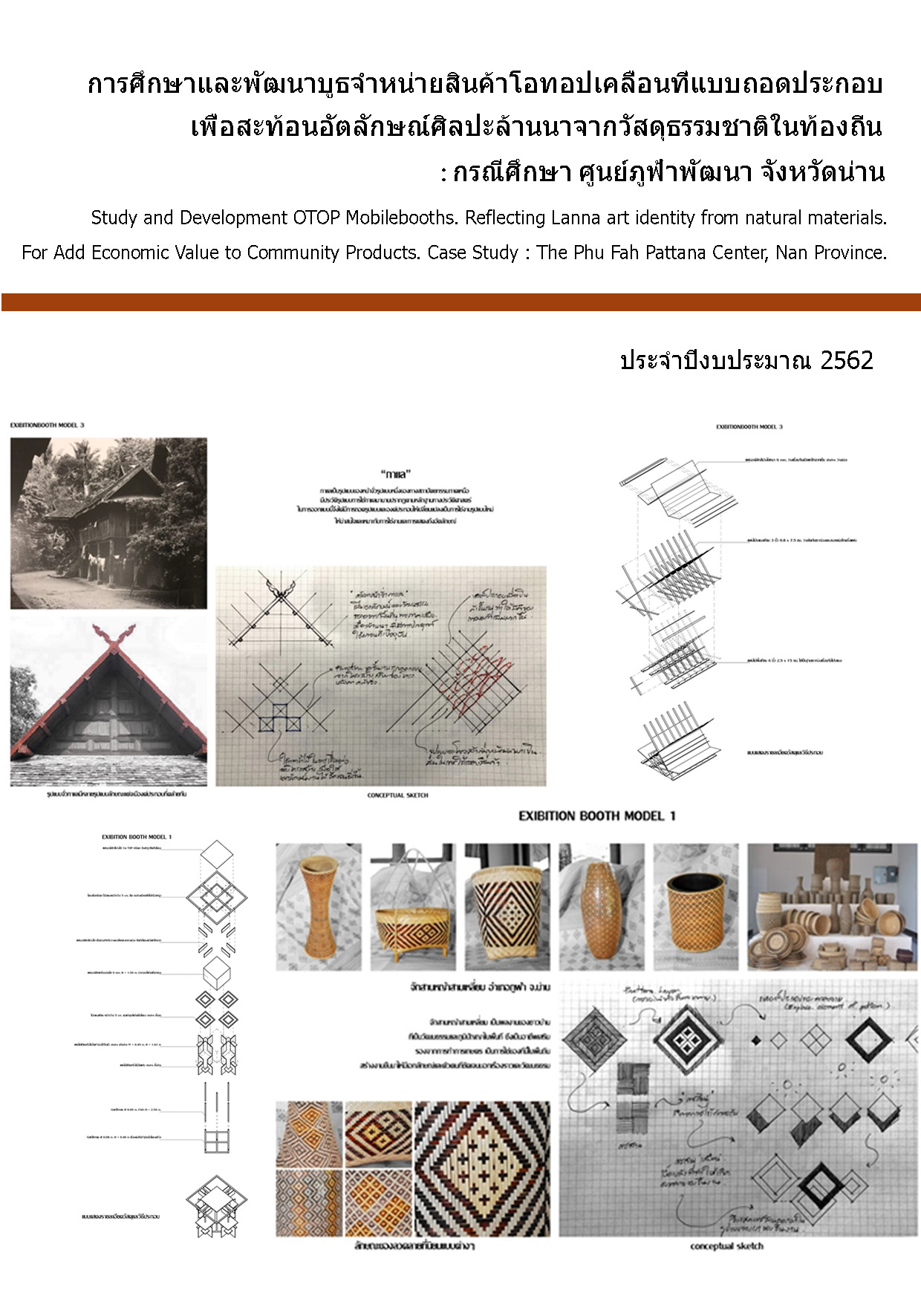
การศึกษาและพัฒนาบูธจำหน่ายสินค้าโอทอปเคลื่อนที่แบบถอดประกอบ สะท้อนอัตลักษณ์ศิลปะล้านนาจากวัสดุธรรมชาติในท้องถิ่นเพื่อเพิ่มมูลค่าทางเศรษฐกิจให้กับผลิตภัณฑ์ในชุมชน : กรณีศึกษา ศูนย์ภูฟ้าพัฒนา จังหวัดน่าน
This research aims to improve the booth model of OTOP products from Phu Fah Pattana Center Nan Province. To increase marketing channels by distributing products to various locations in order to increase sales to community products. The design must take into account the convenience of rapid assembly and dismantling for a limited time. The characteristics of the booth must be disassembled interesting in looks that reflect the identity of Lanna art. There is a beautiful strong structure to support the weight of the product. The size and proportion are suitable for the usage habits of consumers. Which will help promote products in the community that have higher sales stronger communities. Able to divide the product market in the country and can create marketing channels to other countries. It is a good result for the villagers in the community that will have the guarantee of self-sufficiency and sustainably sufficient lives. From the analysis of the Lanna Wisdom Identity Model there are 4 types of concepts which are The concept of the components of the house GalaeThe concept from the barn Concept of the components of the house Kwan Concept of triangular pattern woven grass. After that it was developed to the stage to interpret the meaning of space in form of booth. And then lead to the design of 4 booths. And conducted a questionnaire to find satisfaction with each type of booths that responded to various usability benefits including satisfaction with the appearance and usage characteristics that responded to the behavior of Most users. Conclusion Booths from the concept of Lanna house components called galae have the highest percentage of satisfaction in 3 aspects which are Percentage of satisfaction with the layout of the booth Percentage satisfaction with workpiece assembly and disassembling storage and transportation Percentage of satisfaction with the perception of Lanna identity. For the satisfaction with the size the proportion of use and the convenience of use the booth from the concept of the components of the house Kwan with the highest rate of percentage satisfaction.
การพัฒนาผลิตภัณฑ์สินค้าที่ระลึกจากผ้าทอพื้นเมืองสุโขทัยสำหรับกลุ่มวิสาหกิจ ชุมชนเย็บผ้าและศิลปะประดิษฐ์จากผ้าตำบลเขาแก้วศรีสมบูรณ์ อำเภอทุ่งเสลี่ยม จังหวัดสุโขทัย
This research was aimed to study 1) the needs on souvenir products from Sukhothai local fabrics 2) design and development of souvenir products from Sukhothai local fabrics 3) the satisfaction of the development of souvenir products from Sukhothai local fabrics having been developed and 4) publicize research work of sewing groups and fabric crafts of Khao Kaeo Srisomboon Community Enterprise in Thung Saliam Sukhothai Province. The results of the research were as follows. The survey of souvenir products from Sukhothai local woven fabrics sewing community enterprise and fabric crafts from Khao Kaew Srisomboon Thung Saliam District Sukhothai revealed that the respondents had needs to develop souvenir products from Sukhothai local fabrics namely rag dolls or toys pillows and office supplies respectively. The souvenir design and development of Sukhothai local fabrics were meant to be unique and had been proved by five experts and the results of the evaluation of the overall opinion on the satisfaction were at the highest level as follows. As for office supplies type 1 type 2 and type 3 possessed a mean of 3.79 3.80 and 3.83 respectively. In relation to the pillow products type 1 type 2 and type 3 had an average of 3.81 3.75 and 3.76 respectively. Finally the products of rag dolls in the shape of the elephant mother and baby turtles fish keychain had a mean of 3.81 3.80 and 3.82. Regarding the satisfaction on the development of souvenir products from Sukhothai local fabrics had been verified by five experts. The results of the overall opinion on the satisfaction were at the highest level as follows. The office products type 1 type 2 and type 3 had a mean of 3.77 3.78 and 3.78. 2. In relation to the pillow products type 1 type 2 and type 3 had an average of 3.75 3.71 and 3.73. Finally the products of rag dolls in the shape of the elephant mother and baby turtles fish keychain had a mean of 3.77 3.78 and 3.78. Concerning the dissemination of research work to the community enterprise of Khao Kaeo Srisomboon sewing groups and fabric crafts in Thung Saliam District Sukhothai Province to the target group of 30 people the satisfaction on the research project on the souvenir product development from Sukhothai local fabrics revealed the highest satisfaction score on the curriculum in terms of the designs materials equipment facilities value and utility.