จำนวน Repository ( 28 )

ต่อยอดการพัฒนาผลิตภัณฑ์อาหารแปรูปจากปลาน้ำจืดเพื่อการถ่ายทอดเทคโนโลยี หลักสูตร ผลิตภัณฑ์อาหารจากปลาน้ำจืด
Development of food products from fresh water fish aimed to conduct food recipes and food processing consisted of fish sausage with hrebs fermented fish sausage Pla jor crispy crackers with herbs Namprik-Pla yor and transfer this knowledge and technology to the target community in Supanburee area. it found that most accepted recipe for fish flake glake gave the highest scores for color flavor taste and overall acceptance. the highest-preferable level by consumers for color flavortaste texture and overall acceptance was obtained from crispy crackers with herbs.These products were kept in the packaging at the ambient for six months and then taking samples every two months to analyze the physiochemical properties It was found that colors of both samples changed. a little bit.
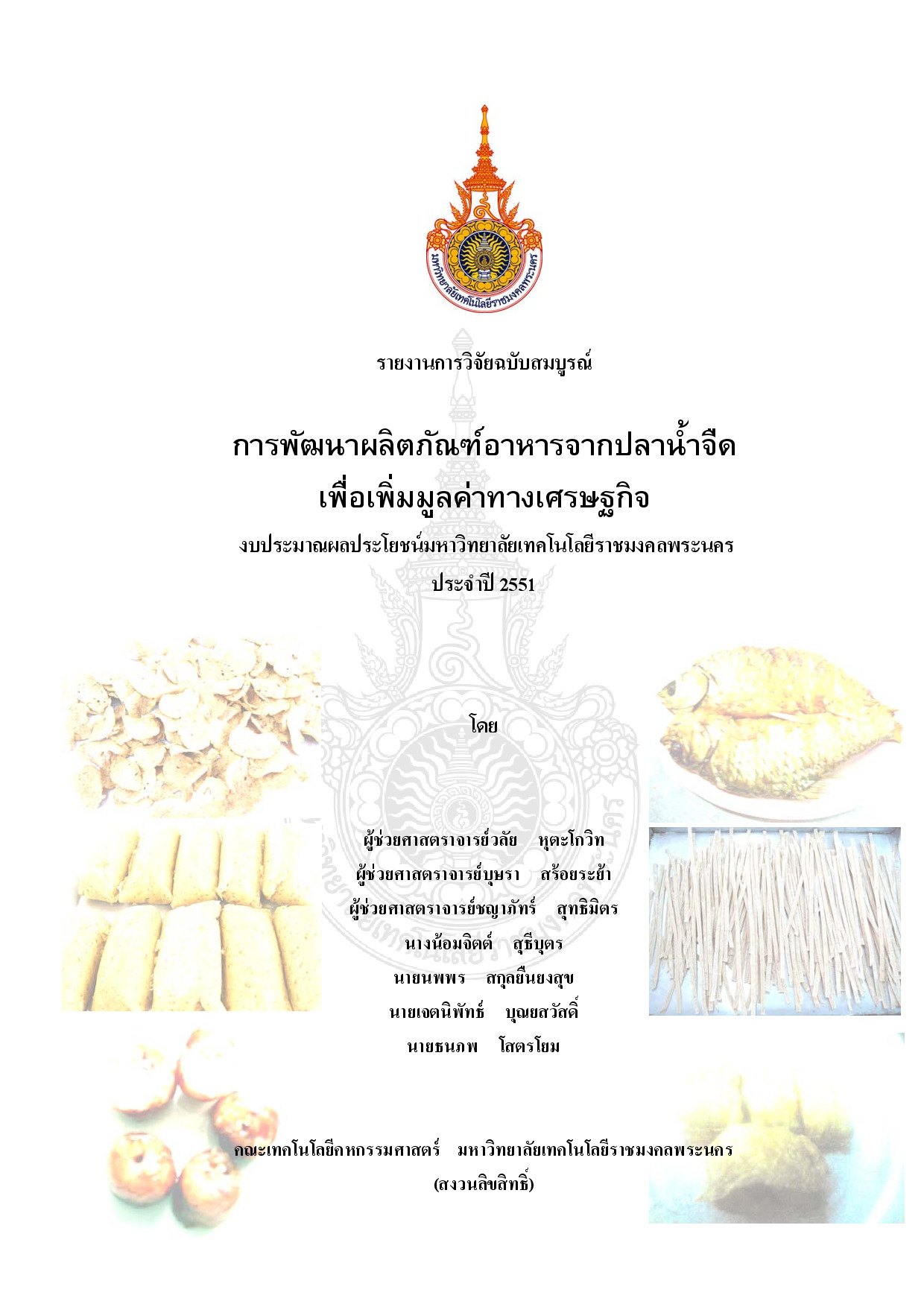
การพัฒนาผลิตภัณฑ์อาหารจากปลาน้ำจืดเพื่อเพิ่มมูลค่าทางเศรษฐกิจ
โครงการวิจัยเรื่อง การพัฒนาผลิตภัณฑ์อาหารจากปลาน้ำจืดเพื่อเพิ่มมูลค่าทางเศรษฐกิจ ได้ดำเนินการสำรวจและคัดเลือกแหล่งจัดซื้อวัตถุดิบที่เหมาะสม ความต้องการของตลาดผลิตภัณฑ์ปลาแปรรูป ผลิตภัณฑ์ที่เหมาะสมกับปลาแต่ละชนิดและน่าสนใจเพื่อนำมาพัฒนาเป็นผลิตภัณฑ์อาหารแปรรูปจากปลาน้ำจืด พบว่าการพัฒนาสูตรและกรรมวิธีการแปรรูปปลาน้ำจืด 6 ผลิตภัณฑ์ ได้แก่ ไส้กรอกปลารสต้มยำ ไส้กรอกอีสานปลานิล ปลายอสมุนไพร ปลาจ๊อ ปลาตะเพียนแผ่นปรุงรสสำเร็จ และน้ำพริกปลาตะเพียน ผลการพัฒนาผลิตภัณฑ์ พบว่า ไส้กรอกปลารสต้มยำ สูตรที่ยอมรับมากที่สุดเป็นสูตรที่ใช้ปลายี่สกทดแทนปลากราย 50 % และ เครื่องต้มยำกึ่งสำเร็จรูป (ชนิด C) 75 กรัม ไส้กรอกอีสานปลานิล ใช้สูตรพื้นฐานที่ได้จากกรมปศุสัตว์ ฝ่ายถ่ายทอดเทคโนโลยีผลิตภัณฑ์เนื้อสัตว์ และใช้ข้าวจ้าวหุงสุก ผลิตภัณฑ์ปลายอสมุนไพร ใช้เนื้อปลานิล แป้งมัน เกลือป่น พริกไทย ไข่ไก่ มันหมู ปริมาณน้ำพริกแกงเผ็ดสมุนไพรที่เหมาะสมในสูตรร้อยละ 3.5 การพัฒนาผลิตภัณฑ์ปลาจ๊อ สูตรที่ใช้เนื้อปลานิลบด มันหมู รากผักชี กระเทียม พริกไทย เกลือ แป้งสาลี น้ำตาลทราย ซีอิ้วขาว ไข่เป็ด ต้นหอม และผักชี ได้รับการยอมรับมากที่สุด การปรับปรุงลักษณะเนื้อสัมผัสโดยใช้ผสมมันหมูที่ใช้วิธีการบดผสม มีคะแนนความชอบมากกว่าการสับละเอียดและหั่นเป็นชิ้นเล็กๆ การศึกษาระยะเวลาการละลายน้ำแข็งจากการเก็บปลาจ๊อเข้าตู้แช่แข็งเป็นเวลา 2 สัปดาห์ เมื่อนำไปละลายน้ำแข็งที่กำลังความร้อน 70% เป็นเวลา1 นาที ผู้ทดสอบชิมให้การยอมรับมากที่สุด ผลิตภัณฑ์ปลาตะเพียนแผ่นปรุงรสสำเร็จรูป โดยการนำปลาตะเพียนขาวมาพัฒนาเป็นปลาแผ่นปรุงรสสำเร็จรูป พบว่าสูตรที่ให้การยอมรับมากที่สุด ประกอบด้วยเนื้อปลาบด ซีอิ๊วขาว น้ำตาลทราย เกลือไนไตรท์ ยี่หร่า พริกไทย ลูกผักชี และน้ำแข็ง กรรมวิธีการขึ้นรูปให้เป็นแผ่นโดยการอัดเป็นแท่งแล้วใช้เครื่องสไลด์ตัดมีคะแนนความชอบจากการทดสอบทางประสาทสัมผัสมากกว่าการคลึง การอัดเป็นแท่งแล้วใช้มีดตัด ผลิตภัณฑ์น้ำพริกปลาตะเพียนสูตรน้ำพริกปลาย่าง ใช้ปริมาณเนื้อปลาตะเพียน 70% วิธีการทำแห้งที่เหมาะสม คือ อบที่อุณหภูมิ 73 องศาเซลเซียส เป็นเวลา 1 ชั่วโมง This research aimed to survey and screen the appropriate resource study the need of fish processed product and investigate the suitable product that fit for each freshwater fish. The findings of this study demonstrated that the most suitable products were 6 ones such as Fish sausage with Tom Yam flavour added Fermented Thai Fish Sausage from Nile Tilapia fish Pla – Yor with Herbs Pla – Jor Fish Flake from Silver Barb Fish and Sauce of grilled silver barb fish paste and chili . The results of product development were : Fish Sausage with Tom Yam Flavour Added was developed by using Seven-Stripped Carp fish partial substituted with Spotted Featherback fish at level 50 % and 75 grams instant Tom Yum flavour (type C). Fermented Thai Fish Sausage from Nile Tilapia fish was developed by using dry-cooked rice. Pla – Yor with Herbs was developed by using Nile Tilapia and 3.5 % curry paste. Pla – Jor was developed by using minced lard and thawing 2-week frozen Pla – Jor by microwave at heat level 70 % for 1 minute. Fish Flake from Silver Barb Fish was developed by crushing to roll and sliding to sheet. Sauce of grilled Silver Barb fish paste and chili was developed by using Silver Barb fish partial substituted with shrimp at level 70 % and the appropriate drying method was using tray dryer at 73OC for 1 hour.
Nutritional Quality of Fish Mixed with Algae Tofu
Fish mixed with algae tofu (FAT) was developed to increase the nutrition and to valuate the tufu. FAT was an alternative for healthy consumers. It was prepared from soybean (500 g) mackerel (75 g) algae (25 g) egg albumin powder (7.5g) potato starch ( 5 g) MgSO4 (25 g) salt (7.5 g) pepper (2.5 g) sugar (5 g) and water (2500 g). Then they were fried at 150 oC for 1 min. The chemical quality of FAT had moisture carbohydrate protein fat ash fiber and calcium were 75.37% 6.06% 15.46% 1.42% 1.61% 1.99% and 1.56 mg/100 g. respectively. The microbial counts were less than 10 CFU/g.
Development of Value Added Food Product from Freshwater Fish
Development of value added food product from freshwater fish aimed to develop processed food product from 5 types of freshwater fish. Because freshwater fish is found locally and cheap processed and value-added product from freshwater fish would enable a producer to have a wide range of market distribution. The findings of this study demonstrated that the most suitable products were fish sausage with Tom Yam flavour added developed by using seven-stripped carp fish partially substituted with spotted featherback fish at level 50% and 7.5% instant Tom Yum flavour. Pla-Yar produt with herbs product was developed by using Nile tilapia and 3.5% curry paste. Pla-Jor product was developed by using minced lard and thawing 2-week frozen Pla-Jor by microwave at heat level 70% for 1 minute. Fish flake from silver barb fish was developed by crushing to roll and sliding to sheet. Sauce of grilled silver barb fish paste and chill was developed by using silver barb fish partially substituted with shrimp at level 70% and the appropriate drying method was using tray dryer at 73 ◦C for 1 hour.
การศึกษาและพัฒนาบรรจุภัณฑ์ของฝากสำหรับผลิตภัณฑ์ปลาสลิดแปรรูป จังหวัดสมุทรปราการ
การวิจัยนี้มีวัตถุประสงค์เพื่อศึกษาแนวทางการออกแบบบรรจุภัณฑ์ของฝาก การพัฒนาปรับปรุงบรรจุภัณฑ์ของฝาก และประเมินประสิทธิภาพผลงานออกแบบบรรจุภัณฑ์ของฝากสำหรับผลิตภัณฑ์ปลาสลิดแปรรูป จังหวัดสมุทรปราการ ทั้งในด้านการใช้งานและด้านการตลาด กลุ่มตัวอย่างในการวิจัย คือ นักท่องเที่ยวต่างถิ่นจำนวน 50 คน และคนในท้องถิ่นจำนวน 50 คน ที่ต้องการซื้อสินค้าปลาช่อนแปรรูปจากร้านในจังหวัดสมุทรปราการ เครื่องมือที่ใช้ในการวิจัยเป็นแบบสอบถามความต้องการด้านต่าง ๆ ของกลุ่มเป้าหมาย มีค่าความเชื่อมั่น เท่ากับ .854 วิเคราะห์ค่าสถิติด้วยค่าร้อยละ ค่าเฉลี่ย ค่าฐานนิยม และแบบสอบถามเพื่อประเมินความพึงพอใจในด้านการใช้งานและในด้านการตลาดของบรรจุภัณฑ์ของฝาก ทั้งในขั้นตอนการประเมินทางเลือกและในขั้นตอนการประเมินเปรียบเทียบกับบรรจุภัณฑ์รูปแบบเดิม โดยแบบสอบภามทั้ง 2 ฉบับ มีค่าความเชื่อมัน เท่ากับ .839และ .844 ตามลำดับ วิเคราะห์ค่าสถิติด้วยค่าร้อยละ ค่าเฉลี่ย และทดสอบ สมมติฐานด้วยสถิติ t-test ชนิดDependent Sample ผลการวิจัยสรุปว่า 1. ผลงานออกแบบบรรจุภัณฑ์แนวทางที่ 1 เหมาะสำหรับฝากเจ้ายาย แนวทางที่ 2 เหมาะสำหรับฝากญาติ และแนวทางที่ 3 เหมาะสำหรับฝากคนในครอบครัว 2. กลุ่มเป้าหมายเลือกผลงานออกแบบบรรจุภัณฑ์ในแนวทางที่ 3 3. กลุ่มเป้าหมายมีความพึงพอใจในบรรจุภัณฑ์รูปแบบใหม่มากกว่ารูปแบบเดิมในทุก้านอย่างมีนัยสำคัญทางสถิติที่ระดับ .05 ผู้จำหน่ายมีความพึงพอใจมากกว่ารูปแบบเดิมในเกือบทุกด้านยกเว้นด้านภาพลักษฑ์ที่เป็นมิตรกับสิ่งแวดล้อมและบรรจุภัณฑ์ใหม่มีประสิทธิภาพการใช้งานได้มากว่าบรรจุภัณฑ์รูปแบบเดิม