จำนวน Repository ( 30 )
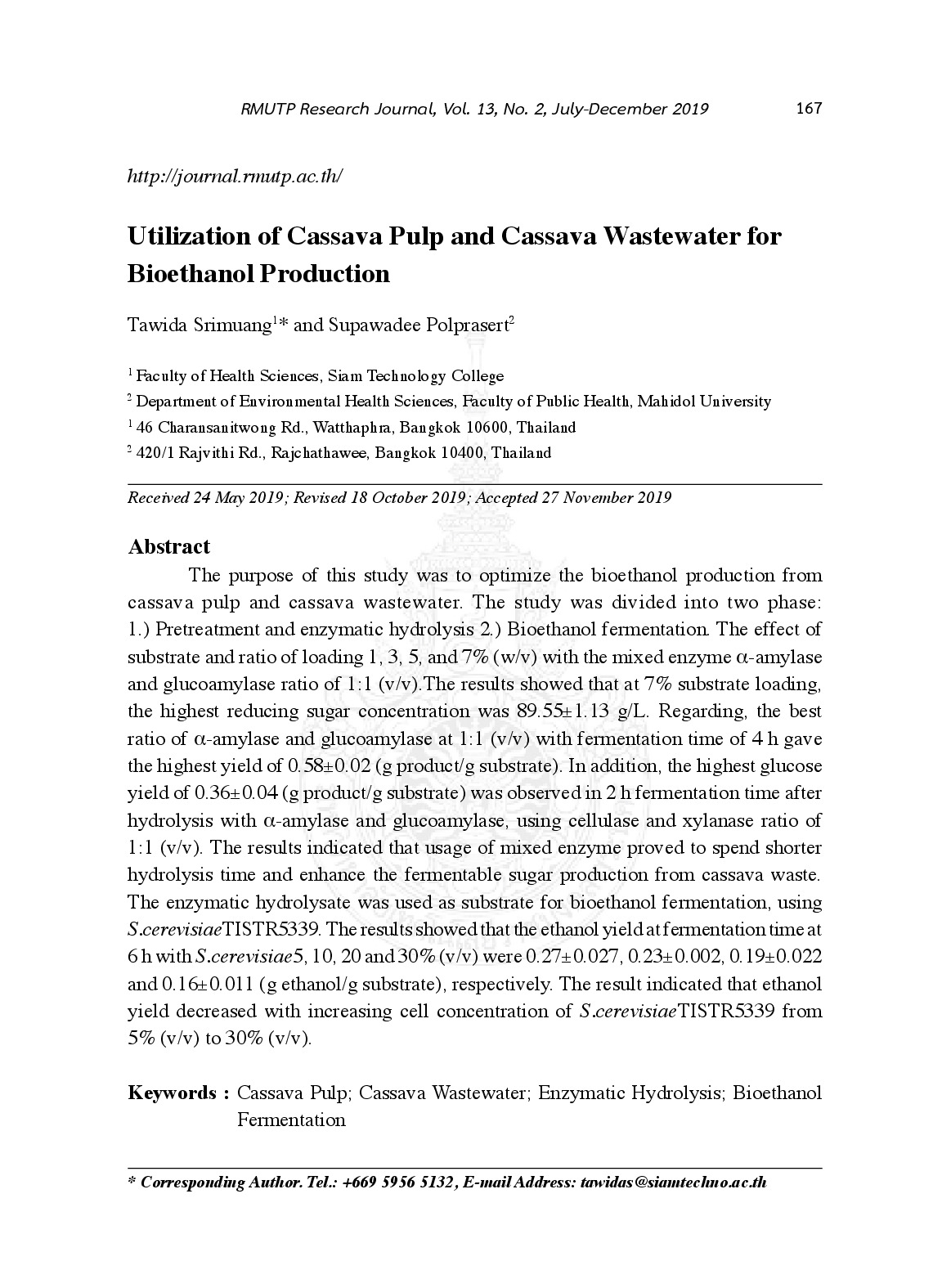
Utilization of cassava pulp and cassava wastewater for bioethanol production
The purpose of this study was to optimize the bioethanol production from cassava pulp and cassava wastewater. The study was divided into two phase: 1.) Pretreatment and enzymatic hydrolysis 2.) Bioethanol fermentation. The effect of substrate and ratio of loading 1 3 5 and 7% (w/v) with the mixed enzyme α-amylase and glucoamylase ratio of 1:1 (v/v).The results showed that at 7% substrate loading the highest reducing sugar concentration was 89.55±1.13 g/L. Regarding the best ratio of α-amylase and glucoamylase at 1:1 (v/v) with fermentation time of 4 h gave the highest yield of 0.58±0.02 (g product/g substrate). In addition the highest glucose yield of 0.36±0.04 (g product/g substrate) was observed in 2 h fermentation time after hydrolysis with α-amylase and glucoamylase using cellulase and xylanase ratio of 1:1 (v/v). The results indicated that usage of mixed enzyme proved to spend shorter hydrolysis time and enhance the fermentable sugar production from cassava waste. The enzymatic hydrolysate was used as substrate for bioethanol fermentation using S.cerevisiaeTISTR5339. The results showed that the ethanol yield at fermentation time at 6 h with S.cerevisiae5 10 20 and 30% (v/v) were 0.27±0.027 0.23±0.002 0.19±0.022 and 0.16±0.011 (g ethanol/g substrate) respectively. The result indicated that ethanol yield decreased with increasing cell concentration of S.cerevisiaeTISTR5339 from 5% (v/v) to 30% (v/v).
ขนมกลีบลำดวนปราศจากกลูเตนเสริมงาดำ
This investigation aims to developing a recipe for making Gleb-Lum-Duan (Thai shortbread cookies) with black sesame from gluten-free flour by determining the appropriate ratio of glutinous flour to rice flour. According to the results from sensory quality evaluation of 50 panelist who were ordinary people using the nine-point hedonic scale it was found that Gleb-Lum-Duan having the ratio of glutinous flour to rice flour as 40:60 had the highest acceptance rating among the tasters. The results from adding texturizing additives in the gluten-free Gleb-Lum-Duan showed that the tasters panelists gave the highest acceptance rating for Gleb-Lum-Duan which xanthan gum on flavor smell texture (fracturability) and overall preference. For the amount of black sesame added in gluten-free Gleb-Lum-Duan the panelist gave the highest acceptance rating for Gleb-Lum-Duan which included 20% black sesame based on color smell taste texture (fracturability) and overall preference. For color of product the L* a* and b* values were 68.83 0.09 and 6.97 respectively. Increasing the amount of black sesame resulted in increasing a* value and decreasing b* value. The amount of free water differed significantly (p≤0.05). Increasing the amount of black sesame was found to decrease hardness (p≤0.05). Gleb-Lum-Duan with black sesame from gluten-free flour included carbohydrates protein ash fat and moisture of 63.69% 3.01% 0.95% 31.19% and 1.16% respectively. A group of 100 ordinary consumers identified taste and nutritional value of gluten-free Gleb-Lum-Duan mixed black sesame as the most important factors
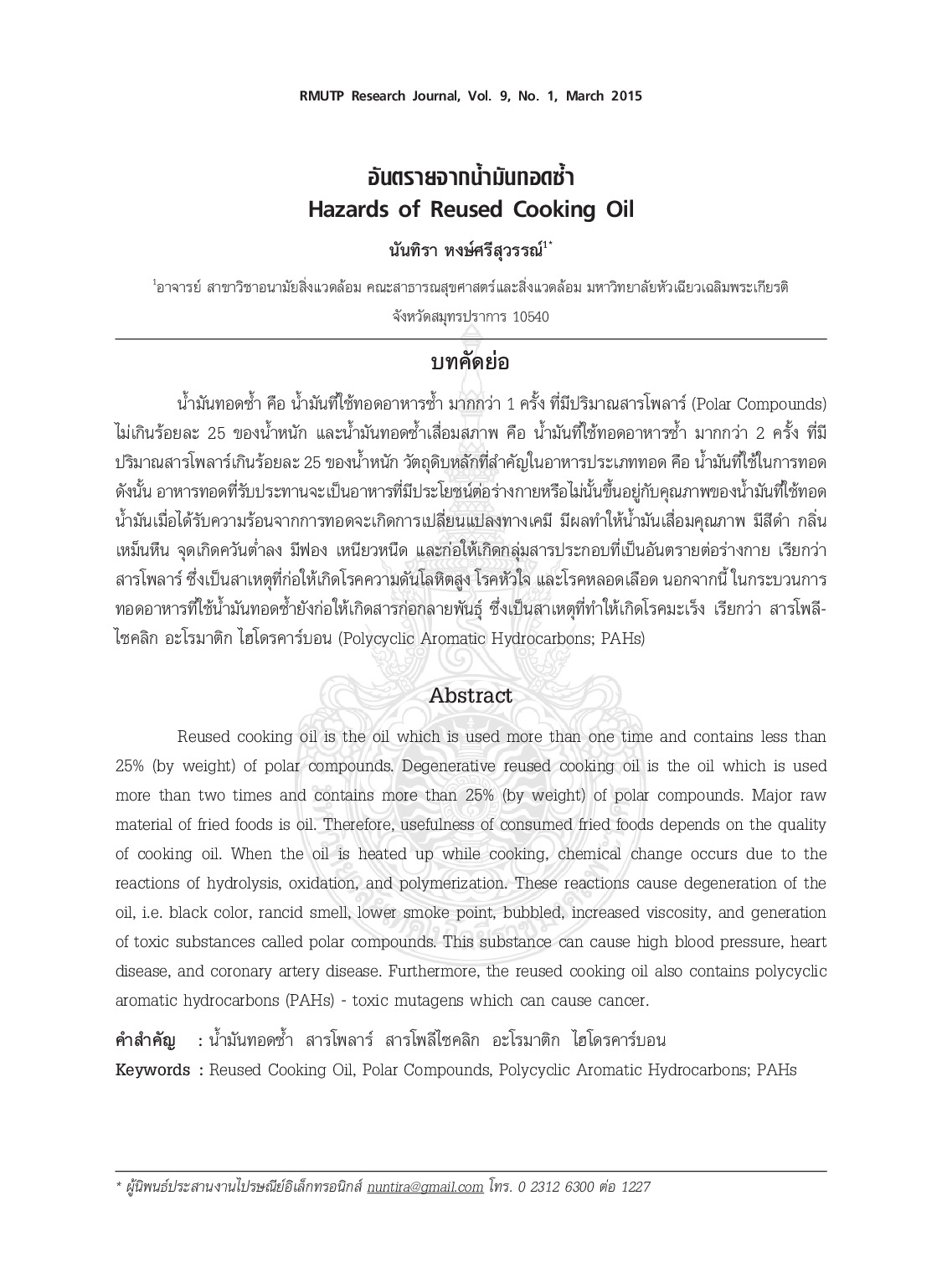
Hazards of reused cooking oil
Reused cooking oil is the oil which is used more than one time and contains less than 25% (by weight) of polar compounds. Degenerative reused cooking oil is the oil which is used more than two times and contains more than 25% (by weight) of polar compounds. Major raw material of fried foods is oil. Therefore usefulness of consumed fried foods depends on the quality of cooking oil. When the oil is heated up while cooking chemical change occurs due to the reactions of hydrolysis oxidation and polymerization. These reactions cause degeneration of the oil i.e. black color rancid smell lower smoke point bubbled increased viscosity and generation of toxic substances called polar compounds. This substance can cause high blood pressure heart disease and coronary artery disease. Furthermore the reused cooking oil also contains polycyclic aromatic hydrocarbons (PAHs) - toxic mutagens which can cause cancer.

Species diversity and reproductive phenology of Podostemaceae in Na Hahaeo District, Loei Province, Northeastern Thailand.
The species composition of Podostemaceae was studied in Loei northeastern Thailand from November 2009 to July 2010 by extensive surveying in the rapids and waterfalls inside and outside of national parks wildlife sanctuaries and protected areas. The samples collected are classified into 2 subfamilies which are Tristichoideae and Podostemoideae. The former contains 2 genera and 3 species Dalzellia kailarsenii Terniopsis sp. 1 Terniopsis sp. 2. The latter has 4 genera and 9 species Hanseniella heterophylla Hydrobryum japonicum Hydrobryum loeicum Hydrobryum tardhuangense Hydrobryum vientianense Hydrobryum sp. 1 Hydrobryum sp. 2 Polypleurum sessile Thawatchaia trilobata. The highest number of species occurs in Hydrobryum with 6 species following by Terniopsis with 2 species. The other four genera have one species each. Based on morphological and molecular analyses revealed that 2 species of the genus Hydrobryum are new and 2 taxa of Terniopsis are also new species. Polypleurum sessile and Thawatchaia trilobata are new recorded in Loei province. The result from this study indicates that the genus richness is relatively high in Loei province which encompasses 60% of the total number of genera (10) in Thailand. The plants in vegetative phase are completely submersed in swiftly running water during a warm wet season (May-October). The plants flower and set fruits and seeds when exposing to air during water level drop in a cool dry season (November- February).
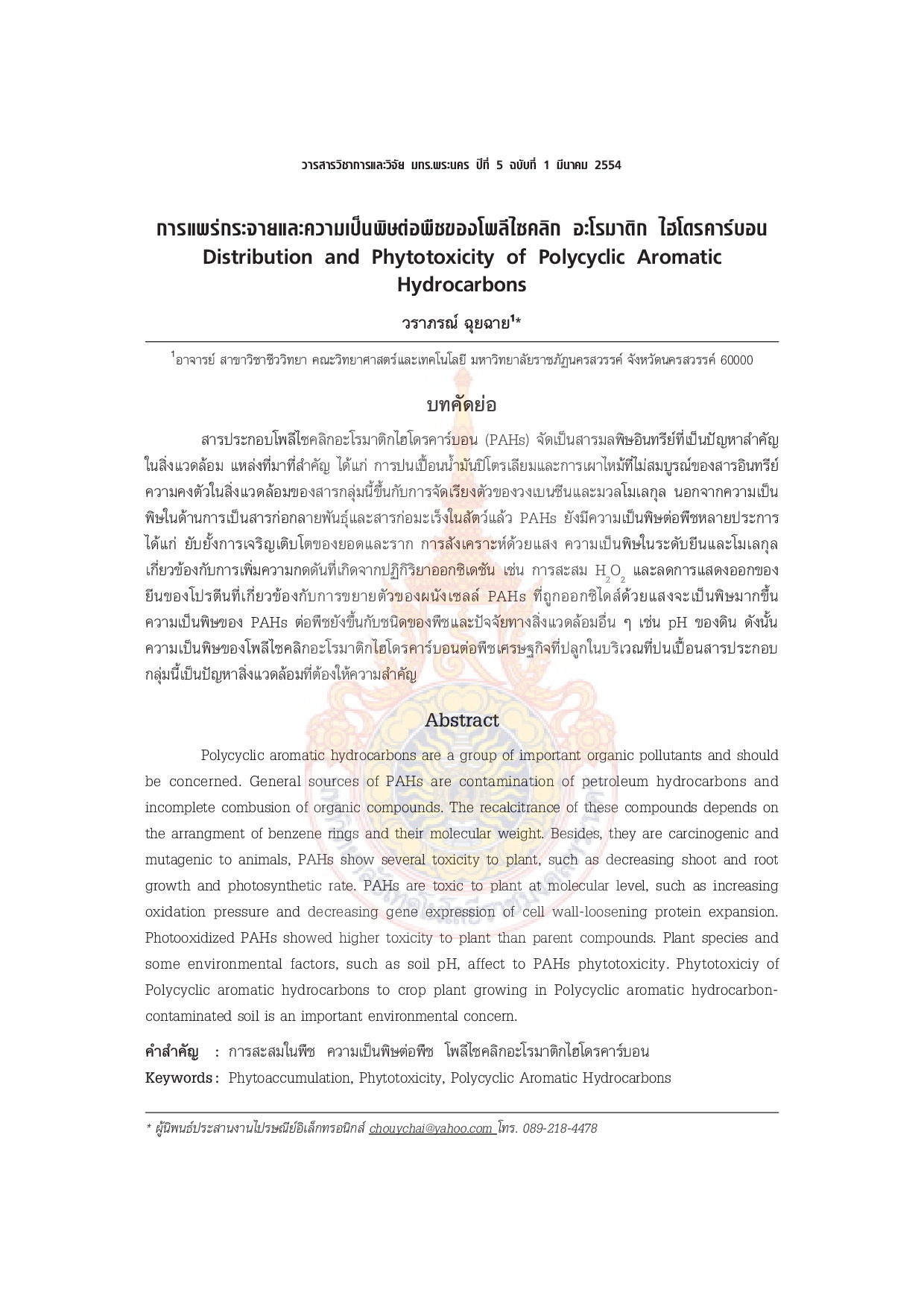
Distribution and Phytotoxicity of Polycyclic Aromatic
Polycyclic aromatic hydrocarbons are a group of important organic pollutants and should be concerned. General sources of PAHs are contamination of petroleum hydrocarbons and incomplete combusion of organic compounds. The recalcitrance of these compounds depends on the arrangment of benzene rings and their molecular weight. Besides they are carcinogenic and mutagenic to animals PAHs show several toxicity to plant such as decreasing shoot and root growth and photosynthetic rate. PAHs are toxic to plant at molecular level such as increasing oxidation pressure and decreasing gene expression of cell wall-loosening protein expansion. Photooxidized PAHs showed higher toxicity to plant than parent compounds. Plant species and some environmental factors such as soil pH affect to PAHs phytotoxicity. Phytotoxiciy of Polycyclic aromatic hydrocarbons to crop plant growing in Polycyclic aromatic hydrocarboncontaminated soil is an important environmental concern