จำนวน Repository ( 484 )
การประยุกต์ใช้เปลือกแตงโมในผลิตภัณฑ์ไอศกรีมและขนมหวาน
การประยุกต์ใช้เปลือกแตงโมในผลิตภัณฑ์ไอศครีมและขนมหวาน มีวัตถุประสงค์เพื่อพัฒนาผลิตภัณฑ์ ไอศครีม เยลลี่ และแยมจากเปลือกแตงโมที่เหลือทิ้งมา ศึกษาคุณสมบัติทางกายภาพ ทางเคมี ทางด้านประสาท สัมผัส และศึกษาการยอมรับของผลิตภัณฑ์ โดยเริ่มจากไอศครีมแยมเปลือกแตงโม ทาการศึกษาสูตรพื้นฐาน พบว่า สูตรที่ 1 ผู้ทดสอบชิมชอบมาก และมีคุณสมบัติทางกายภาพใกล้เคียงสูตรควบคุมมากที่สุด จากนั้นนาสูตรที่ 1 ไปศึกษาปริมาณแยมเปลือกแตงโมที่เหมาะสมในผลิตภัณฑ์ไอศครีมที่ปริมาณ 3 ระดับ คือ 20 30 และ 40 กรัม จากการศึกษาระดับที่ 20 กรัม คุณสมบัติทางกายภาพใกล้เคียงสูตรควบคุมมากที่สุด ค่าความหนืดของไอศครีม มิกซ์ร้อยละ 28.30 อัตราการขึ้นฟูหลังการปั่นแข็งร้อยละ 16.12 มีไขมันร้อยละ 15.11 โปรตีนร้อยละ 3.17 เส้นใย ร้อยละ 2.23 คาร์โบไฮเดรตร้อยละ 16.52 ความชื้นร้อยละ 62.45 และเถ้าร้อยละ 0.52 การศึกษาการยอมรับของ ผู้บริโภคที่มีต่อผลิตภัณฑ์ไอศครีมแยมเปลือกแตงโม ผู้บริโภคมีความพึงพอใจที่คะแนนความชอบมากร้อยละ 41 เยลลี่เปลือกแตงโม ทาการศึกษาสูตรพื้นฐาน พบว่า สูตรที่ 1 ผู้ทดสอบชิมชอบมากที่สุด ศึกษาปริมาณ น้าเปลือกแตงโมทดแทนส่วนผสมของของเหลวทั้งหมดในส่วนผสมของเยลลี่ ซึ่งผู้ทดสอบชิมชอบน้าเปลือกแตงโม ในระดับร้อยละ 100 จากนั้นศึกษาการปรับปรุงคุณภาพทางประสาทสัมผัส พบว่า สูตรที่ 2 ใช้น้าเข้มข้นร้อยละ 7 ช่วยในการปรับปรุงคุณภาพทางประสาทสัมผัสในทุกๆด้าน ศึกษาระดับความหวานที่เหมาะสม ซึ่งผู้ทดสอบชิมชอบ ปริมาณน้าตาลทราย 7 กรัมของสูตรที่ 1 มากที่สุด ศึกษาการยอมรับของผู้บริโภคที่มีต่อผลิตภัณฑ์ ได้ความพึง พอใจชอบปานกลางร้อยละ 49 การศึกษาเปรียบเทียบเยลลี่จากท้องตลาดกับเยลลี่จากเปลือกแตงโม พบว่า ค่าสี ของผลิตภัณฑ์เยลลี่เปลือกแตงโมมีสีแดงอ่อนกว่า ค่าปริมาณน้าอิสระ(Aw)ทีค่ามากกว่า ค่าปริมาณความชื้นมีค่าไม่ แตกต่างกัน ค่าความเป็นกรดด่าง มีความเป็นกรดสูงมากกว่าผลิตภัณฑ์เยลลี่จากท้องตลาด และการศึกษาอายุการ เก็บรักษา พบว่า เยลลี่เปลือกแตงโมเก็บรักษาที่อุณหภูมิ 4 องศาเซลเซียส มีอายุการเก็บรักษาอยู่ที่ 4 สัปดาห์ แยมเปลือกแตงโม จากการศึกษาสูตรพื้นฐาน พบว่า สูตรที่ 1 ผู้ทดสอบชิมชอบมากที่สุด นามาศึกษา อัตราส่วนเปลือกแตงโม(ปั่น)และเปลือกแตงโม(สับ)ที่เหมาะสม คือ ที่ 3:2 ส่วน เนื่องจากมีการกระจายตัวกันของ แยมกาลังดีในการแผ่บนแผ่นขนมปัง ศึกษาการเปลี่ยนแปลงคุณลักษณะคุณภาพของแยมเปลือกแตงโมที่ทาการ เพิ่มปริมาณของแข็งที่ละลายในน้าที่ 68 องศาบริกซ์ จากเดิม 65 องศาบริกซ์ พบว่า ค่าสี มีสีเขียวอมเหลืองเข้มขึ้น เล็กน้อย ค่าความเป็นกรดด่าง มีความเป็นกรดสูงขึ้นเล็กน้อย การศึกษาการยอมรับของผู้บริโภคที่มีต่อผลิตภัณฑ์ ได้ความพึงพอใจชอบปานกลางร้อยละ 41 จากนั้นศึกษาเปรียบเทียบคุณลักษณะทางกายภาพและเคมีของแยม ท้องตลาด 2 ชนิด กับแยมเปลือกแตงโม พบว่า ค่าปริมาณน้าอิสระ(Aw) ของแยมเปลือกแตงโมสูงกว่า ค่าปริมาณ ความชื้นมีค่ามากกว่า ค่าความเป็นกรด-ด่าง(pH) มีค่าอยู่ที่ 3.33 ปริมาณเส้นใยหยาบมีปริมาณอยู่ร้อยละ 1.58 ซึ่ง มากกว่าแยมท้องตลาด และศึกษาบรรจุภัณฑ์ที่เหมาะสมของผลิตภัณฑ์แยมเปลือกแตงโม คือ ขวดแก้ว แบบมีฝา ปิดสนิท น้าหนักสุทธิ 220 กรัม
การพัฒนาผลิตภัณฑ์ซอสสำเร็จรูปจากเปลือกแตงโมที่เหลือใช้
This research had objectives to study the proper amount of adding of unused water melon peel in products of tomato sauce chili sauce pizza sauce and seafood sauce. This research studied the nutritional value of sauce products and studied the acceptance of consumers towards sauce products. The test found about the study about proper amount of unused water melon peel in four kinds of sauce products. The researcher tested about acceptance of forty examinees who are instructors in field of Food and Nutrition majoring Food and Nutritional science and majoring Food Service Industry by using 9-point hedonic scale by adding water melon peel into tomato sauce at levels of 5 10 and 15 per cent of all ingredients It is found that the examinees accepted chili sauce at level of 15 per cent that is in the much favor level (8). The chili sauce has been added with water melon peel at levels of 3 6 and 9 per cent of total ingredients. It was found that the examinees accepted it at level of 9 per cent that was from the level of moderate favor to much favor (7-8). The examinees accepted pizza sauce which has been added with water melon peel at level of 10 20 and 30 per cent of all ingredients. It was found that examinees accepted at level of 30 per cent which was in the level of much favor (8). The examinees accepted seafood sauce which has been added with water melon peel at level of 10 20 and 30 per cent of all ingredients. It was found that examinees accepted at level of 20 per cent which was in the level from moderate to very much favor (7-8). When the researcher studied the physical features of sauce product it was found that pH value at which was 25 degrees Celsius was in range of 3.90 3.49 3.83 and 2.73. The viscosity value was 4650cp 32639cp 37760cp and 612cp or centipoints respectively. Nutritional value of sauce product it was found that tomato sauce which has been added with water melon peel for 15 per cent has total calory for 70 per cent protein for less than 1.25 per cent fat for 0 per cent ash for 1.43 per cent carbohydrate for 17.5 per cent and moisture amount of 81.1 per cent. Chili sauce which is added with water melon peel for 9 per cent has total energy for 71.2 per cent; protein is less than 1.25 per cent fat is 0 per cent ash is 3.85 per cent; carbohydrate is 17.8 per cent and it has moisture amount of 78.4 per cent. Pizza sauce which is addedwith water melon peel for 30 per cent has total energy for 145 per cent; protein is less than 1.25 per cent fat is 3.49 per cent ash is 3.18 per cent; carbohydrate is 28.5 per cent and it has moisture amount of 64.8 per cent. Seafood sauce which is added with water melon peel for 20 per cent hashas total energy for 91.8 per cent; protein is 1.59 per cent fat is 0.20 per cent ash is 4.19 per cent; carbohydrate is 20.9 per cent and it has moisture amount of 73.1 per cent. However adding of water melon peel into four kinds of sauce products can be done but it should be realized about chemical components of starting components for example moisture amount and carbohydrate. These components may affect physical features for example smell flavor and texture. These features affect acceptance of products. From technology transfer of sauce products from water melon rind at 157/16 moo 9 Kao San housewife Group agricultural enterprise Bang Plee Bang Pla Samut Prakarn. 50 housewife Group agricultural there the level of satisfaction in every aspect.
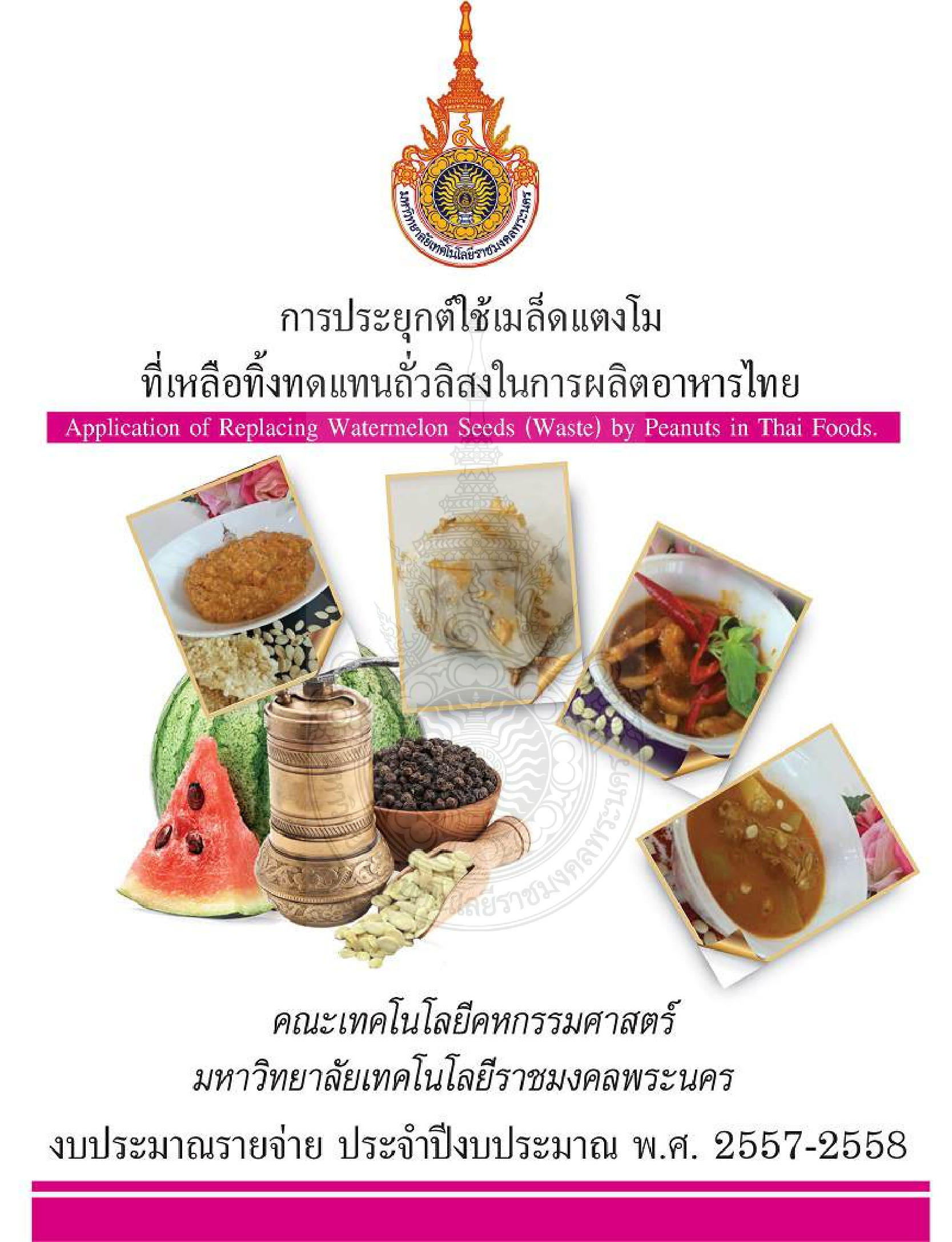
การประยุกต์ใช้เปลือกแตงโมในการผลิตผลิตภัณฑ์อาหารกึ่งสำเร็จรูป
A study of the watermelon rind the right to produce the best recipe Watermelon Cake. The ratio of the total amount of chicken. The third level is 28:17 watermelon rind that has an average overall score 7.03 7.00 7.00 6.73 6.70 and 7.13 respectively which are significantly different statistically (P ≤ 0.05) and bring. Education shelf life of the product mix cakes frozen watermelon rind. Physical chemical and microbiological By the cake mix frozen watermelon rind packed into plastic boxes sealed and stored at -21 ° C for 4 months the product remains safe for consumers since total microorganisms. Tub Tim Krob with watermelon rind The best include Ruby dissolves the calcium chloride 0.5 percent in the conditions of frozen watermelon rind. Because of its hardness and adhesion of the powder of ruby. Ratio of water to sugar syrup soaked watermelon pomegranate peel 3 46:11 there was swelling of ruby little different to that ratio. Water and sugar at 44:13 to the physical quality. By measuring the diameter of the shade water activity (aw) chemical properties of soluble solids content of 24.5 oBrix Then Tub Tim Krob. The color is a reddish color sai l * 22.27 26.46 and b * 3.06. Watermelon rind Loy Kaewlittle panelists found that the scores of recipes that use fresh pandan leaves into the water. The total soluble solids (% TSS) 19 0Brix because when it is refrigerated and eaten immediately do not add ice. Then compare the products on the market float. The watermelon rind is colored green and red titratable acidity - alkalinity (pH) were similar in the range of 4.00 to 5.00 due to the taste by crystallized. Add sour citric acid is used. Keep up the cause of the damage is difficult. Could be stored for at least 2 weeks product is safe for consumption. Consumer satisfaction with the products have moderate inclination. Dehydrated Watermelom Rind Reasonable temperature and drying time is 55:17 hrs. Most dried watermelon rind preserves the color brightness (L *) 25.22 the redness (a *) 5.64 and yellowness (b *) 10.45. and water activity 0.53 which is the standard set. Moisture 13:17 shelf dehydrated watermelon rind. Stored in plastic bags Sealed with a separate piece of heat stored at room temperature for 2 weeks it is safe to consume. The Resort complying and a community standard dry fruits study found that consumer acceptance. Consumers who have found a dehydrated watermelon rind like moderately satisfied.
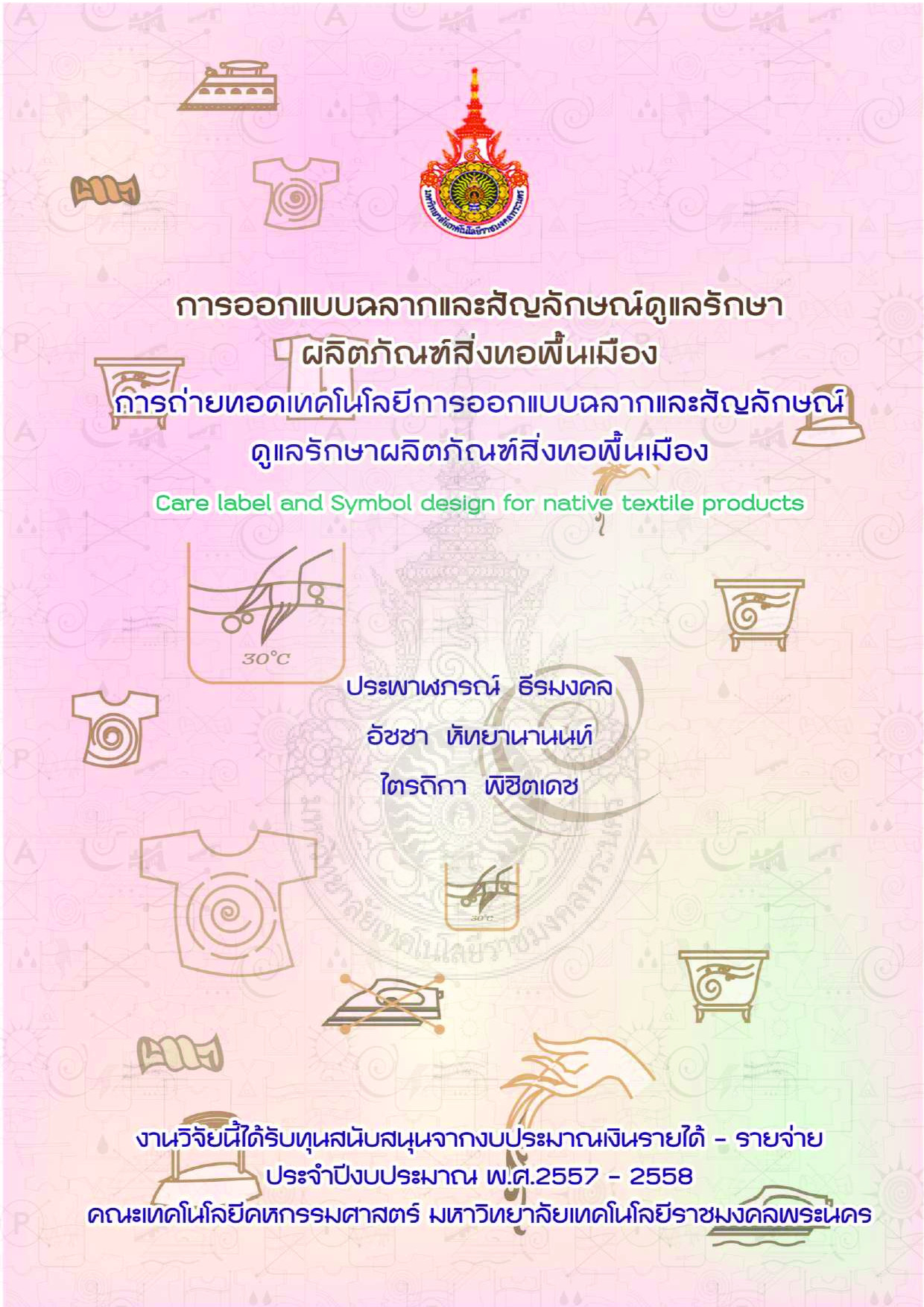
การออกแบบฉลากและสัญลักษณ์ดูแลรักษาผลิตภัณฑ์สิ่งทอพื้นเมือง
This research is Care label and Symbol design for native textile products. The purpose of this research were 1) to study and design the care label and symbol design of native textile products. 2) to design the care label and symbol design of native textile products and 3) to assessment the consumers satisfaction towards the care label and symbol design for native textile products. 4) to transfer knowledge towards the SMEs production communities about the care label and symbol design for native textile products. 5) to assessment the consumers satisfaction towards the care label and symbol design for native textile products. The research instruments used to collect data: 1) a draft care label and symbol design of native textile products of 6 types (10 prototypes) as 60 prototypes of washing bleaching spinning twisting and drying ironing and colour dropping. 2) Questionnaire of expert opinion and selective drafts for 3 models as 18 prototypes. 3) Questionnaire of consumers satisfaction towards the care label and symbol design for native textile product of 100 people: buyers sellers manufacturers and those interested in native textiles. The evaluation data was analyzed by using SPSS program in frequency mean and percentage. All in conclusion as table and descriptive. In the second research year the process are focus group people for transfer knowledge as SMEs community Enterprise OTOP production communities and other that it is interesting in this research : MEA-LA small enterprise in Singburi province PAMONT Hand-woven Communities in Ratchaburi province and Thai SONG-DUM Woven Ban-Sa-Kee-Rai in Nakhompathum province. To plan the schedule and set the date place amount of participate and lectures 102 people on 12 22 and 28 July 2015 and asking for consumer satisfaction of the curriculum and lecture for “transfer knowledge the care label and symbol design for native textile product” by Questionnaire of participate satisfaction. Last the evaluation data was analyzed by using SPSS program in mean and percentage. The First year’s research showed that mostly respondents were male at 59 percent aged 46 years at 52 percent and also being the entrepreneurs / business owners at 45 percent. 48 percent as bachelors degree and their income were an average of 20001 - 25000 baht at 46 percent. The analysis of consumers satisfaction can be concluded that the first types of care label and symbol design for native textile product at highest levels satisfaction is Colour dropping at 4.46. The next types is bleaching at 4.44 Washing at 4.42 Ironing at 4.38 Twisting and Drying at 4.32 and the last types is at least levels satisfaction is Spinning at 4.28 but all have been satisfied at maximum average and highest level of satisfaction. The research in the second year found that mostly participates were female aged 51 – 60 years old finished the secondary school and also there are farmer. The participates are their income under 5000 baht and They are moderately understanding symbol and care label but they are not make for their products. In relation to technology transfer of “the care label and symbol design for native textile product” divided into 3 parts it is also the curriculum and lecture for this research. The analysis of participate satisfaction It have been satisfied at maximum average and highest level of satisfaction in facilities. The participants are mainly used to provide benefits to themselves for one month to apply the gained after the training. The participants used care and symbol label for their products. Moreover a focus will be capped by the other communities to teach another one for working out. Satisfaction with the benefits of technology transfer and utilization. Satisfaction at the highest level. The comments and suggestions of the participants found that they need for re-training again. They would like to have a longer period of training in order to gain more knowledge. All lecturer can transfer knowledge during the training as well.
การพัฒนาผลิตภัณฑ์วุ้นกรอบจากน้ำตาลสด
Fresh coconut syrup is a product from coconut spadix which has unique sweet taste and odor. Due to its short storage life it is usually processed into palm sugar. Development of new product from fresh coconut syrup would add more value by using it to produce crispy jelly. A suitable formula selected as a basic formula used 42.11 percent of refined sugar 56.14 percent of water and 1.75 percent of jelly powder. The basic formula was adjusted by calculating amount of water and soluble solids. Then a study was conducted to determine suitable amount of refined sugar heating period and drying temperature. It was found that a higher ratio of refined sugar and heating period led to increased concentration level of the mixture. As a result the crispy jelly had higher amount of sugar chips on the jellys surface and higher level of hardness. The highest score given by testers was for crispy jelly which used a ratio of fresh coconut syrup and refined sugar at 1:0.6 and 1:0.8 heating period of 5 minutes. Drying crispy jelly at higher temperature resulted in decreased drying period and higher degree of hardness. Drying at 70 degree Celcius produced crispy jelly with good quality which received the highest likeness score from testers. A study that kept crispy jelly in plastic box for at least 8 weeks showed that the tested condition could effectively maintain good quality of the crispy jelly.