จำนวน Repository ( 2 )

การศึกษาประสิทธิภาพทิศทางการกัดงานที่มีผลต่อความหยาบผิวโดยวิธีการทากุชิ
A Study direction milling affecting surface roughness by the Taguchi method with a 10 mm. bite milling cutter the direction of milling is clockwise G41 and counter clockwise milling. G42 is intended to measure the milling direction of the workpiece by testing with brass and aluminum materials. By measuring the milling direction the feed rate is 100 mm / min the speed is 1500 rpm and the depth of milling is 3 mm. The clockwise and counterclockwise hands provide better surface roughness and from the test the factors that affect the roughness of the surface are brass and aluminum. The coefficient of variation in surface roughness of the test specimens was 4 factors namely feed rate of 80 100 and 120 mm/min speed of 1200 1500 and 1800 rpm. The 3 4 and 5 mm workpieces are machined and the milling direction is divided into two parts: G41 clockwise bite counterclockwise G42 brass and brass material testing. It is found that the correct direction for brass milling is the direction of machining G41 with a cutting speed of 1200 rpm. The feed rate is 120 mm/min. And the depth of bite is 4 mm. The surface roughness of the workpiece is minimal. The surface roughness is 0.84 ?m. The optimum direction for aluminum milling is G42 cutting direction. The cutting speed is 1200 m/min. The feed rate is 120 mm/min. And the depth of biting is 5 mm. The surface roughness of the workpiece is minimal. The surface roughness was 0.75 ?m.
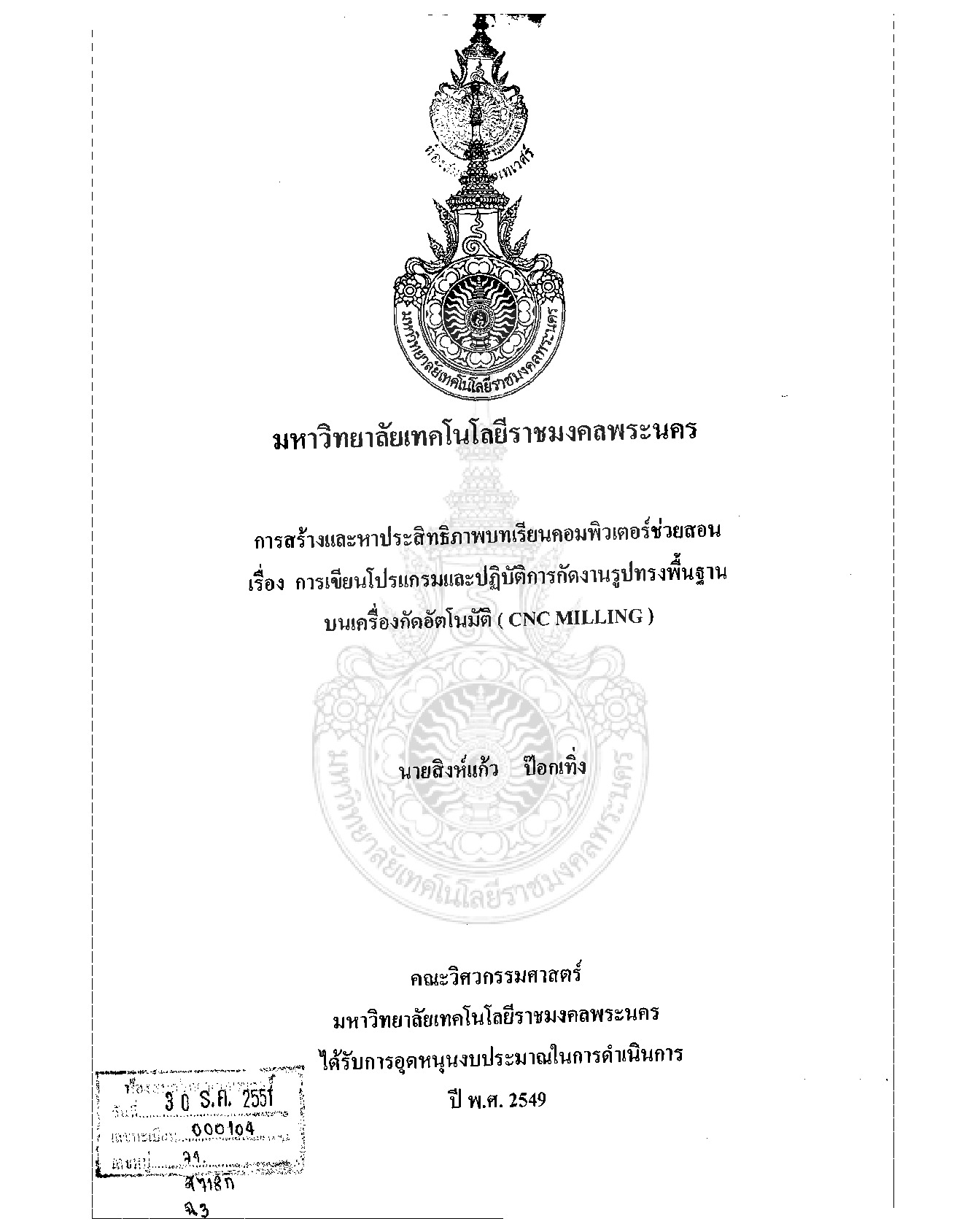
การสร้างและหาประสิทธิภาพบทเรียนคอมพิวเตอร์ช่วยสอน เรื่อง การเขียนโปรแกรมและปฏิบัติการกัดงานรูปทรงพื้นฐานบนเครื่องกัดอัตโนมัติ (CNC MILLING)
การวิจัยครั้งนี้ มีวัตถุประสงค์เพื่อสร้างและหาประสิทธิภาพบทเรียนคอมพิวเตอร์ช่วยสอน เรื่องการเขียนโปรแกรมและปฏิบัติการกัดงานรูปทรงพื้นฐานบนเครื่องกัดอัตโนมัติ (CNC MILLING) ให้ได้ตามเกณฑ์มาตรฐาน 90/90 และวิเคราะห์สัมฤทธิ์ทางการเรียนของนักศึกษาหลังจากเรียนด้วยบทเรียนคอมพิวเตอร์ช่วยสอนกลุ่มตัวอย่างที่ใช้ในการวิจัย เป็นนักศึกษาระดับประกาศนียบัตรวิชาชีพชั้นสูง สาขาวิชาเทคโนโลยีอุตสาหการ – เครื่องจักรกลอัตโนมัติ คณะวิศวกรรมศาสตร์ มหาวิทยาลัยเทคโนโลยีราชมงคลพระนคร จำนวน 20 คน ผู้วิจัยได้ทำการทดลองโดยให้กลุ่มตัวอย่างทำแบบทดสอบก่อนเรียน แล้วให้ทำการเรียนโดยใช้บทเรียนคอมพิวเตอร์ช่วยสอน เรื่อง การเขียนโปรแกรมและปฏิบัติการกัดงานรูปทรงพื้นฐานบนเครื่องกัดอัตโนมัติ (CNC MILLING) ที่ผู้วิจัยจัดทำขึ้นประกอบด้วย 6 หน่วยเรียน จากนั้นให้ทำแบบทดสอบหลังเรียน แล้วนำมาคำนวณหาประสิทธิภาพของบทเรียนคอมพิวเตอร์ช่วยสอนและวิเคราะห์ผลสัมฤทธิ์ทางการ เรียน หลังจากเรียนด้วยบทเรียนคอมพิวเตอร์ช่วยสอน ผลการวิจัยครั้งนี้ปรากฏว่า ประสิทธิของบทเรียนคอมพิวเตอร์ช่วยสอนที่ผู้วิจัยสร้างขึ้นมีประสิทธิภาพได้ตามเกณฑ์มาตรฐาน 90/90 และหลังจากเรียนด้วยบทเรียนคอมพิวเตอร์ช่วยสอน นักศึกษามีความรู้เพิ่มมากขึ้นอย่างมีนัยสำคัญทางสถิติที่ระดับ 0.01