จำนวน Repository ( 4 )

Phytotoxicity assessment of polycyclic aromatic hydrocarbons Co-Contamination in Soil during Economic Legume Seedling Growth
This research studied combined toxicities of 4 generally found Polycyclic Aromatic Hydrocarbons (PAHs) - anthracene fluorene fluoranthene and phenanthrene – during growth of 3 legume seedlings - cow pea mungbean and longbean - planted in varied combination of PAH contaminant in soil. Results showed that mungbean growth was more sensitive to PAH co-contaminated soil than cow pea and longbean. Co-contamination of all 4 PAHs was more toxic to legume than each pair of PAHs. Shoot length and fresh weight of legume seedling were more sensitive to co-contamination of all 4 PAHs than root length. Dry weight of legume seedling was the least sensitive to co-contamination of all PAHs.
Phytotoxicity assessment of polycyclic aromatic hydrocarbons Co-Contamination in Soil during Economic Legume Seedling Growth
This research studied combined toxicities of 4 generally found Polycyclic Aromatic Hydrocarbons (PAHs) - anthracene fluorene fluoranthene and phenanthrene – during growth of 3 legume seedlings - cow pea mungbean and longbean - planted in varied combination of PAH contaminant in soil. Results showed that mungbean growth was more sensitive to PAH co-contaminated soil than cow pea and longbean. Co-contamination of all 4 PAHs was more toxic to legume than each pair of PAHs. Shoot length and fresh weight of legume seedling were more sensitive to co-contamination of all 4 PAHs than root length. Dry weight of legume seedling was the least sensitive to co-contamination of all PAHs.
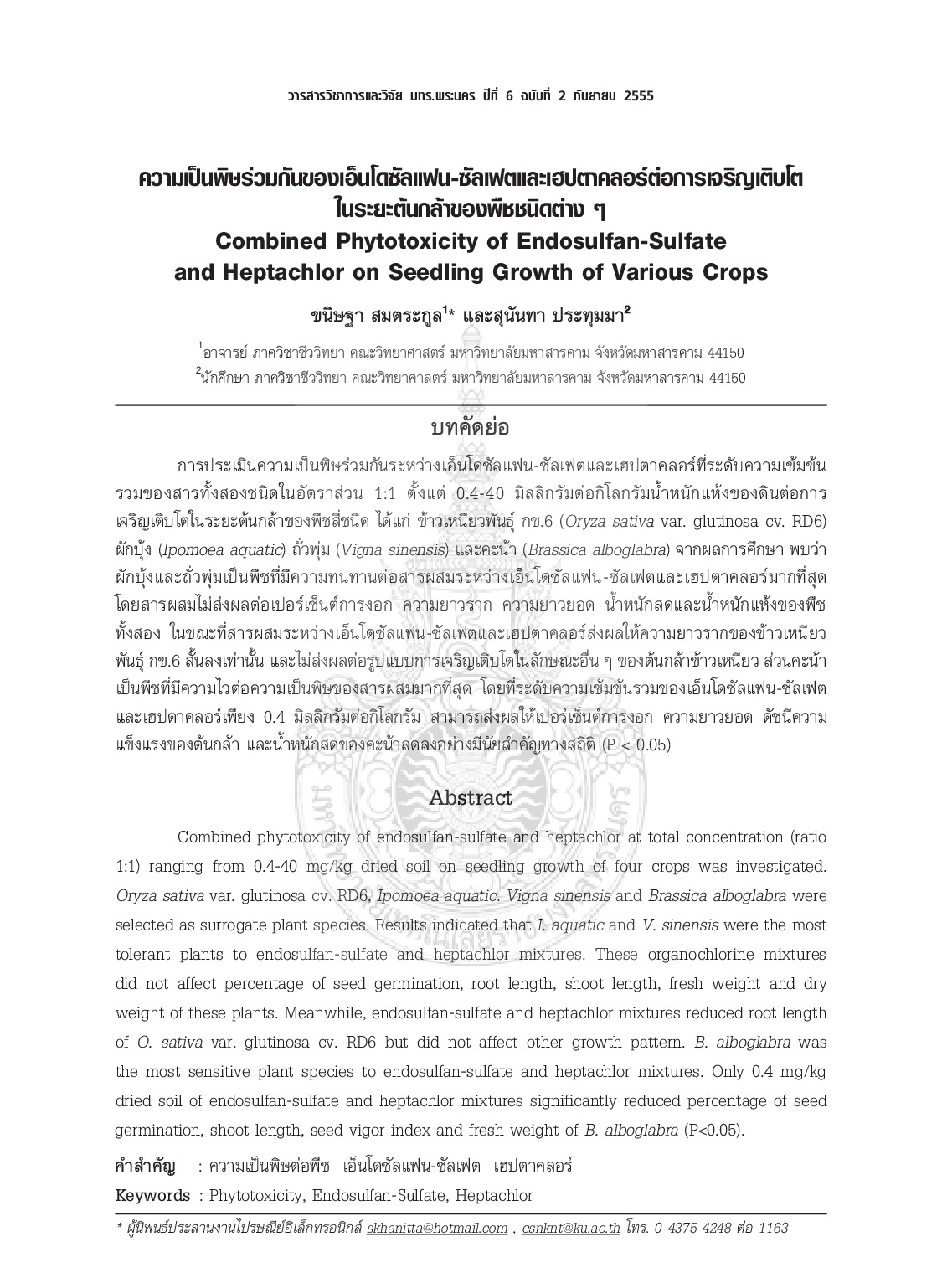
Combined Phytotoxicity of Endosulfan-Sulfate and Heptachlor on Seedling Growth of Various Crops
Combined phytotoxicity of endosulfan-sulfate and heptachlor at total concentration (ratio 1:1) ranging from 0.4-40 mg/kg dried soil on seedling growth of four crops was investigated. Oryza sativa var. glutinosa cv. RD6 Ipomoea aquatic. Vigna sinensis and Brassica alboglabra were selected as surrogate plant species. Results indicated that I. aquatic and V. sinensis were the most tolerant plants to endosulfan-sulfate and heptachlor mixtures. These organochlorine mixtures did not affect percentage of seed germination root length shoot length fresh weight and dry weight of these plants. Meanwhile endosulfan-sulfate and heptachlor mixtures reduced root length of O. sativa var. glutinosa cv. RD6 but did not affect other growth pattern. B. alboglabra was the most sensitive plant species to endosulfan-sulfate and heptachlor mixtures. Only 0.4 mg/kg dried soil of endosulfan-sulfate and heptachlor mixtures signif icantly reduced percentage of seed germination shoot length seed vigor index and fresh weight of B. alboglabra (P<0.05)
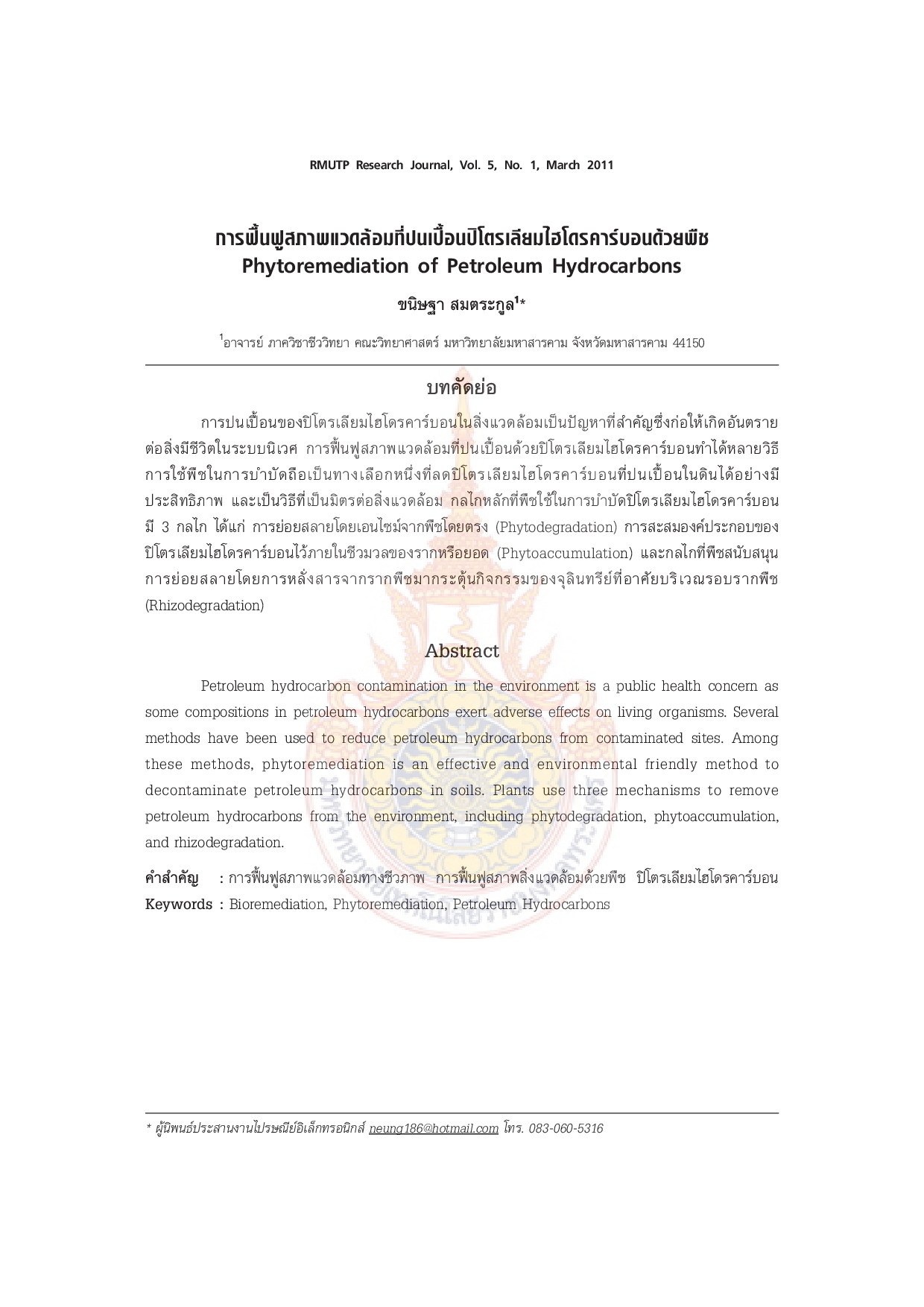
Phytoremediation of Petroleum Hydrocarbons
Petroleum hydrocarbon contamination in the environment is a public health concern as some compositions in petroleum hydrocarbons exert adverse effects on living organisms. Several methods have been used to reduce petroleum hydrocarbons from contaminated sites. Among these methods phytoremediation is an effective and environmental friendly method to decontaminate petroleum hydrocarbons in soils. Plants use three mechanisms to remove petroleum hydrocarbons from the environment including phytodegradation phytoaccumulation and rhizodegradation