จำนวน Repository ( 8 )
การบูรณาการองค์ความรู้ในการพัฒนาศักยภาพผลิตภัณฑ์อาหารจากสับปะรด เพื่อเพิ่มมูลค่าทางการตลาด และความยั่งยืนเชิงพาณิชย์ระดับชุมชน
งานวิจัยนี้ได้ศึกษาการพัฒนาศักยภาพสับปะรดตกเกรดในการผลิตผลิตภัณฑ์อาหารแปรรูป ผลการศึกษา มีดังนี้ ศึกษาการสำรวจพฤติกรรมผู้บริโภคถึงผลิตภัณฑ์ที่ทำจากสับปะรดตกเกรด ที่ผู้บริโภคนิยมรับประทานถ้าจะนำสับประรดไปแปรรูปเป็นผลิตภัณฑ์ที่มีอยู่แล้วในท้องตลาด 3 ลำดับแรก ได้แก่ ขนมสับปะรด (ค่าเฉลี่ย 4.57) ข้าวเกรียบ (ค่าเฉลี่ย 4.30) และสับปะรดแผ่น ปรุงรส (ค่าเฉลี่ย 4.20) ตามลำดับ ศึกษากรรมวิธีการแปรรูปสับปะรดจากผลการสำรวจผลิตภัณฑ์ของผู้บริโภค กากสับปะรดเพิ่มในส่วนผสมของผลิตภัณฑ์ข้าวเกรียบ 40% ผู้ชิมให้การยอมรับ มากที่สุดในด้าน ลักษณะปรากฏ สี กลิ่น รสชาติ เนื้อสัมผัส และความชอบโดยรวม โดยมีค่าเฉลี่ย 8.10 8.83 7.95 8.03 7.95 และ 8.00 ตามลำดับ กากสับปะรดทดแทนกล้วยน้ำว้าบางส่วน 100% ผู้ชิมให้การยอมรับมากที่สุดในด้าน ลักษณะปรากฏ สี กลิ่น รสชาติ เนื้อสัมผัส และความชอบโดยรวม โดยมีค่าเฉลี่ย 8.45 8.48 7.98 8.20 8.23 และ 8.38 ตามลำดับ อุณหภูมิ และเวลาที่เหมาะสมในการสับปปะรดอบแห้ง คือ อุณหภูมิที่ 90 องศาเซลเซียส เป็นเวลา 4 ชั่วโมง การใช้ผงปรุงรสปาปิก้า 6% ผู้ชิมให้การยอมรับมากที่สุดในด้าน ลักษณะปรากฏ สี กลิ่น รสชาติ เนื้อสัมผัส และความชอบโดยรวม โดยมีค่าเฉลี่ย 8.05 7.95 8.18 7.98 7.95 และ 7.95 ตามลำดับ ศึกษาคุณภาพทางเคมี และคุณภาพทางกายภาพของผลิตภัณฑ์อาหารแปรรูปจากสับปะรดตกเกรด ผลิตภัณฑ์ข้าวเกรียบ พบว่า คุณภาพทางเคมีข้าวเกรียบ สูตรที่มีความากที่สุด ดังนี้ สูตรที่ 3 (40%) กรัม ความชื้นร้อยละ 3.30 สูตรที่ 2 (30%) ไขมันร้อยละ 21.37 สูตรที่ 3 (40%) เยื่อใยร้อยละ 8.38 สูตรที่ 1 (20%) เถ้าร้อยละ 2.00 สูตรที่ 2 (30%) โปรตีนร้อยละ 2.03 ส่วนคุณภาพทางกายภาพ พบว่า ความสว่าง (L*) สูตรที่ 1 (20%) กรัม มีค่ามากที่สุด 63.53 ค่าสีแดง (a*) และค่าสีเหลือง (b*) สูตรที่ 3 (40%) กรัม มีค่ามากที่สุด 3.14 และ 15.66 กากสับปะรดตกเกรดทดแทนกล้วยน้ำว้าบางส่วน พบว่า คุณภาพทางเคมีของกากสับปะรดตกเกรดทดแทนกล้วยน้ำว้าบางส่วน มีค่ามากที่สุด ดังนี้ สูตรที่ 2 (30%) กรัม ความชื้นร้อยละ 54.01 สูตรที่ 1 (20%) กรัม ไขมันร้อยละ 0.35 เยื่อใยร้อยละ 2.56 เถ้าร้อยละ 0.57 สูตรที่ 2 (30%) กรัม โปรตีนร้อยละ 3.93 ส่วนคุณภาพทางกายภาพ พบว่า ความสว่าง (L*) สูตรที่ 2 (30%) กรัม มีค่ามากที่สุด 69.75 ค่าสีแดง (a*) และ ค่าสีเหลือง (b*) สูตรที่ 3 (40%) กรัม มีค่ามากที่สุด -1.61 และ 12.67 อุณหภูมิที่เหมาะสมในการสับปปะรดอบแห้งคือ อุณหภูมิที่ 90 องศาเซลเซียส เป็นเวลา 4 ชั่วโมง ผู้ชิมให้การยอมรับมากที่สุดในด้าน ลักษณะปรากฏ สี กลิ่น รสชาติ เนื้อสัมผัส และความชอบโดยรวม โดยมีค่าเฉลี่ย 7.99 7.60 7.50 7.55 8.25 และ 7.95 ตามลำดับ ซึ่งมีค่าความชื้ที่เหมาะสมแก่การนำมาทำสับปะรดปรุงรสผงปาปิก้า สับปะรดตกเกรดอบแห้งปรุงรสปาปิก้า ผงปรุงรสค่ามากที่สุด ดังนี้ สูตรที่ 1 (2%) กรัม ความชื้นร้อยละ 8.02 สูตรที่ 3 (6%) กรัม ไขมันร้อยละ 0.68 สูตรที่ 2 (4%) กรัม เยื่อใยร้อยละ 12.34 สูตรที่ 1 (2%) กรัม เถ้าร้อยละ 9.49 และ โปรตีน ร้อยละ 8.84 ส่วนคุณภาพทางกายภาพ พบว่า ความสว่าง (L*) สูตรที่ 1 (2%) กรัม มีค่ามากที่สุด 80.03 ค่าสีแดง (a*) มีค่ามากที่สุด 9.24 และ ค่าสีเหลือง (b*) สูตรที่ 1 (2%) กรัม มีค่ามากที่สุด 24.76 ศึกษาการทดสอบผู้บริโภค (Consumer test) ที่มีผลต่อผลิตภัณฑ์อาหารแปรรูปจากสับปะรดตกเกรด ผลิตภัณฑ์ข้าวเกรียบ ผู้บริโภคให้ความพึงพอใจต่อผลิตภัณฑ์ข้าวเกรียบ ในระดับความชอบปานกลาง โดยให้ความรู้สึกต่อลักษณะผลิตภัณฑ์ ด้าน ลักษณะปรากฏ สี กลิ่น กลิ่นและรสชาติ อยู่ในระดับความชอบปานกลาง ผลิตภัณฑ์ขนมสับปะรดตกเกรด ในระดับความชอบปานกลาง โดยให้ความรู้สึกต่อลักษณะผลิตภัณฑ์ ด้าน ลักษณะปรากฏ สี กลิ่น กลิ่นและรสชาติ อยู่ในระดับความชอบปานกลาง ผลิตภัณฑ์สับปะรดตกเกรดอบแห้งปรุงรส ในระดับความชอบปานกลาง โดยให้ความรู้สึกต่อลักษณะผลิตภัณฑ์ ด้าน ลักษณะปรากฏ สี กลิ่น กลิ่นและรสชาติอยู่ในระดับความชอบปานกลาง ผลการถ่ายทอดเทคโนโลยีโครงการการพัฒนาศักยภาพสับปะรดตกเกรดในการผลิตผลิตภัณฑ์อาหารแปรรูป ดำเนินการจัดอบรม วันที่ 30 มิถุนายน -1 กรกฎาคม 2563 ณ กลุ่มวิสาหกิจชุมชนกลุ่มผู้ปลูกสับปะรดบ้านต้นเกตุ ตำบลห้วยทราย อำเภอเมืองประจวบคีรีขันธ์ จังหวัดประจวบคีรีขันธ์ ผู้เข้าอบรมจำนวน 45 คน ส่วนใหญ่เป็นเพศหญิงคิดเป็นร้อยละ 80.00 มีอายุ 36-45 ปี ผู้เข้ารับการอบรมมีความพึงพอใจของผู้รับบริการในกระบวนการให้บริการ อยู่ในระดับ มาก – มากที่สุด คิดเป็นร้อยละ 100 ผู้ตอบแบบสอบถามมีการนำความรู้ไปใช้ประโยชน์ จำนวน 45 คน คิดเป็นร้อยละ 100 และมีความพึงพอใจของผู้รับบริการวิชาการและวิชาชีพต่อประโยชน์จากการบริการของผู้เข้ารบรมอยู่ในระดับมาก – มากที่สุด คิดเป็นร้อยละ 100และผู้เข้ารับการอบรมมีความพึงพอใจบริการวิชาการและวิชาชีพต่อประโยชน์จากการบริการอยู่ในระดับ มาก-มากที่สุด คิดเป็นร้อยละ 94.67 การพัฒนาศักยภาพผลิตภัณฑ์เนื้อสัตว์แปรรูปเสริมกากสับปะรดที่เหลือจากการคั้นน้ำ กากสับปะรดที่นำมาใช้ในการวิจัยเป็นสายพันธุ์ปัตตาเวีย ทำการต้มเพื่อสกัดกรด และน้ำตาลออก มีลักษณะเป็นกากสด ผลิตภัณฑ์เนื้อสัตว์แปรรูปที่นำมาใช้ ได้แก่ ไส้กรอกหมูบดหยาบ ลูกชิ้น และหมู-ยอ การเสริมกากสับปะรดในไส้กรอกหมูบดหยาบสามารถเสริมได้ถึงร้อยละ 15 ลูกชิ้นหมูสามารถเสริมได้ถึงร้อยละ 20 และหมูยอสามารถเสริมได้ถึงร้อยละ 10 การเสริมกากสับปะรดผลิตภัณฑ์เนื้อสัตว์แปรรูปมีผลทำให้ผลิตภัณฑ์เนื้อสัตว์แปรรูปทั้ง 3 ชนิดมีปริมาณใยอาหารหยาบเพิ่มขึ้น ในขณะเดียวกันมีผลทำให้ผลิตภัณฑ์เนื้อสัตว์แปรรูปมีสีอ่อน และมีคะแนนคุณลักษณะด้านเนื้อสัมผัสลงลด ซึ่งส่งผลต่อการยอมรับ การทดสอบการยอมรับของผู้บริโภค การเสริมกากสับปะรดผลิตภัณฑ์เนื้อสัตว์แปรรูปมีผลทำให้ผลิตภัณฑ์เนื้อสัตว์แปรรูปทั้ง 3 ชนิด จำนวน 100 คน พบว่า ผู้ทดสอบส่วนใหญ่มากกว่าร้อยละ 95 ให้การยอมรับในผลิตภัณฑ์การเสริมกากสับปะรดผลิตภัณฑ์เนื้อสัตว์แปรรูปมีผลทำให้ผลิตภัณฑ์เนื้อสัตว์แปรรูปทั้ง 3 ชนิด สำหรับการถ่ายทอดเทคโนโลยีการพัฒนาศักยภาพผลิตภัณฑ์เนื้อสัตว์แปรรูปเสริมกากสับปะรดที่เหลือจากการคั้นน้ำ ณ คณะเทคโนโลยีคหกรรมศาสตร์ ผู้เข้ารับการอบรมมีความพึงพอใจมากที่สุดในทุกด้านของการถ่ายทอดเทคโนโลยี งานวิจัยนี้มีวัตถุประสงค์เพื่อศึกษากระบวนการผลิตที่เหมาะสมในการผลิตซอสผัดไทย ซอสหมี่กรอบ ซอสสามรสโดยใช้น้ำสับปะรดเป็นส่วนผสมหลักในสูตร เพื่อศึกษาคุณภาพของผลิตภัณฑ์ซอสสำเร็จรูปจากสับปะรด และเพื่อศึกษาการยอมรับของผู้บริโภค (Consumer test) ที่มีต่อผลิตภัณฑ์ซอสสำเร็จรูปจากสับปะรด ผลการพัฒนาสูตรการผลิตที่เหมาะสมในการผลิตซอสผัดไทย จากผลการประเมินคุณภาพทางประสาทสัมผัสของซอสผัดไทยด้วยวิธีการชิม 9 ระดับ (9 point Hedonic scale) พบว่าผู้ชิมให้การยอมรับปริมาณน้ำสับปะรดที่เหมาะสมในการผลิตซอสผัดไทยที่ร้อยละ 30 ในคุณลักษณะทุกด้าน ได้แก่ ลักษณะปรากฏ สี กลิ่น รสชาติ เนื้อสัมผัส และความชอบโดยรวม โดยมีคะแนนเฉลี่ย 8.08 7.83 7.93 8.15 8.05 และ 8.13 ตามลำดับ ซึ่งอยู่ในระดับความชอบมาก ผลการประเมินคุณภาพทางประสาทสัมผัสของซอสหมี่กรอบ พบว่าผู้ชิมให้การยอมรับปริมาณน้ำสับปะรดที่เหมาะสมในการผลิตซอสหมี่กรอบที่ร้อยละ 75 ในด้านลักษณะปรากฏ สี กลิ่น รสชาติ เนื้อสัมผัส และความชอบโดยรวม โดยมีคะแนนเฉลี่ย 7.89 7.79 7.88 8.03 7.98 และ 7.93 ตามลำดับ ซึ่งอยู่ในระดับชอบมาก ผลการประเมินคุณภาพทางประสาทสัมผัสของซอสสามรส พบว่าผู้ชิมให้การยอมรับปริมาณน้ำสับปะรดที่เหมาะสมในการผลิตซอสสามรสร้อยละ 100 ในด้านลักษณะปรากฏ สี กลิ่น รสชาติ เนื้อสัมผัส และความชอบโดยรวม โดยมีคะแนนเฉลี่ย 8.35 8.04 8.25 8.22 8.15 และ8.24 ตามลำดับ ซึ่งอยู่ในระดับชอบมาก ผลการศึกษาคุณภาพของผลิตภัณฑ์ซอสผัดไทย ซอสหมี่กรอบ และซอสสามรสที่ใช้น้ำสับปะรดเป็นส่วนผสมหลัก พบว่า การเพิ่มปริมาณน้ำสับปะรดมีผลต่อค่าความเป็น กรด - ด่าง ของผลิตภัณฑ์ ผลิตภัณฑ์ซอสทั้ง 3 ชนิด มีค่าความเป็น กรด - ด่าง อยู่ในช่วงกรด คุณภาพด้านจุลินทรีย์ของซอสทั้ง 3 ชนิด ผ่านเกณฑ์มาตรฐานผลิตภัณฑ์ชุมชน กระทรวงอุตสาหกรรมกำหนดไว้ ผลการศึกษาการยอมรับของผู้บริโภคที่มีต่อผลิตภัณฑ์ซอสสำเร็จรูปจากสับปะรด ผู้บริโภคส่วนใหญ่เป็นเพศหญิง ส่วนใหญ่มีอายุอยู่ในช่วง 19 - 29 ปี และในช่วงอายุ 40 - 49 ปี ด้านการศึกษาของผู้ตอบแบบสอบถามส่วนใหญ่มีการศึกษาต่ำกว่าปริญญาตรี และระดับปริญญาตรี ด้านสถานะภาพการสมรสผู้ตอบแบบสอบถามส่วนใหญ่สมรสแล้ว อาชีพของผู้ตอบแบบสอบถาม ส่วนใหญ่มีอาชีพลูกจ้างรายวัน และรับราชการ/รัฐวิสาหกิจ รายได้ส่วนใหญ่ของผู้ตอบแบบสอบถามต่ำกว่า 20000 บาท ผู้บริโภคชอบคุณลักษณะของผลิตภัณฑ์ซอสสำเร็จรูปจากสับปะรด ทั้ง 3 ชนิด ในระดับชอบมากถึงชอบมากที่สุด และผู้บริโภคส่วนใหญ่ยอมรับผลิตภัณฑ์ซอสสำเร็จรูปจากสับปะรด ทั้ง 3 ชนิด ถ้าวางจำหน่ายผู้บริโภคส่วนใหญ่ซื้อเพราะสะดวกในการใช้/ลดขั้นตอนการทำ ราคาผลิตภัณฑ์ซอสสำเร็จรูปจากสับปะรดทั้ง 3 ชนิด ที่ผู้บริโภคยอมรับอยู่ที่ราคา 50 บาท/ขวด โครงการวิจัยนี้มีวัตถุประสงค์เพื่อดำเนินการถ่ายทอดเทคโนโลยีการแปรรูปสับปะรดตกเกรดให้มีศักยภาพ เกิดมูลค่าเพิ่มมากขึ้นเป็นการพัฒนาศักยภาพสับปะรดตกเกรดในผลิตภัณฑ์น้ำพริกสำเร็จรูปพร้อมบริโภค เพื่อให้กลุ่มชุมชนที่มีปัญหาด้านผลผลิต ด้านรายได้ และด้านองค์ความรู้เกี่ยวกับการแปรรูปผลิตภัณฑ์อาหารนั้นได้รับความรู้สามารถนำเอาไปปฏิบัติได้จริงเป็นการกระจายองค์ความรู้สู่ชุมชนเพื่อให้เห็นถึงกระบวนการ ขั้นตอน วิธีการผลิต และการนำผลผลิตในท้องถิ่นไปพัฒนาเป็นสินค้าที่ช่วยสร้างความมั่นคงให้แก่ชุมชนอย่างยั่งยืน โดยกำหนดกลุ่มเป้าหมาย ประชากรและกลุ่มเป้าหมายในการถ่ายทอดคือกลุ่มวิสาหกิจชุมชนผู้ปลูกสับปะรดบ้านต้นเกตุ และบุคคลที่สนใจ ตำบลห้วยทราย อำเภอเมือง จังหวัดประจวบคีรีขันธ์ จากสับปะรดตกเกรดซึ่งเป็นพืชหลักที่สร้างรายได้ให้แก่ชุมชน โดยมีจำนวนผู้เข้าร่วมรับการฝึกอบรม คณะกรรมการดำเนินงานและวิทยากร รวมจำนวนทั้งสิ้น 63 คน ระยะเวลาในการอบรม 2 วัน ระหว่างวันที่ 5-6 เดือนกรกฎาคม พ.ศ.2563 และสำรวจความพึงพอใจในการฝึกอบรมด้วยแบบสอบถามความพึงพอใจ การเก็บรวบรวมข้อมูล นำข้อมูลที่ได้มาวิเคราะห์ค่าทางสถิติโดยใช้ค่าความถี่ และค่าร้อยละ ผลการวิเคราะห์ข้อมูล พบว่าส่วนของข้อมูลทั่วไปกลุ่มตัวอย่างหรือผู้เข้ารับการอบรมส่วนใหญ่เป็นเพศหญิง มีอายุอยู่ในช่วง 36-45 ปี ส่วนผลของความพึงพอใจเป็นข้อคำถามที่ใช้สอบถามความพึงพอใจเกี่ยวกับโครงการถ่ายทอดเทคโนโลยี เรื่องการพัฒนาศักยภาพสับปะรดตกเกรดในผลิตภัณฑ์น้ำพริกสำเร็จรูปพร้อมบริโภค โดยแบ่งออกเป็น 5 ด้าน คือ ด้านการบริการของเจ้าหน้าที่ ด้านวิทยากร ด้านกระบวนการ/ขั้นตอนการให้บริการ ด้านสิ่งอำนวยความสะดวก ด้านประโยชน์จากการรับบริการ และความพึงพอใจในภาพรวมของโครงการ พบว่าผู้เข้ารับการอบรมมีความพึงพอใจทั้ง 5 ด้านในระดับความพึงพอใจมากที่สุด ติดตามผลการถ่ายทอดเทคโนโลยีไปใช้ประโยชน์ ผู้เข้าร่วมอบรมส่วนใหญ่ได้นำองค์ความรู้และเทคโนโลยีที่ได้รับไปใช้ให้เกิดประโยชน์ต่อตนเองและชุมชน โดยมีส่วนน้อยที่ไม่ได้นำไปใช้ประโยชน์ ด้านระยะเวลาในการที่ผู้เข้ารับการอบรมได้รับหลังการอบรมไปใช้พบว่านำเอากลับไปใช้ภายในเวลา 1 เดือนหลังจากรับการอบรม และด้านความพึงพอใจต่อประโยชน์ที่ได้รับจากการอบรมคือ ด้านการบริการของเจ้าหน้าที่ ด้านวิทยากร ด้านกระบวนการหรือขั้นตอนการให้บริการ ด้านสิ่งอำนวยความสะดวก ด้านประโยชน์จากการรับบริการ และความพึงพอใจในภาพรวมของโครงการถ่ายองค์ความรู้และเทคโนโลยีนำไปใช้ประโยชน์พบว่ามีความพึงพอใจมากที่สุด
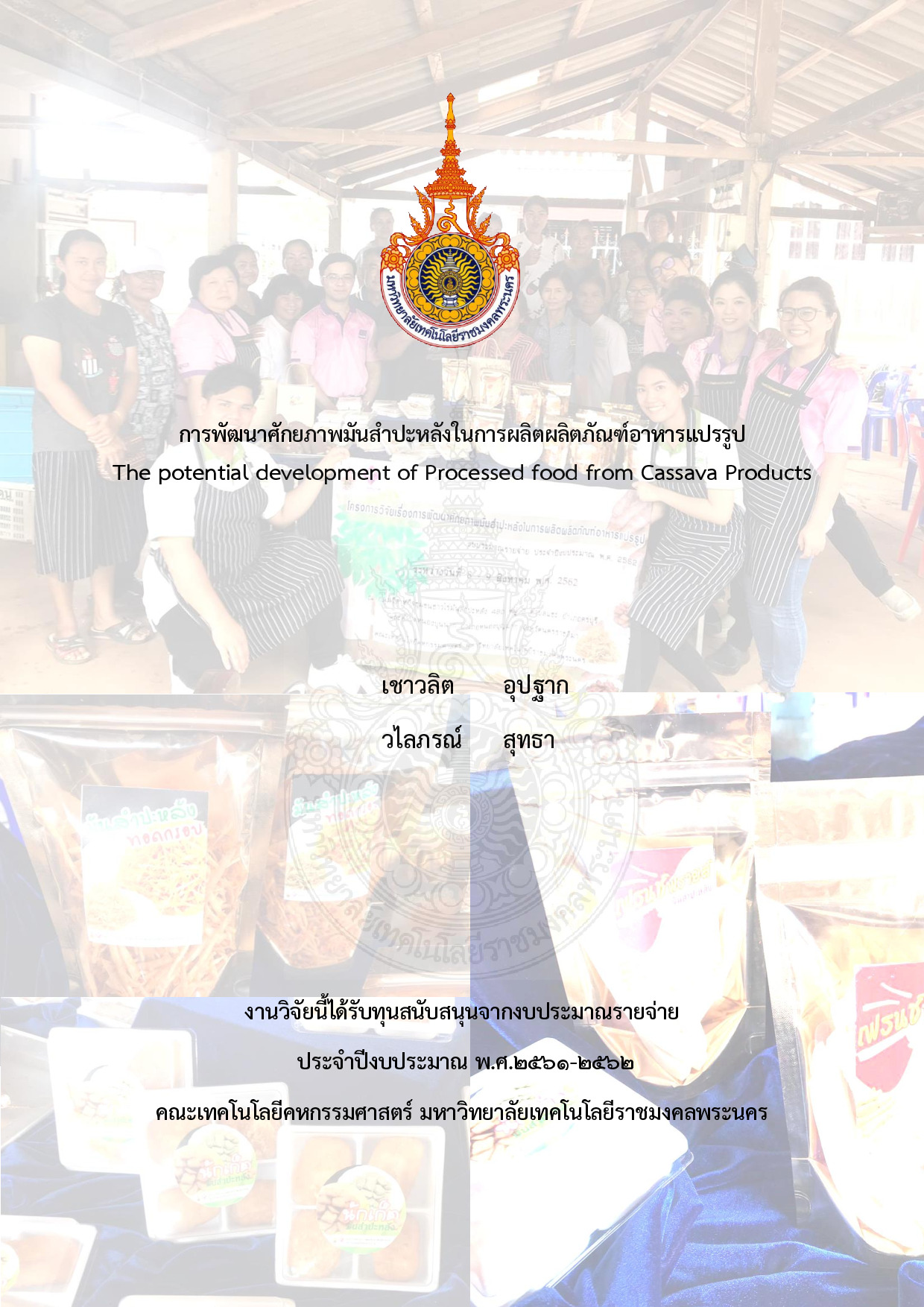
การพัฒนาศักยภาพมันสำปะหลังในการผลิตผลิตภัณฑ์อาหารแปรรูป
This research has objectives to study about production process of four types of processed food product to study quality of processed food product supplemented with cassava to study about consumer test towards processed food product to study quality of processed food product supplemented with cassava to study about consumer test towards processed food product made supplemented with cassava. From the test it was found about the appropriate quantity of cassava to supplement into four types of processed food product. The researcher had consumer test in order to test about acceptance of testers who are 40 instructors in field of Food and Nutrition field of Food and Nutrition Science and field of Food Service Industry using method of giving marks for favor in type of 9-point hedonic scale. The researcher supplemented cassava into barbecue powder French Fries at level of 0 2 4 and 8 percent of all ingredient. It was found that testers accepted the French Fries at level of 2 percent to be in level of moderate favor. The researcher made nuggets supplemented with cassava at level of 0 50 75 and 100 percent of all in gradient. It was found that testers accepted the nuggets at level of 75 percent. The researcher supplemented cassava into fish cake at level of 0 40 60 and 80 percent of all ingredient. It was found that testers accepted the fish cake supplemented with cassava at level of 60 percent to be in level of moderate favor. The researcher made crispy cassava mixed with Barbecue power at level of 2 4 6 and 8 percent of all ingredient. It was found that the testers accepted the crispy cassava at level of 4 percent to be in level of moderate favor. Regarding nutritional value of French Fries it was found that cassava for 2 percent in French Fries with Barbecue powder had moisture value for 28. 25 percent fat value for 27.21 percent fiber for 2.22 percent ash for 2.28 percent and protein for 2.22 percent. Nugget it was found that nugget supplemented with cassava for 75 percent had moisture value for 53.35 percent fat value for 6.47 percent fiber for 1.67 percent ash for 1.94 percent and protein for 17.98 percent. Fish cake it was found that fish cake supplemented with cassava for 60 percent the chemical quality had moisture value for 50.92 percent fat value for 13.78 percent fiber for 2.69 percent ash for 2.85 percent and protein for 21.97 percent. Crispy cassava mixed with Barbecue powder it was found that crispy cassava mixed with Barbecue powder for 4 percent chemical quality had moisture value for 1.39 percent fat value for 21.04 percent fiber for 3.64 percent ash for 3.05 percent and protein for 2.22 percent. However supplementing of cassava in four types of processed food products can be made but there shall be realizing about chemical elements of primary components such as moisture and fat quantity. These elements may affect the physical features for example smell and taste and texture. These features had effect on product acceptance. Study result of acceptance of consumers which had effect on products of semi-finished sauce supplemented with cassava; 100 consumers are at Faculty of Home Economics Technology Rajamangala University of Technology Phra Nakhon and Thewet Market. Regarding information of feeling on acceptance of French Fries product of cassava mixed with Barbecue powder it was found that consumers were satisfied with product of French Fries of cassava mixed with Barbecue powder for 2 percent in level of moderate favor giving feeling on product feature in appearance color smell smell and taste to be in level of moderate favor. Regarding information of feeling on acceptance of Cassava product it was found that consumers were satisfied with Fried Cassava product of 40 percent in level of moderate favor giving feeling on product feature in appearance color smell smell and taste to be in level of moderate favor. Regarding information of feeling on acceptance of French Fires product of cassava nugget it was found that consumers were satisfied with cassava nugget in level of moderate favor giving feeling on product feature in appearance color smell smell and taste to be in level of moderate favor. Regarding information of feeling on acceptance of crispy cassava mixed with Barbecue powder it was found that consumers were satisfied with crispy cassava mixed with Barbecue powder in level of moderate favor giving feeling on product feature in appearance color smell smell and taste to be in level of moderate favor. Result of technology transfer in project of tapioca potential development in producing of semi-finished sauce product which was held on 10-11 August 2019 at Tapioca Farmer community Enterprise Group Khon Buri District and Nong Bunmak District Nakhon Ratchasima Province there were 45 trainees. From evaluation it was found that 45 questionnaire respondents brought knowledge to utilize numbering 45 persons to be 100 percent. The satisfaction of academic and professional service receivers towards benefit from service of trainees was in much satisfaction and the most satisfaction to be 100 percent.
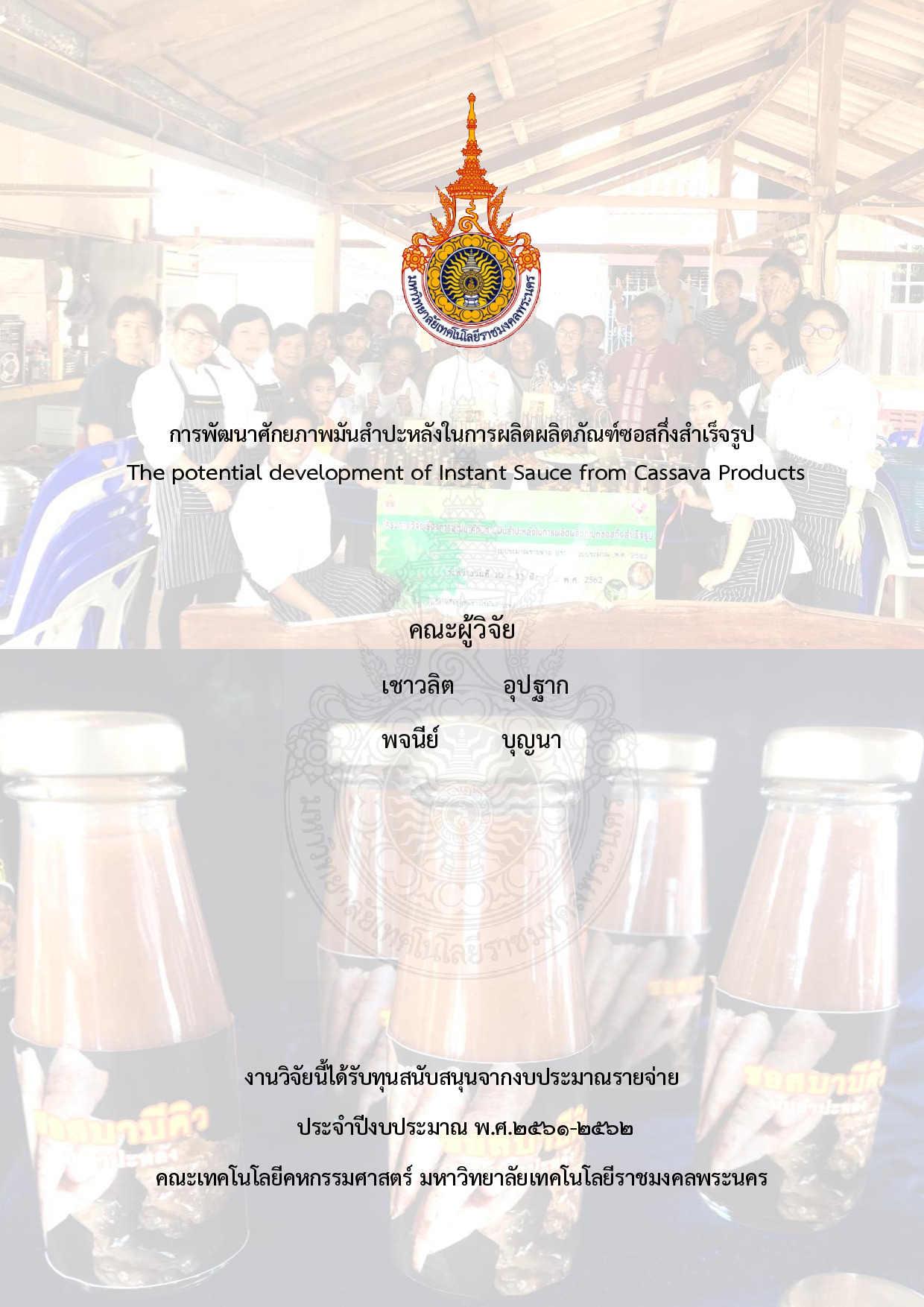
การพัฒนาศักยภาพมันสำปะหลังในการผลิตผลิตภัณฑ์ซอสกึ่งสำเร็จรูป
This research has objectives to study about production process of four types of finished sauce product made from cassava to study about quality of finished sauce product made from cassava to study about consumer test towards finished sauce product made from cassava. From the test it was found that study about quantity of suitable cassava supplement to the four types of finished cassava product by testing about acceptance of testers who were 40 instructors in field of Food and Nutrition field of Food and Nutrition Science and field of Food Service Industry. The method was to give marks for favor in type of 9-point hedonic scale by supplementing cassava into Teriyaki Sauce at levels of 0 20 40 and 60 percent of total ingredient. It was found that the testers accepted the sauce at level of 20 percent which was in the most favorite level. Semi-finished frying sauce supplemented with cassava at level of 0 40 60 and 80 percent of total ingredient; it was found that the testers accepted the level of 60 percent of Barbeque sauce supplemented with cassava at level of 0 40 60 and 80 percent of total ingredient; it was found that the testers accepted level of 40 percent in the level of much favor of semi-finished flavored fermented frying sauce supplemented with cassava at level of 0 20 40 and 60 percent of total ingredient it was found that the testers accepted the sauce at level of 40 percent which is in the level of much favor. Nutritional value of semi-finished sauce product it was found that Teriyaki sauce for 20 percent has moisture value of 78.66 percent fat value of 1.08 percent fiber for 1.36 percent ash for 2.29 percent and protein for 3.34 percent. Semi-finished frying sauce it was found that semi-finished frying sauce supplemented with cassava for 60 percent had moisture value of 80.85 percent fat value of 0.55 percent fiber for 1.35 percent ash for 3.35 and percent and protein for 3.29 percent. cassava for 60 percent it was found that chemical quality had moisture for 82.31 percent fat value for 0.75 percent fiber for 1.51 percent ash for 2.41 percent and protein for 3.37 percent. Semi-finished fermented flavored sauce it was found that semi-finished fermented flavor sauce supplemented with cassava for 40 percent it was found that chemical quality had moisture value for 83.67 percent fat value for 0.07 percent fiber 4.54 percent ash for 4.54 percent and protein for 2.42 percent. However supplementing of cassava into process of finished food products of 4 types; supplementing can be made but there shall be realizing about chemical elements of starting components for example moisture and fat quantity. These components may have effect on physical features for example smell smell and taste and texture. These features affected acceptance of products. The result of study about acceptance of consumers (Consumer test) towards product of semi-finished sauce supplemented with cassava and 100 consumers in Faculty of Home Economics Technology Rajamangala University of Technology Phra Nakhon and people in Tevet Market. Feeling towards acceptance of semi-finished sauce product supplemented with cassava it was found that consumers were satisfactory towards Teriyaki sauce product in moderate favor level having feeling on product in appearance color smell smell and taste in moderate favor level. Feeling towards acceptance of semi-finished sauce product it was found that consumers were satisfactory towards semi-finished frying sauce product 60 percent in moderate favor level having feeling on product in appearance color smell smell and taste in moderate favor level. Feeling towards acceptance of semi-finished fermented sauce product it was found that consumers were satisfactory towards semi-finished fermented sauce product 75 percent in moderate favor level having feeling on product in appearance color smell smell and taste in moderate favor level. Result of technology transfer in project of cassava potential development in production of semi-finished sauce product Tapioca Farmer Community Enterprise Group 480 Khon Buri District and Nong Bunmak District Nakhon Ratchasima Province 45 trainees; most were female having age of 36-45 years to be 96.00 percent. From evaluation it was found that 45 respondents used knowledge to be 100 percent and satisfactory of service receivers in academic aspect and professional aspect towards benefit from service of trainees in level from much to the most to be 100 percent.
การศึกษากากมะขามเปียกเหลือใช้ในผลิตภัณฑ์มะขามแก้ว ของวิสาหกิจชุมชมชนแม่บ้านเกษตรกร สวนเก้าแสน
The objective of this research to study the basic 3 formulas of tamarind gummy products physicals and chemical properties of final product of this research by 9- point hedonic scale of 30 examiner laboratory. The results show the basic formula of tamarind gummy be recognized to study in the next step. The results show the basic formula of tamarind gummy accept on the like moderately (7). Then tamarind pulp substituted at 0 25 52 75 and 100 by weight of tamarind. At 0 percentage of tamarind pulp substituted renewable panelists for the most respected. However estimates replacing the 50 percent level still has to accept the product tasting of tamarind gummy. The chemical composition of tamarind gummy were 371.25 Kcals of total energy 4.05 of energy from fat 0.64 of protein 0.45 of fat 3.44 of ash 91.16 of carbohydrate and 4.56 of crude fiber. For the technology transfer of tamarind gummy at community enterprise the participants were satisfied in all of all aspects. However substituted of tamarind pulp in tamarind gummy can be extra consideration of chemical composition of ingredients such as sugar and fiber for acceptance of tamarind gummy of these features may affect to physical properties such as in color and texture of production should be intensive studied.
การพัฒนาผลิตภัณฑ์ซอสสำเร็จรูปจากเปลือกแตงโมที่เหลือใช้
This research had objectives to study the proper amount of adding of unused water melon peel in products of tomato sauce chili sauce pizza sauce and seafood sauce. This research studied the nutritional value of sauce products and studied the acceptance of consumers towards sauce products. The test found about the study about proper amount of unused water melon peel in four kinds of sauce products. The researcher tested about acceptance of forty examinees who are instructors in field of Food and Nutrition majoring Food and Nutritional science and majoring Food Service Industry by using 9-point hedonic scale by adding water melon peel into tomato sauce at levels of 5 10 and 15 per cent of all ingredients It is found that the examinees accepted chili sauce at level of 15 per cent that is in the much favor level (8). The chili sauce has been added with water melon peel at levels of 3 6 and 9 per cent of total ingredients. It was found that the examinees accepted it at level of 9 per cent that was from the level of moderate favor to much favor (7-8). The examinees accepted pizza sauce which has been added with water melon peel at level of 10 20 and 30 per cent of all ingredients. It was found that examinees accepted at level of 30 per cent which was in the level of much favor (8). The examinees accepted seafood sauce which has been added with water melon peel at level of 10 20 and 30 per cent of all ingredients. It was found that examinees accepted at level of 20 per cent which was in the level from moderate to very much favor (7-8). When the researcher studied the physical features of sauce product it was found that pH value at which was 25 degrees Celsius was in range of 3.90 3.49 3.83 and 2.73. The viscosity value was 4650cp 32639cp 37760cp and 612cp or centipoints respectively. Nutritional value of sauce product it was found that tomato sauce which has been added with water melon peel for 15 per cent has total calory for 70 per cent protein for less than 1.25 per cent fat for 0 per cent ash for 1.43 per cent carbohydrate for 17.5 per cent and moisture amount of 81.1 per cent. Chili sauce which is added with water melon peel for 9 per cent has total energy for 71.2 per cent; protein is less than 1.25 per cent fat is 0 per cent ash is 3.85 per cent; carbohydrate is 17.8 per cent and it has moisture amount of 78.4 per cent. Pizza sauce which is addedwith water melon peel for 30 per cent has total energy for 145 per cent; protein is less than 1.25 per cent fat is 3.49 per cent ash is 3.18 per cent; carbohydrate is 28.5 per cent and it has moisture amount of 64.8 per cent. Seafood sauce which is added with water melon peel for 20 per cent hashas total energy for 91.8 per cent; protein is 1.59 per cent fat is 0.20 per cent ash is 4.19 per cent; carbohydrate is 20.9 per cent and it has moisture amount of 73.1 per cent. However adding of water melon peel into four kinds of sauce products can be done but it should be realized about chemical components of starting components for example moisture amount and carbohydrate. These components may affect physical features for example smell flavor and texture. These features affect acceptance of products. From technology transfer of sauce products from water melon rind at 157/16 moo 9 Kao San housewife Group agricultural enterprise Bang Plee Bang Pla Samut Prakarn. 50 housewife Group agricultural there the level of satisfaction in every aspect.