จำนวน Repository ( 6 )

คุณลักษณะของผู้ประกอบการที่ประสบความสำเร็จ : กรณีศึกษาโรงเรียนสอนตัดเสื้อไพลิน
The purposes of this research were to explore 1) the characteristics of successful entrepreneur: case study of Pailin Couture and 2) the factors affecting of self- employed of students who study major in fashion clothing and textiles design faculty of home economics technology at RMUTP. Using mixed method research and divide the data into 2 parts: 1) collected data from the entrepreneur as a key informant by using structure interviews and analyze data by content analysis and 2) collected data from students whose are selected using purposive sampling technique using questionnaire and data was analyzed using frequency percentage mean and standard deviation. The finding was concluded as follows: Characteristics of successful entrepreneur consist of: 1) inspiration from clearly know themselves and led to career 2) have experience or preparation about finding a place to study work-in-study finding a team coaching and channel expansion 3) working approached were to maintain harmony conflict reduction and do not use the mood to work 4) problem solving solution was to find the cause of the problem and consciousness in solving problems 5) core concept in occupational was takes a shorter time to learn but take it to career quickly and have creative development 6) category of products or services was variety of clothing styles 7) recruitment must choose who had the knowledge and ability in work and 8) recommendations for the couture entrepreneur should have knowledge and skills such as product planning team building marketing plan and target group of business. The factors affecting of self-employed of students found that: expectations of parents after graduation was self-employed. Individual factors toward to self-employed were love to work independent interesting in self-employment and love to learn more. Job factors toward to highly self-employed were individual challenge extremely in use ability and interpersonal relation.
พฤติกรรมการเรียนรู้ด้วยตนเองของนักศึกษา คณะเทคโนโลยีคหกรรมศาสตร์ มหาวิทยาลัยเทคโนโลยีราชมงคลพระนคร
The survey research aimed to: 1) study the behaviors of self-directed learning; 2) compare levels of self-directed learning behaviors which is classified by personal status; and 3) study guidelines for self-directed learning. The subject obtained through stratified random sampling consisted of 319 first-fourth year undergraduates of the Faculty of Home Economics Technology Rajamangala University of Technology Phra Nakhon. The research tool was a questionnaire. The frequency percentage mean standard deviation t-test and ANOVA were used for data analysis and hypothesis testing. The results were as follows: 1. The overall level of students’ behaviors for self-directed learning was high (X = 3.74; S.D.= 0.74) that were self-evaluation competency (X = 3.89; S.D.= 0.74) self-management competency (X = 3.75; S.D.=0.76) self-learning competency (X = 3.74; S.D.=0.70) self-searching competency (X = 3.72; S.D.=0.72) and characteristics of self-directed learners (X = 3.59; S.D.=0.77) respectively. 2. There was no difference of self-directed learning behaviors when genders and educational levels were considered. In contrast there were statistically significant difference at 0.05 when academic performance was considered. 3. The overall level of students’ opinions on guidelines for self-directed learning was high (X = 3.51;S.D.= 0.85) self-directed was academic matter (X = 3.74; S.D.=0.76) physical matter (X = 3.41 ; S.D.=0.93) management (X = 3.40; S.D.=0.87) respectively.
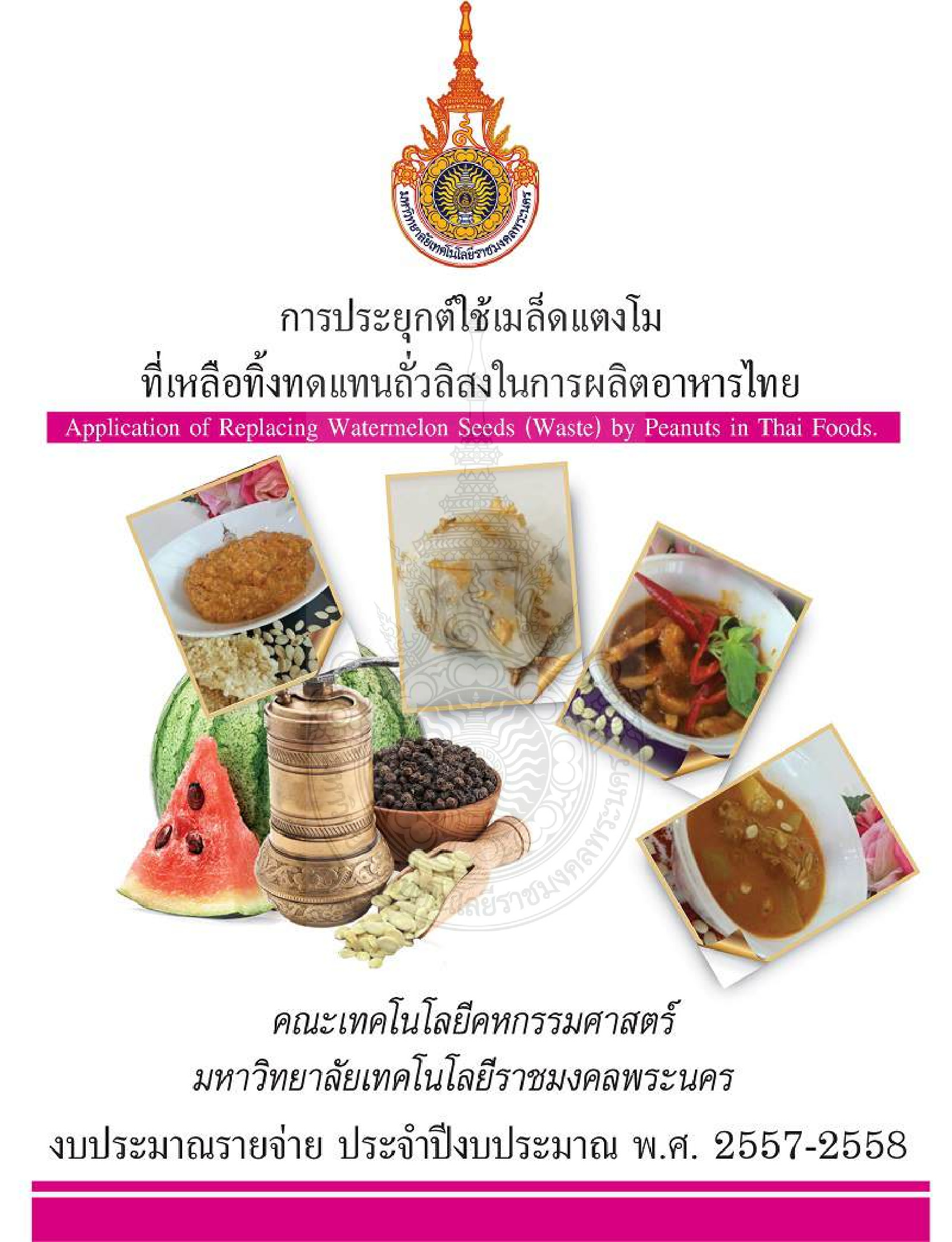
ความต้องการพัฒนาตนเองเพื่อรองรับการเข้าสู่ประชาคมอาเซียนของนักศึกษา คณะเทคโนโลยีคหกรรมศาสตร์ มหาวิทยาลัยเทคโนโลยีราชมงคลพระนคร
The survey research aimed to: 1) study the levels of self-development needs in preparation to enter AEC; 2) make a comparison of the students’ needs levels in aspects of personal data; and 3) propose appropriate forms of activities to be used in the development. The subject obtained through stratified random sampling consisted of 321 first-fourth year undergraduates of the Faculty of the Home Economic Technology Rajamangala University of Technology Phra Nakhon. The tool was a questionnaire. To analyse data the frequency percentage mean standard deviation t- test and ANOVA were used. The results were as follows: 1) The overall level of self-development needs was high ( X = 3.75). The needs for selfdevelopment in line with the Thai Qualifications Framework for Higher Education were high ( = 3.89). Moreover the level of needs conforming to Thai Graduate Preferable Qualifications for the ASEAN Community was moderate ( X = 3.46). 2) There was no statistically significant difference ( p<0.05) of the self-development needs level when genders educational levels or academic performances were considered 3) As for the activities it was rated best to use training for the development of cognitive skills numerical analysis communication and information technology skills domain of psychomotor skills and knowledge on ASEAN Community rules and regulations; lecturing for knowledge on ASEAN Community rules and regulations; study touring for knowledge development; camping for ethics and moral interpersonal skills responsibility and language skills; and student inter institutional exchanging for neighbouring countries knowledge development.
การศึกษาคุณธรรมจริยธรรมของนักศึกษา กรณีศึกษา นักศึกษาคณะเทคโนโลยีคหกรรมศาสตร์ มหาวิทยาลัยเทคโนโลยีราชมงคล
This research has the objectives to study about level of virtue and ethics and to compare virtue and ethics of students Faculty of Home Economics Technology Rajamangala University of Technology Phra Nakhon categorizing according to personal factors. This research is descriptive research. Sample group used in this research comprised students of Faculty of Home Economics Technology Rajamangala University of Technology Phra Nakhon. The sample group comprised 321 students. The research took samples by using stratified sampling. Tools used in data analyzing are questionnaires divided into three parts Part 1 : questions on personal background ; Part 2 : questionnaires on behavior regarding virtues and ethics of students ; part 3 composed of questionnaire regarding opinion on virtue and ethics of students including students of Faculty of Home Economics Technology Rajamangala University of Technology Phra Nakhon. Statistics used in data analysis included frequency percentage mean standard deviation and in testing of hypothesis using t-test statistics and ANOVA to analyze variance testing difference in pair by LSD methods. The research result found that 1. The research result found that level of behavior in virtue and ethics of students of Faculty of Home Economics Technology Rajamangala University of Technology Phra Nakhon in the overview the behavior was in very good level (x= 3.96). When the criterion It is in a very good level of 4 parts. Include The behavior in virtue and ethics in the aspect of pressure factors (x= 3.84). The behavior in virtue and ethics in the aspect of nourishing factors (x= 4.10). The behavior in virtue and ethics in the aspect of arresting factors (x= 3.84); the behavior in virtue and ethics in the aspect of supporting factors (x= 4.08). 2. Comparing difference of the behavior in virtue and ethics of students Faculty of Home Economics Technology Rajamangala University of Technology Phra Nakhon categorizing according to personal factors; the result was that students having different genders residence description and occupation of parents did not have different behavior in virtue and ethics. Students studying in different class levels and having different study result; had different behavior in virtue and ethics with
การศึกษาการใช้ประโยชน์เศษเส้นด้ายไหมเหลือทิ้ง เพื่อใช้ทำเครื่องประดับสตรี
The objectives of this research are to use waste silk yarn for making women accessories and transfer the created technology to a women community in Surin Province. The required information for product design was collected. Subsequently 15 conceptual designs were made including necklace bracelet and bangle earring and pin. The experts were asked to choose the best 5 designs out of 15 designs. Then the prototypes were made by using waste silk yarn. Finally the most suitable product was selected for further technology transfer to a target group of 55 women who live in Surin. The questionnaires were used to asses the satisfactory of the training. The corresponding data was statistically analyzed. The results from the evaluated questionnaires show that most of the attended women are 31–40 years old and graduated from lower secondary schools. They are merchants and their average earnings are below 5000 Baht/month. Regard to the training program in terms of preparation instructors and overview most of them are satisfied the program in the high level to very high level. The average satisfactory for all of 3 aspects is in the high level.