จำนวน Repository ( 3 )
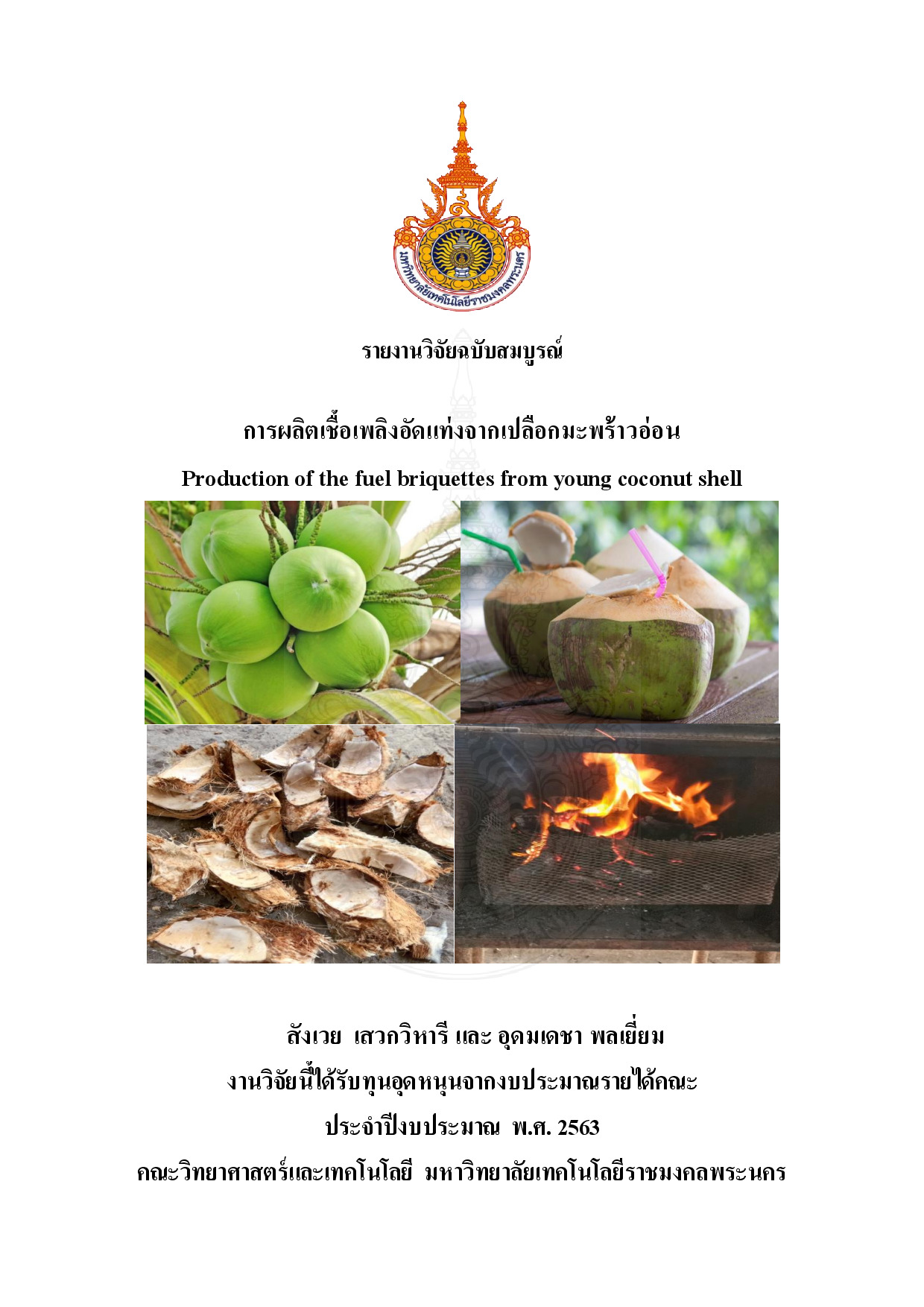
การผลิตเชื้อเพลิงอัดแท่งจากเปลือกมะพร้าวอ่อน
Young coconut shells are a byproduct after processing coconut juice which can be used to produce a solid-fuel. This fuel from the coconut shell is an alternative source instead of using firewood or charcoal made of timber in the natural forest. The solid-fuel from young coconut shells was prepared by using a wet glue powder as a binder then was compressed by using a briquette machine. The black coconut briquette was stable after exposure to the sun. The average of the briquette combustion rate was at 11.24 g /min. There is no eruption smut smoke and odor by using the young coconut shell briquette yo start a fire. To sum up a young coconut shell has a high potential as an alternative biomass material for producing a briquette especially for commercial. This solution can increase the reduction of haze weather in the sight of solid waste incineration and also global warming.

Production of fuel briquettes form nipa palm shell mixed with fat dregs
This research is to study the production of fuel briquettes from the Nipa palm and Fat dregs in the ratio 1:0 1:0.1 and 1:0.3 kg respectively. We performed a study of the properties of the fuel briquette produced and also study the heating value moisture content ash volatile matter and fixed carbon. The results showed that the heating value of the fuel briquette is the most fuel briquette sclera ratio of fat and the residue was 1:0.3.The heating value of 5370 calories per gram. Followed by fuel briquette ratio 1:0.1 and 1:0 with heating value of 5300 and 5280 calories per gram respectively. The results also showed that increasing the amount of fat dregs ingredients make heating value of fuel briquettes increase as well. Also when the fuel briquette production tested by igniting the fuel briquette with no mixing of Fat dregs can ignite flammable odorless and smokeless. Fuel briquettes that are mixed in a ratio of 1:0.1 and 1:0.3 of fat can ignite flammable. The smell of burning grease and smoke residue to consider using a combination of fat dregs in fuel briquette for reduce the amount of waste that could affect the environment.
Potential energy of the fuel briquettes from mangosteen shell
The objective of this research is to use mangosteen shell that from household wastes for produce the fuel briquette. This fuel is used in terms of renewable energy which instead of firewood and charcoal from natural forest. We used the adhesive paste as a binder and briquette with hand pack filler. The results showed that the mangosteen shell can be burned to charcoal black and lightweight. By grinding mangosteen charcoal into small size these charcoals were mixing with the paste. We have to compress the mixing charcoal molded into fuel briquettes. These briquettes are performed the stable and non-broken products. After sun drying the results of potential energy testing showed that the calorific value 5920 cal/g combustion rate 11.8 g/min fixed carbon content 61.7% and ash content 7%. For the combustion efficiency testing our fuel briquette could be performed cooking as well non-explosion high combustible non-soot non-smoke and non-odors during used. These fuel briquettes are suitable for fuel products in household community or commercial production and industrial. Due to these advantages our briquettes are possibly to instead of firewood and charcoal from natural forest which can be reduced the global warming by another way.