จำนวน Repository ( 2 )
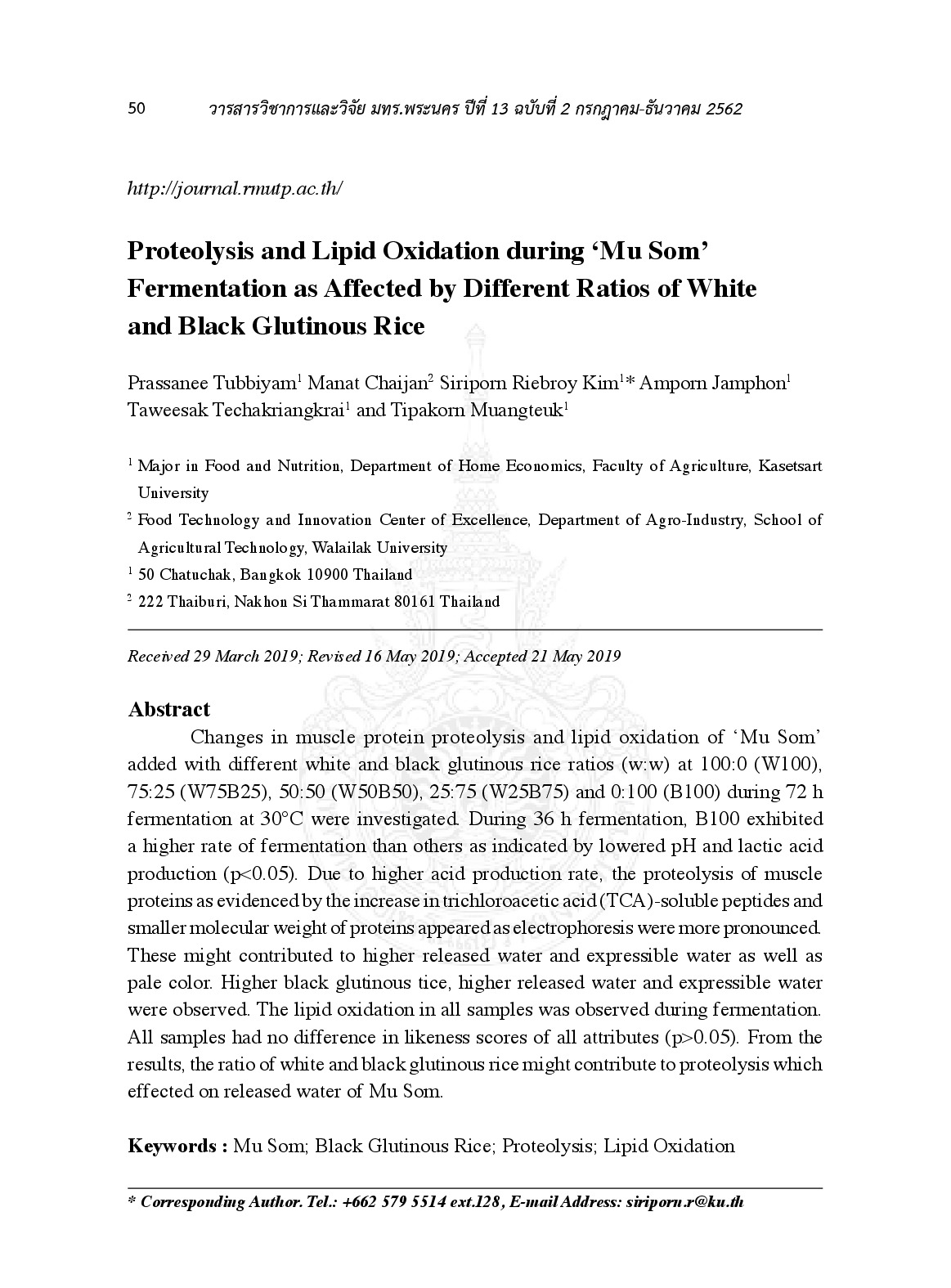
Proteolysis and lipid oxidation during ‘mu som’ fermentation as affected by different ratios of white and black glutinous rice
Changes in muscle protein proteolysis and lipid oxidation of ‘Mu Som’ added with different white and black glutinous rice ratios (w:w) at 100:0 (W100) 75:25 (W75B25) 50:50 (W50B50) 25:75 (W25B75) and 0:100 (B100) during 72 h fermentation at 30°C were investigated. During 36 h fermentation B100 exhibited a higher rate of fermentation than others as indicated by lowered pH and lactic acid production (p<0.05). Due to higher acid production rate the proteolysis of muscle proteins as evidenced by the increase in trichloroacetic acid (TCA)-soluble peptides and smaller molecular weight of proteins appeared as electrophoresis were more pronounced. These might contributed to higher released water and expressible water as well as pale color. Higher black glutinous tice higher released water and expressible water were observed. The lipid oxidation in all samples was observed during fermentation. All samples had no difference in likeness scores of all attributes (p>0.05). From the results the ratio of white and black glutinous rice might contribute to proteolysis which effected on released water of Mu Som.
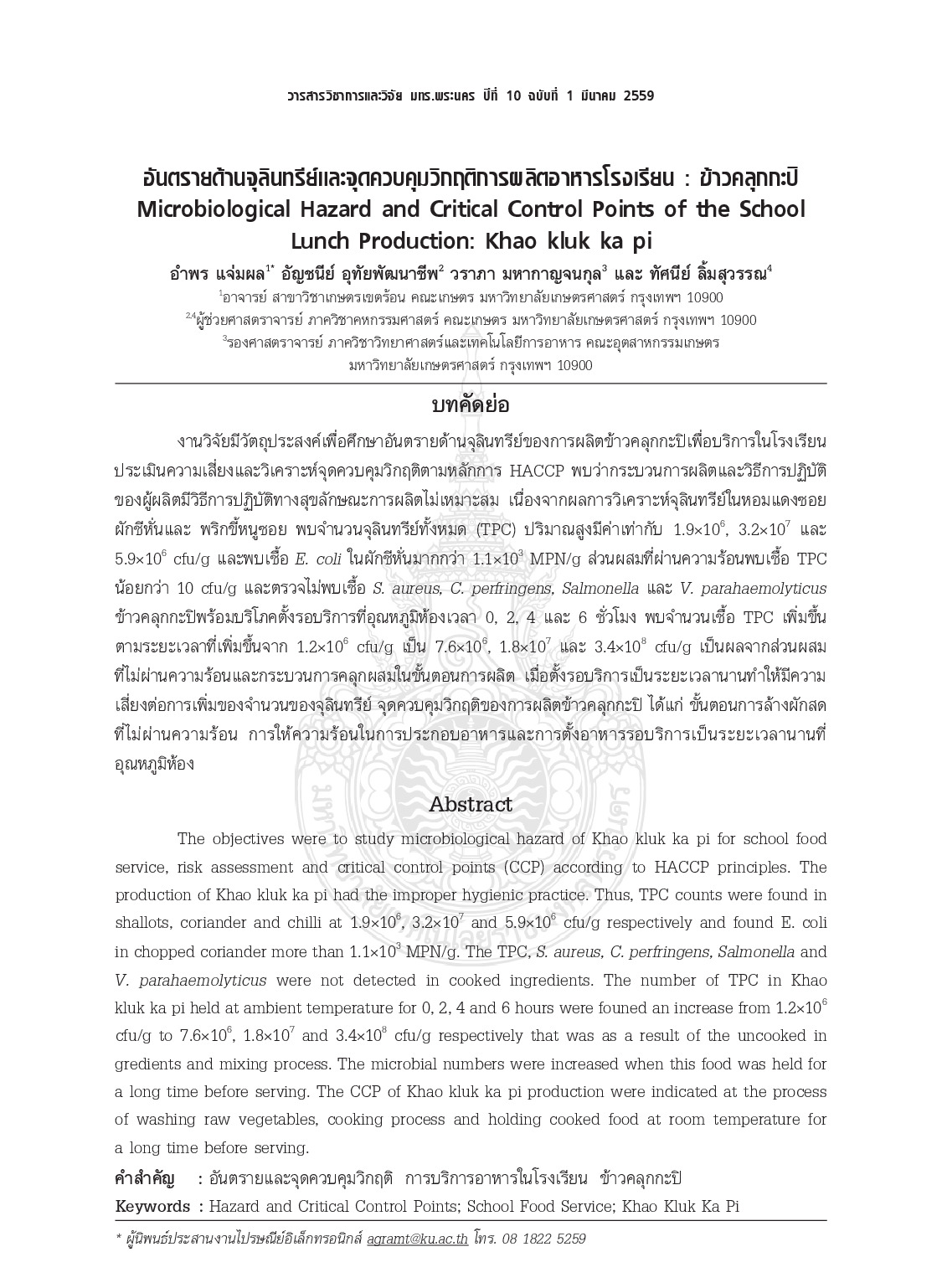
อันตรายด้านจุลินทรีย์และจุดควบคุมวิกฤติการผลิตอาหารโรงเรียน : ข้าวคลุกกะปิ
The objectives were to study microbiological hazard of Khao kluk ka pi for school food service risk assessment and critical control points (CCP) according to HACCP principles.The production of Khao kluk ka pi had the improper hygienic practice. Thus TPC counts were found in shallots coriander and chilli at 1.9×10⁶ 3.2×10⁷ and 5.9×10⁶ cfu/g respectively and found E. coli in chopped coriander more than 1100 MPN/g. The TPC S. aureus C. perfringens Salmonella and V. parahaemolyticus were not detected in cooked ingredients. The number of TPC in Khao kluk ka pi held at ambient temperature for 0 2 4 and 6 hours were founed an increase from 1.2×10⁶ cfu/g to 7.6×10⁶ 1.8×10⁷ and 3.4×10⁸ cfu/g respectively that was as a result of the uncooked ingredients and mixing process. The microbial numbers were increased when this food was held for a long time before serving. The CCP of Khao kluk ka pi production were indicated at the process of washing raw vegetables cooking process and holding cooked food at room temperature for a long time before serving.