จำนวน Repository ( 2 )
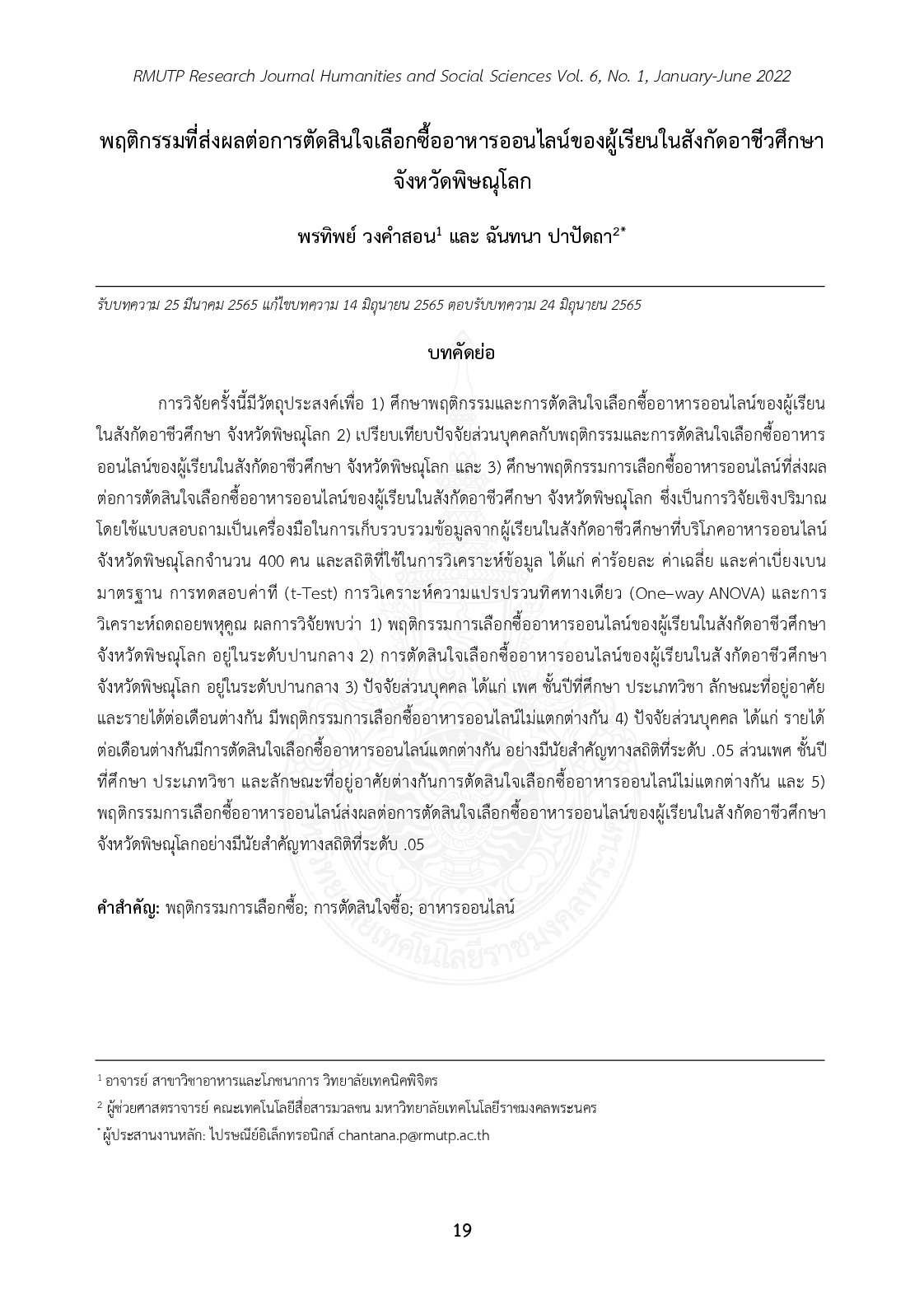
พฤติกรรมที่ส่งผลต่อการตัดสินใจเลือกซื้ออาหารออนไลน์ของผู้เรียนในสังกัดอาชีวศึกษา จังหวัดพิษณุโลก
The objectives of this research were 1) to study the behavior and decision to buy online food of vocational students in Phitsanulok Province 2) to compare of personal factors with behavior and decision to buy online food of vocational students in Phitsanulok Province and 3) to study online food shopping behavior affecting to buy online food decisions of students vocational in Phitsanulok Province. The research was a quantitative research using questionnaires from 400 vocational students in Phitsanulok Province. Data was systematically analyzed by percentage mean standard deviation (S.D.) t-Test One-way ANOVA and multiple regression analysis. The result showed that the behavior of buying online food was at moderate level. The decision to buy online food was at moderate level. Difference Personal factors including gender year of study type of subject housing type and monthly income had different of behavior of online food shopping with no statistical significance. Difference Personal factors including type of subject and monthly income had different of decision to buy food online with statistical significance at .05. Online food purchasing behavior effecting decision to buy food online with statistical significance at .05.
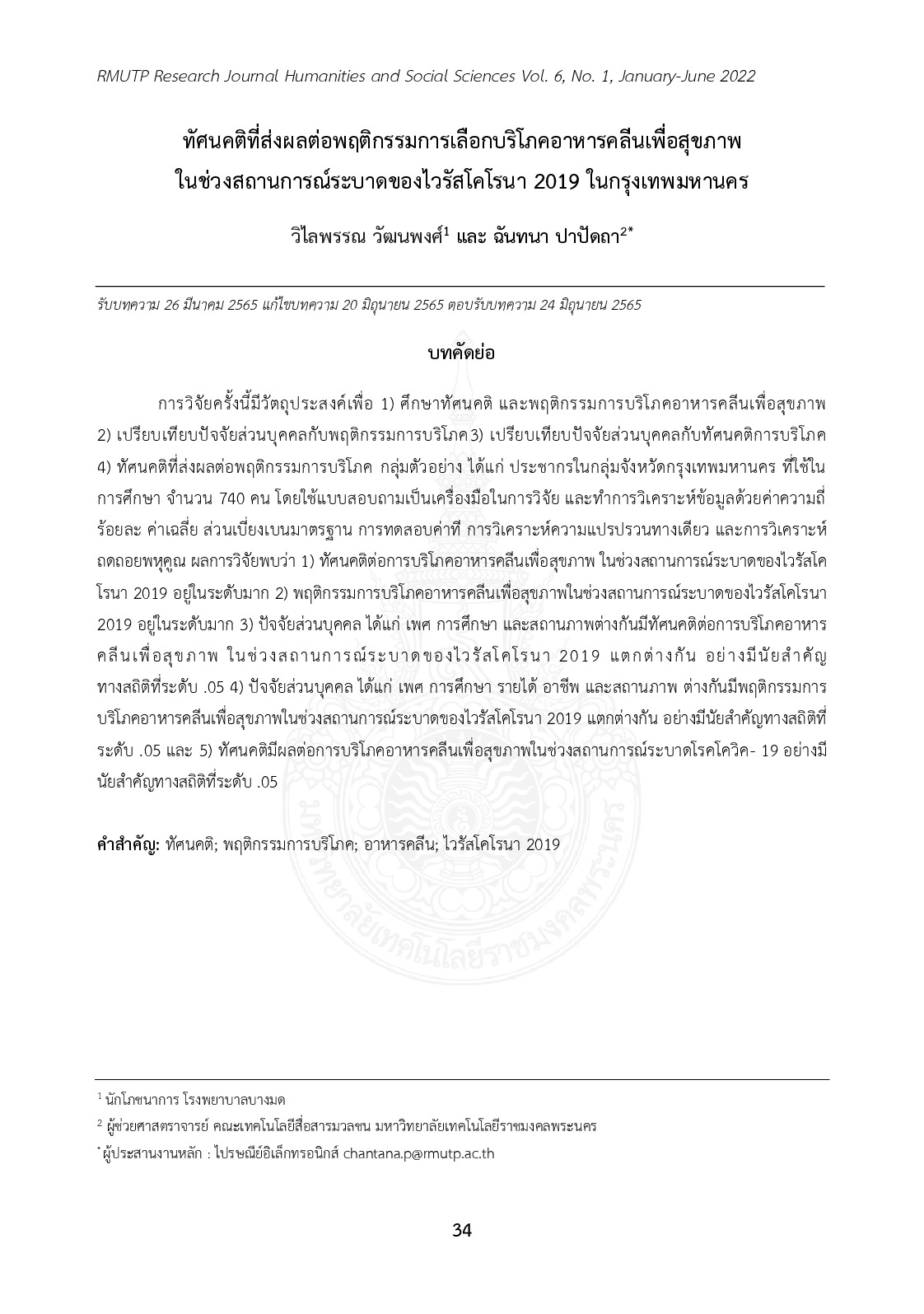
ทัศนคติที่ส่งผลต่อพฤติกรรมการเลือกบริโภคอาหารคลีนเพื่อสุขภาพในช่วงสถานการณ์ระบาดของไวรัสโคโรนา 2019 ในกรุงเทพมหานคร
The objectives of this research were to 1) study attitudes and consumption behavior of clean food for health 2) compare personal factors with consumption behavior 3) compare personal factors with consumption attitudes and 4) study attitudes affecting consumption behavior. The sample group was the population of Bangkok Province. Used in the study: 740 people. The questionnaire was used as a research tool. The data were analyzed by frequency percentage mean standard deviation. T-value test Analysis of one-way ANOVA and multiple regression analysis. The research results were found that: attitudes towards the consumption of clean food for health during the Covid-19 epidemic situation was at a high level. Clean food for health consumption behavior during the Covid-19 epidemic situation was at a high level.Individual factors including gender education and status had different attitudes towards healthy food consumption. During the Covid-19 epidemic situation the difference was statistically significant at the .05 level Individual factors including gender education income occupation and status had different healthy clean food consumption behaviors during the Covid-19 epidemic with statistical significance at the .05 level. Attitudes had a statistically significant effect on healthy food consumption during the Covid-19 epidemic at .05 level.