จำนวน Repository ( 2 )
การพัฒนาผลิตภัณฑ์อาหารจากปลาน้ำจืดเพื่อเพิ่มมูลค่าทางเศรษฐกิจ
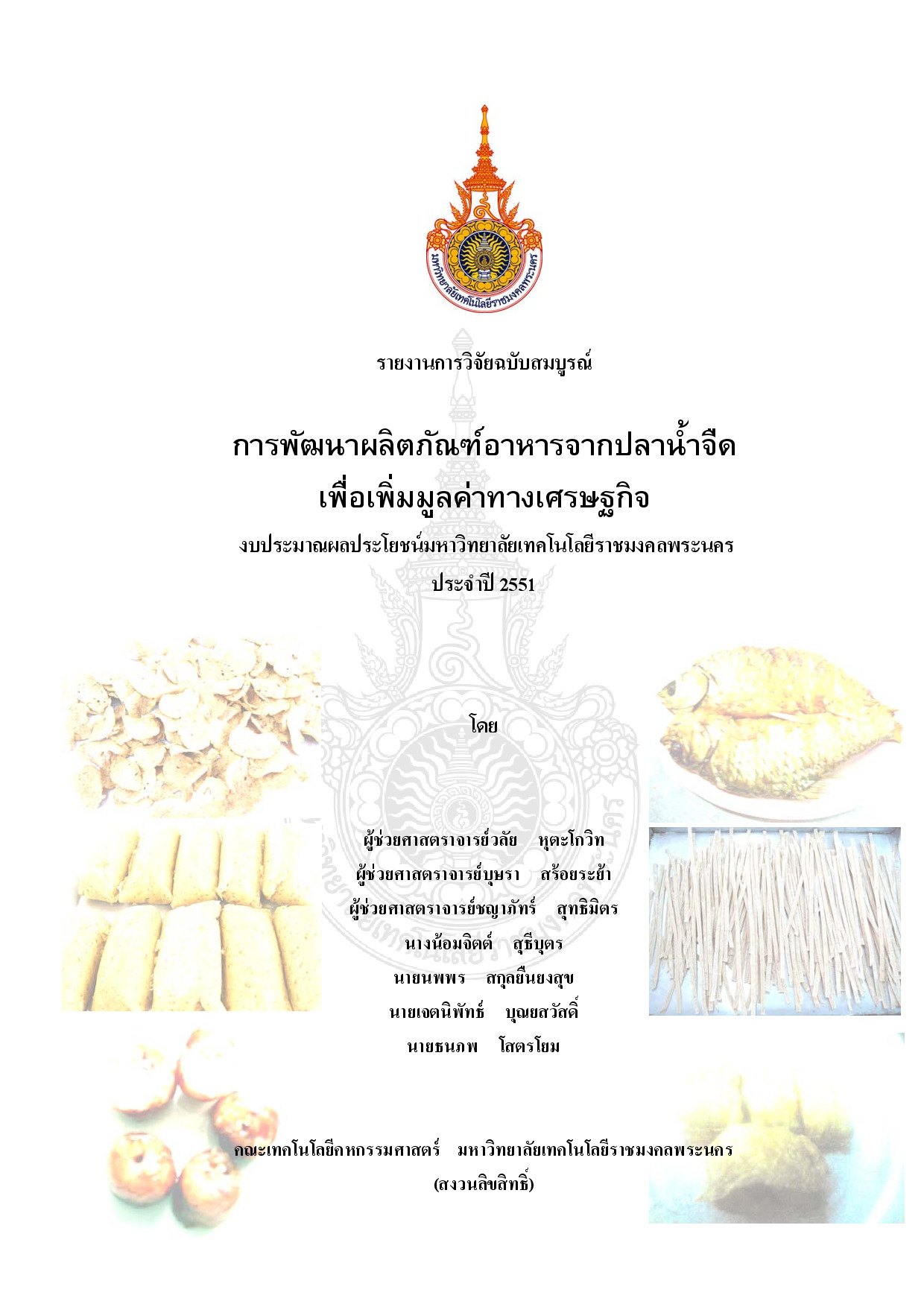
โครงการวิจัยเรื่อง การพัฒนาผลิตภัณฑ์อาหารจากปลาน้ำจืดเพื่อเพิ่มมูลค่าทางเศรษฐกิจ ได้ดำเนินการสำรวจและคัดเลือกแหล่งจัดซื้อวัตถุดิบที่เหมาะสม ความต้องการของตลาดผลิตภัณฑ์ปลาแปรรูป ผลิตภัณฑ์ที่เหมาะสมกับปลาแต่ละชนิดและน่าสนใจเพื่อนำมาพัฒนาเป็นผลิตภัณฑ์อาหารแปรรูปจากปลาน้ำจืด พบว่าการพัฒนาสูตรและกรรมวิธีการแปรรูปปลาน้ำจืด 6 ผลิตภัณฑ์ ได้แก่ ไส้กรอกปลารสต้มยำ ไส้กรอกอีสานปลานิล ปลายอสมุนไพร ปลาจ๊อ ปลาตะเพียนแผ่นปรุงรสสำเร็จ และน้ำพริกปลาตะเพียน ผลการพัฒนาผลิตภัณฑ์ พบว่า ไส้กรอกปลารสต้มยำ สูตรที่ยอมรับมากที่สุดเป็นสูตรที่ใช้ปลายี่สกทดแทนปลากราย 50 % และ เครื่องต้มยำกึ่งสำเร็จรูป (ชนิด C) 75 กรัม ไส้กรอกอีสานปลานิล ใช้สูตรพื้นฐานที่ได้จากกรมปศุสัตว์ ฝ่ายถ่ายทอดเทคโนโลยีผลิตภัณฑ์เนื้อสัตว์ และใช้ข้าวจ้าวหุงสุก ผลิตภัณฑ์ปลายอสมุนไพร ใช้เนื้อปลานิล แป้งมัน เกลือป่น พริกไทย ไข่ไก่ มันหมู ปริมาณน้ำพริกแกงเผ็ดสมุนไพรที่เหมาะสมในสูตรร้อยละ 3.5 การพัฒนาผลิตภัณฑ์ปลาจ๊อ สูตรที่ใช้เนื้อปลานิลบด มันหมู รากผักชี กระเทียม พริกไทย เกลือ แป้งสาลี น้ำตาลทราย ซีอิ้วขาว ไข่เป็ด ต้นหอม และผักชี ได้รับการยอมรับมากที่สุด การปรับปรุงลักษณะเนื้อสัมผัสโดยใช้ผสมมันหมูที่ใช้วิธีการบดผสม มีคะแนนความชอบมากกว่าการสับละเอียดและหั่นเป็นชิ้นเล็กๆ การศึกษาระยะเวลาการละลายน้ำแข็งจากการเก็บปลาจ๊อเข้าตู้แช่แข็งเป็นเวลา 2 สัปดาห์ เมื่อนำไปละลายน้ำแข็งที่กำลังความร้อน 70% เป็นเวลา1 นาที ผู้ทดสอบชิมให้การยอมรับมากที่สุด ผลิตภัณฑ์ปลาตะเพียนแผ่นปรุงรสสำเร็จรูป โดยการนำปลาตะเพียนขาวมาพัฒนาเป็นปลาแผ่นปรุงรสสำเร็จรูป พบว่าสูตรที่ให้การยอมรับมากที่สุด ประกอบด้วยเนื้อปลาบด ซีอิ๊วขาว น้ำตาลทราย เกลือไนไตรท์ ยี่หร่า พริกไทย ลูกผักชี และน้ำแข็ง กรรมวิธีการขึ้นรูปให้เป็นแผ่นโดยการอัดเป็นแท่งแล้วใช้เครื่องสไลด์ตัดมีคะแนนความชอบจากการทดสอบทางประสาทสัมผัสมากกว่าการคลึง การอัดเป็นแท่งแล้วใช้มีดตัด ผลิตภัณฑ์น้ำพริกปลาตะเพียนสูตรน้ำพริกปลาย่าง ใช้ปริมาณเนื้อปลาตะเพียน 70% วิธีการทำแห้งที่เหมาะสม คือ อบที่อุณหภูมิ 73 องศาเซลเซียส เป็นเวลา 1 ชั่วโมง This research aimed to survey and screen the appropriate resource study the need of fish processed product and investigate the suitable product that fit for each freshwater fish. The findings of this study demonstrated that the most suitable products were 6 ones such as Fish sausage with Tom Yam flavour added Fermented Thai Fish Sausage from Nile Tilapia fish Pla – Yor with Herbs Pla – Jor Fish Flake from Silver Barb Fish and Sauce of grilled silver barb fish paste and chili . The results of product development were : Fish Sausage with Tom Yam Flavour Added was developed by using Seven-Stripped Carp fish partial substituted with Spotted Featherback fish at level 50 % and 75 grams instant Tom Yum flavour (type C). Fermented Thai Fish Sausage from Nile Tilapia fish was developed by using dry-cooked rice. Pla – Yor with Herbs was developed by using Nile Tilapia and 3.5 % curry paste. Pla – Jor was developed by using minced lard and thawing 2-week frozen Pla – Jor by microwave at heat level 70 % for 1 minute. Fish Flake from Silver Barb Fish was developed by crushing to roll and sliding to sheet. Sauce of grilled Silver Barb fish paste and chili was developed by using Silver Barb fish partial substituted with shrimp at level 70 % and the appropriate drying method was using tray dryer at 73OC for 1 hour.

Development of Fruit - Confectionery Products From the Leftover from Fruit - Canning Factories in Small Business Industry
Development of fruit – confectionery products the leftover from fruit – canning factories in small business industry is the second – year continuous project. The aims were to study the product shelf life and to transfer production process to the community and private sectors. The result of shelf – life study indicated that the pH and water activity of Papaya Cream Guava Cream Pineapple Cream Mixed – flavoured fruit (yee) and Banana toffee were 3.78 3.62 3.20 3.48 3.57 3.92 and 0.97 0.97 0.91 0.60 0.51 0.58 respectively. At an 8-week period no microorganism – borne deterioration of the products was found;moreover they were accepted by the consumers. The target group of as participants as planned was trained for a 3 – day period to produce 5 fruit – confectionery products. The training evaluation revealed that the group considered management on instructors teaching materials and laboratories ‘much’ to ‘most appropriate’; whereas training operation was viewed ‘most appropriate’. At the project end it was found that 29.27% 29.27 and 28.05% of the target group made fruit – confectionery for family consumption and as a gift or a souvenir respectively; 9.76% put their products in stores for sale as a supplemental career; 3.65% transferred their knoeledge to others.