จำนวน Repository ( 2 )
ผลของอุณหภูมิที่มีต่อค่าความต้านทานและความจุไฟฟ้าของข้าวเปลือกที่มีความชื้นแตกต่างกัน
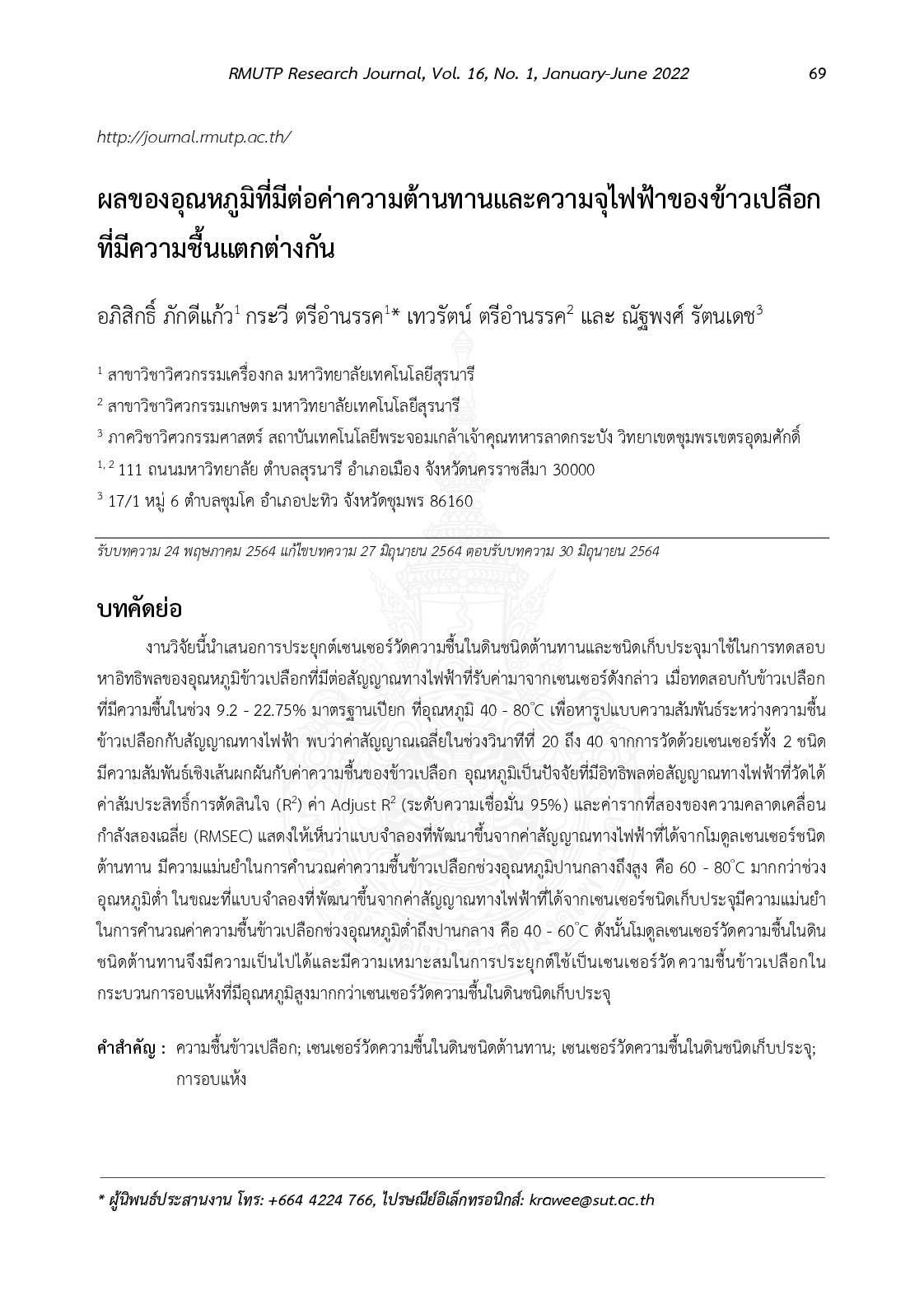
This research proposes an application of resistive and capacitive soil moisture sensors to investigate the influences of paddy temperature on the electrical signal received from sensors when tested with paddy moisture in the range 9.2 - 22.75%wb at 40 - 80ºC to determine the relationship between paddy moisture and electrical signals. It was found that the mean signal values between 20 - 40 seconds from both sensors were inversely linear correlation with the moisture content of the paddy. Temperature is the factors that influence the measured electrical signal. R2 Adjust R2 (95% confidence interval) and RMSEC showed that the model developed from the resistive sensor signals was accurate in calculating the moisture content of paddy between medium to high temperature in range 60 - 80ºC more than the low temperature range. While the capacitive sensor signals model is accurate in calculating paddy moisture between low to medium temperature in range 40 - 60 ºC. Therefore the resistive soil moisture sensor is possible and more suitable for applying as a paddy moisture sensor in the high temperature drying processes than a capacitor soil moisture sensor.
Effect of temperature on roast of sungyod phatthalung popped rice to nutritional values
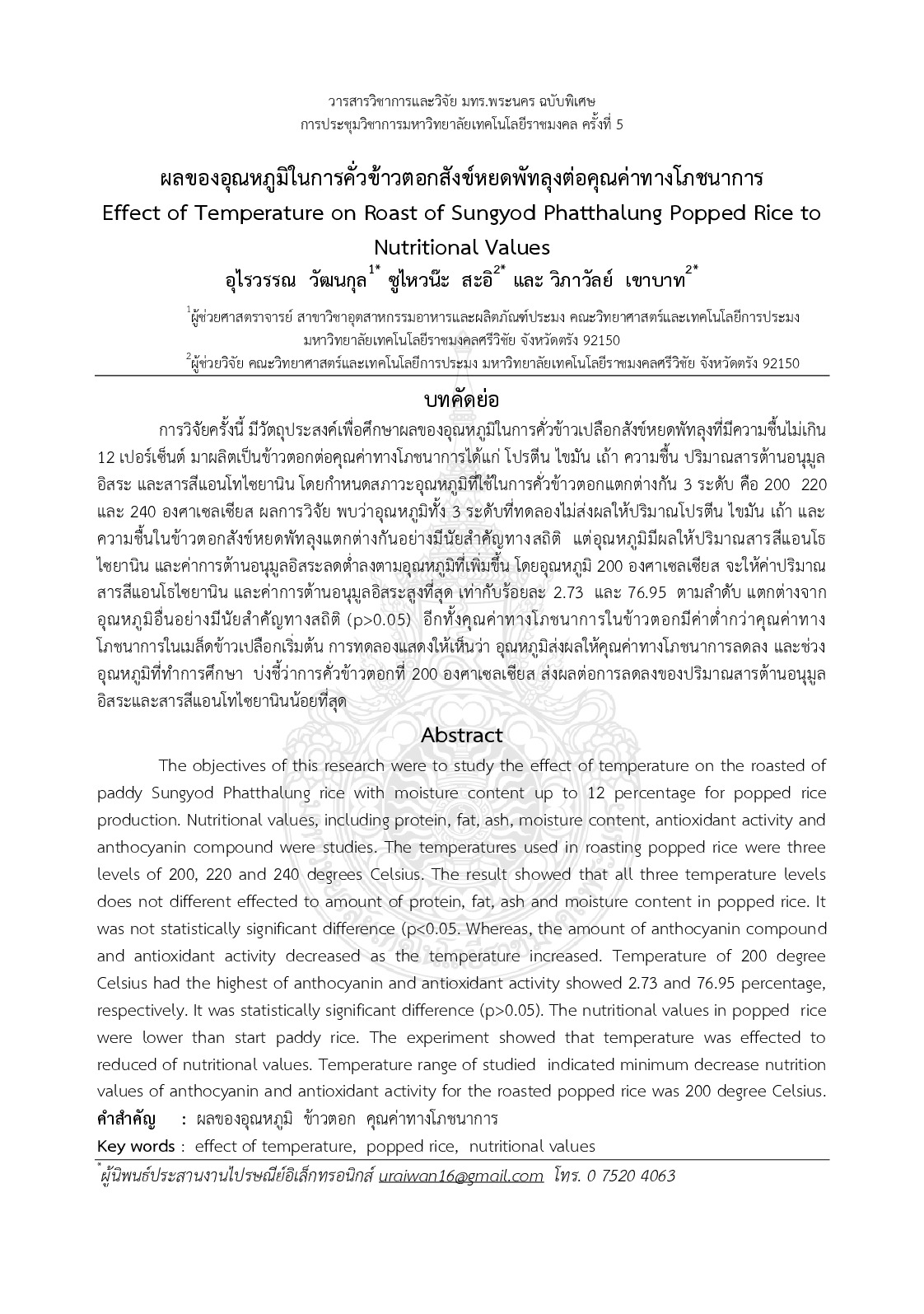
The objectives of this research were to study the effect of temperature on the roasted of paddy Sungyod Phatthalung rice with moisture content up to 12 percentage for popped rice production. Nutritional values including protein fat ash moisture content antioxidant activity and anthocyanin compound were studies. The temperatures used in roasting popped rice were three levels of 200 220 and 240 degrees Celsius. The result showed that all three temperature levels does not different effected to amount of protein fat ash and moisture content in popped rice. It was not statistically significant difference (p<0.05. Whereas the amount of anthocyanin compound and antioxidant activity decreased as the temperature increased. Temperature of 200 degree Celsius had the highest of anthocyanin and antioxidant activity showed 2.73 and 76.95 percentage respectively. It was statistically significant difference (p>0.05). The nutritional values in popped rice were lower than start paddy rice. The experiment showed that temperature was effected to reduced of nutritional values. Temperature range of studied indicated minimum decrease nutrition values of anthocyanin and antioxidant activity for the roasted popped rice was 200 degree Celsius.