จำนวน Repository ( 7 )
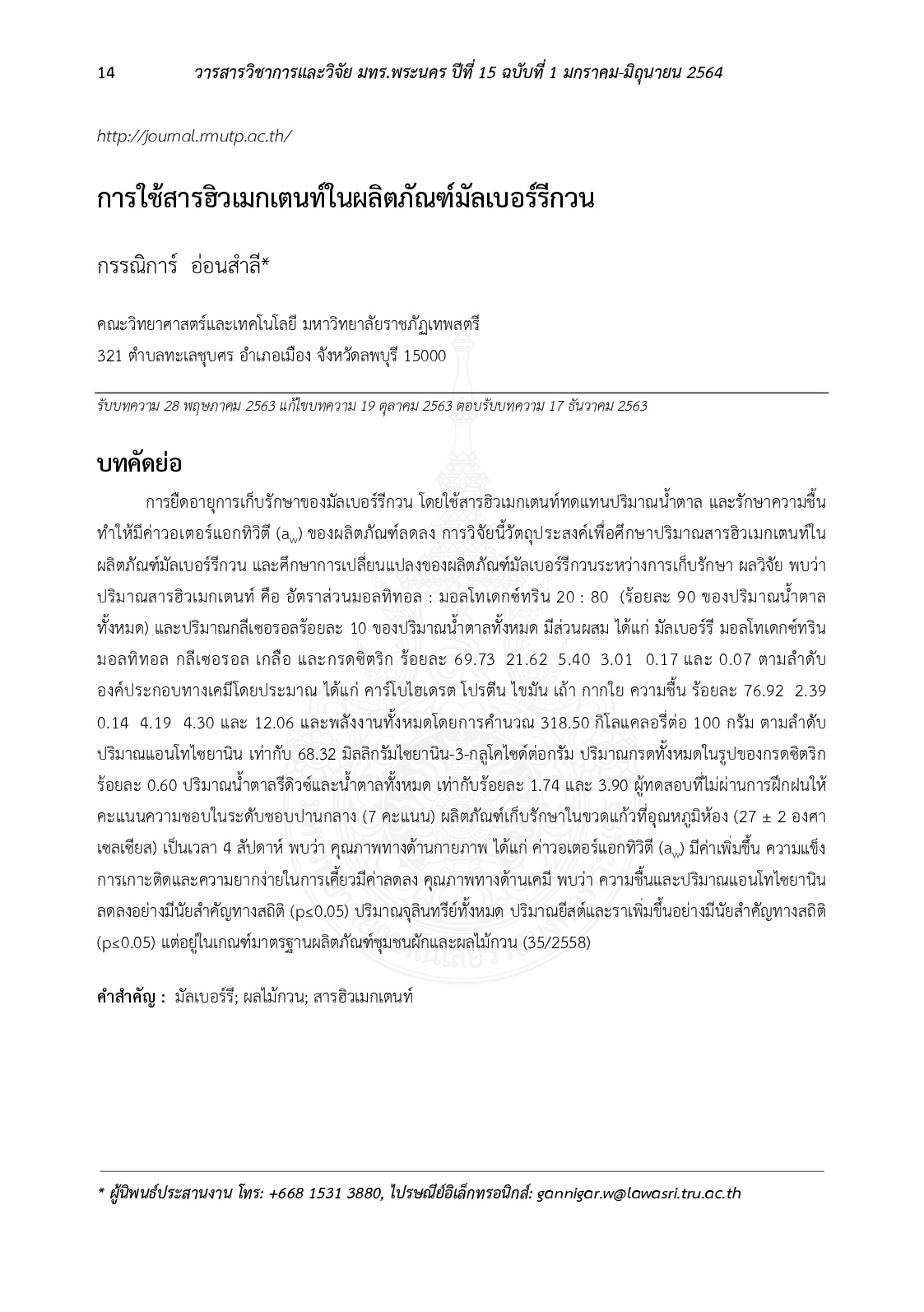
การใช้สารฮิวเมกเตนท์ในผลิตภัณฑ์มัลเบอร์รีกวน
The shelf-life extension of mulberry paste by using humectants to place sugar content could maintain the moisture while reducing the water activity (aw) of the product. The objectives of this research were to study on humectants replacement and the changes of the mulberry paste product quality during storage. The sugar content in the standard formula was replaced by 10% w/w glycerol and 90% w/w of maltitol and maltodextrin mixture (20:80 w/w). The final mulberry paste product consisted of mulberry maltodextrin maltitol glycerol salt and citric acid by 69.80% 21.62% 5.40% 3.01% 0.17% and 0.07% respectively. The chemical compositions: carbohydrates proteins fat ash fiber and moisture of the product were 76.92% 2.39% 0.14% 4.19% 4.30% 12.06% respectively. The total energy by calculation was 318.50 kcal/100 g. The anthocyanin content was 68.32 mg cyanidin- 3-glucoside/g. Total titratable acidity (citric acid equivalent) was 0.60%. The reducing sugar and total sugar values were 1.74% and 3.90% respectively. The consumer acceptance as evaluated by untrained panelists was in the level of moderately like (7 score). The product packed in glass bottle containers was stored at 27±2 ºC for 4 weeks. The aw was increased while the textural properties: hardness adhesiveness and chewiness were decreased. The chemical quality analysis showed significant decreases (p≤0.05) in the moisture and the anthocyanin contents. The microbial quality; total plate count and yeast and mold measurements were significantly increased (p≤0.05) however the values were within the acceptable range according to the Thai community product standard (35/2558).
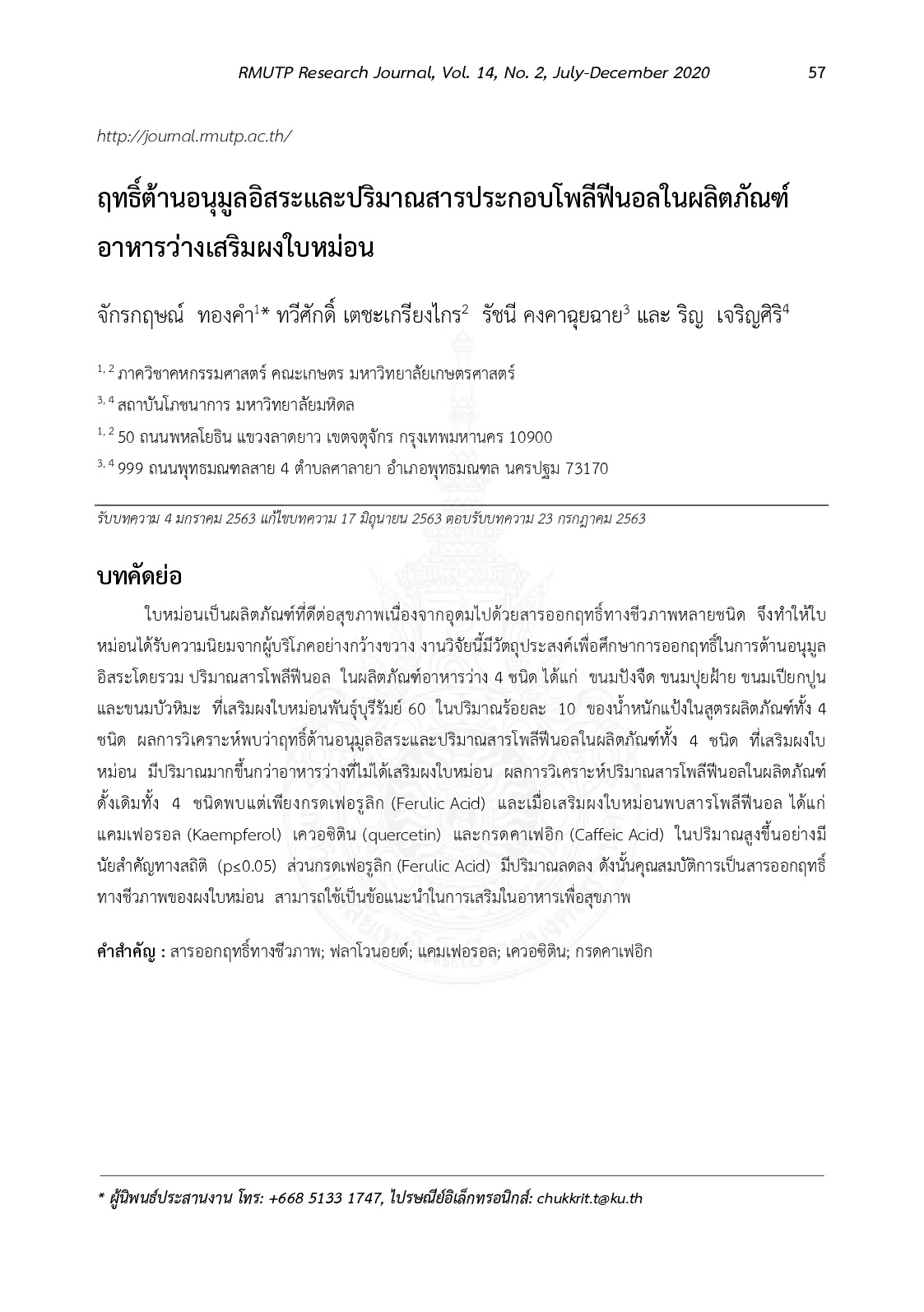
ฤทธิ์ต้านอนุมูลอิสระและปริมาณสารประกอบโพลีฟีนอลในผลิตภัณฑ์อาหารว่างเสริมผงใบหม่อน
The potential health benefits attributed to mulberry leaf and its bioactive compounds have led to a huge increase of mulberry leaf products in the food market. The objective of this research was to determine total antioxidant activities ( FRAP and DPPH assays) and polyphenol compounds in 4 snack products i.e. loaf-bread puifai (Thai steamed cupcakes) peakpoon (Green coconut sweet pudding) and snow skin mooncake fortified with 10% mulberry leaf powder from “ Buri Rum 60” cultivar. The result showed that antioxidant activities and polyphenol contents increased in 4 products fortified with mulberry leaf powder. Ferulic acid was the only phenolic compound found in all original products. Kaempferol quercetin and caffeic acid were significantly increased whereas ferulic acid was reduced in the modified formulas. Therefore these bioactive compounds properties of mulberry leaf powder suggested their possible use for fortifying the healthy foods.
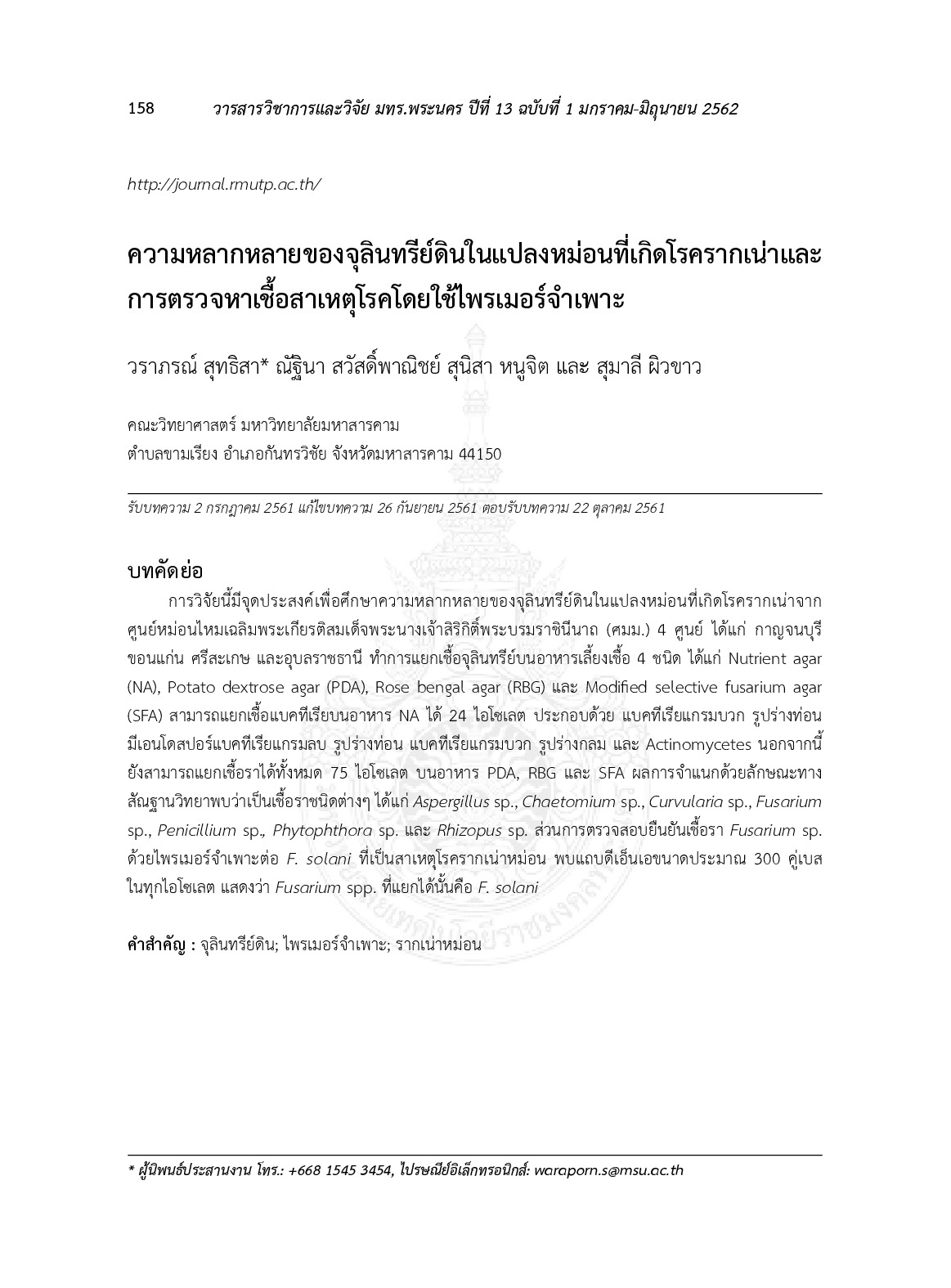
ความหลากหลายของจุลินทรีย์ดินในแปลงหม่อนที่เกิดโรครากเน่าและการตรวจหาเชื้อสาเหตุโรคโดยใช้ไพรเมอร์จำเพาะ
The diversity of soil microorganisms in mulberry root rot disease infesting fields was investigated from The Queen Sirikit Sericulture Center at Kanchanaburi Khon Kaen Sisaket and Ubon Ratchathani provinces. Isolation of the soil microorganisms was performed on four media as nutrient agar (NA) potato dextrose agar (PDA) rose bengal agar (RBG) and modified selective fusarium agar (SFA). Twenty-four bacterial isolates were arisen from NA including gram positive endospore forming rod gram negative rod gram positive cocci and Actinomycetes. Similarly 75 isolates of fungi were gained from PDA RBG and SFA and could be defined to be Aspergillus sp. Chaetomium sp. Curvularia sp. Fusarium sp. Penicillium sp. Phytophthora sp. and Rhizopus sp. by their morphological characteristics. Verification of the causal pathogen of mulberry root rot disease could be accomplished using specific primers for F. solani in which a DNA band at approximately 300 bp was revealed.
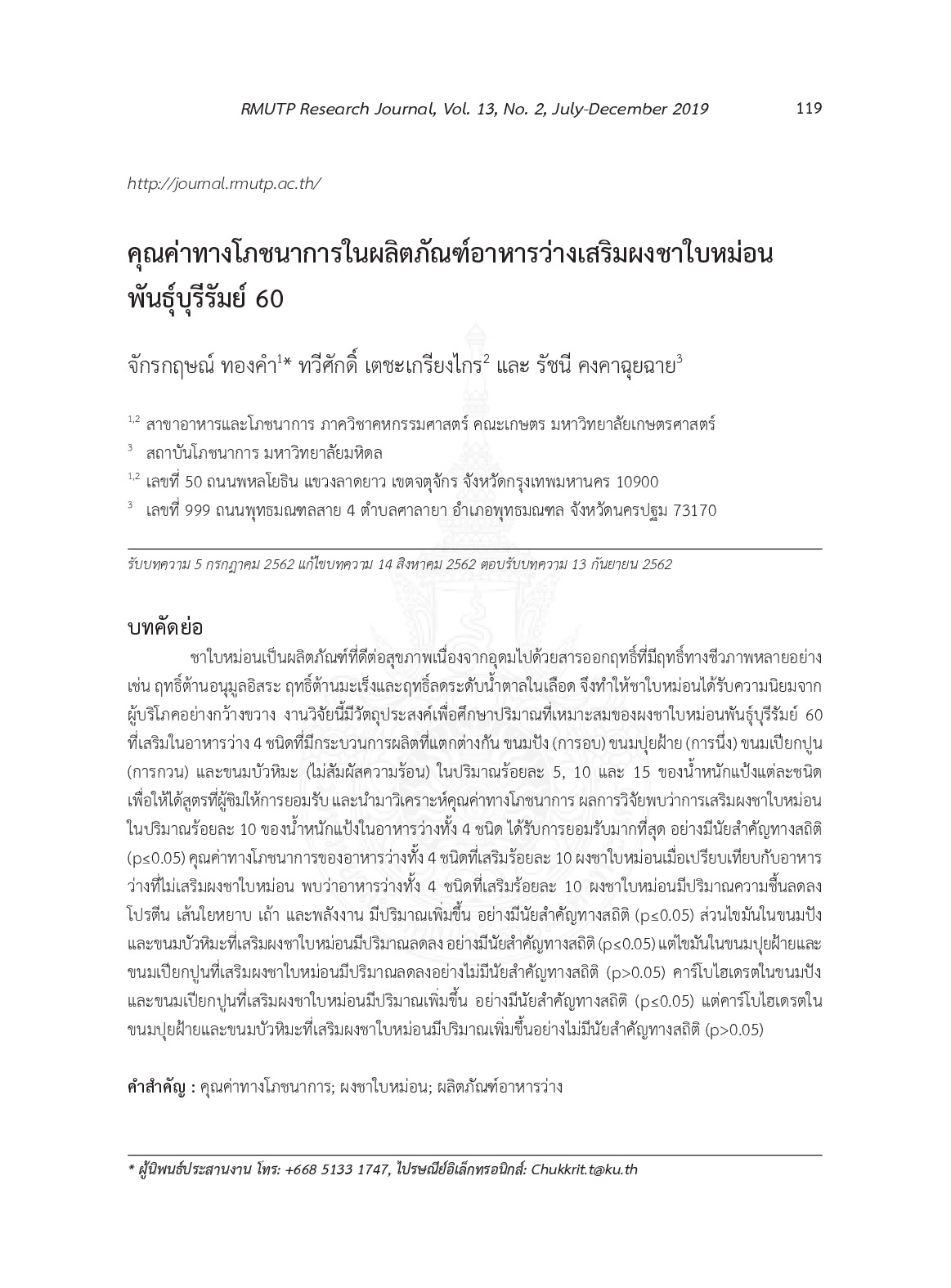
คุณค่าทางโภชนาการในผลิตภัณฑ์อาหารว่างเสริมผงชาใบหม่อนพันธุ์บุรีรัมย์ 60
The potential health benefits attributed to mulberry leaf tea and its bioactive compounds such as antioxidant effects cancer chemoprevention and lower blood sugar levels have led to a huge increase of mulberry leaf tea products in the food market. The objectives of this research were to determine the appropriate amount of mulberry leaf tea powder Buri Rum 60 added in 4 snack products which were cook by 4 different process i.e. bread (baked) puifai (steam) peakpoon (stir) and snow lotus (no heat treatment). The Mulberry leaf tea powder was used in the ingredients for 3 levels i.e. 5 10 and 15%. Then the most preferred formula was analyzed for the nutritional values. The result showed that all 4 snacks added with Mulberry leaf tea powder at level of 10% were accepted the most. The nutritive value of these 4 snacks indicated that the moisture contents decreased while protein fiber ash energy increased significantly (p≤0.05). In comparison to the original formulas fat decreased significantly in bread and snow lotus added with mulberry leaf tea powder (p≤0.05) and decreased non-significantly in puifai and peakpoon added with Mulberry leaf tea powder (p>0.05). Carbohydrate increased significantly in bread and peakpoon added with mulberry leaf tea powder (p≤0.05) and increased non-significantly in puifai and snow lotus added with Mulberry leaf tea powder (p>0.05).
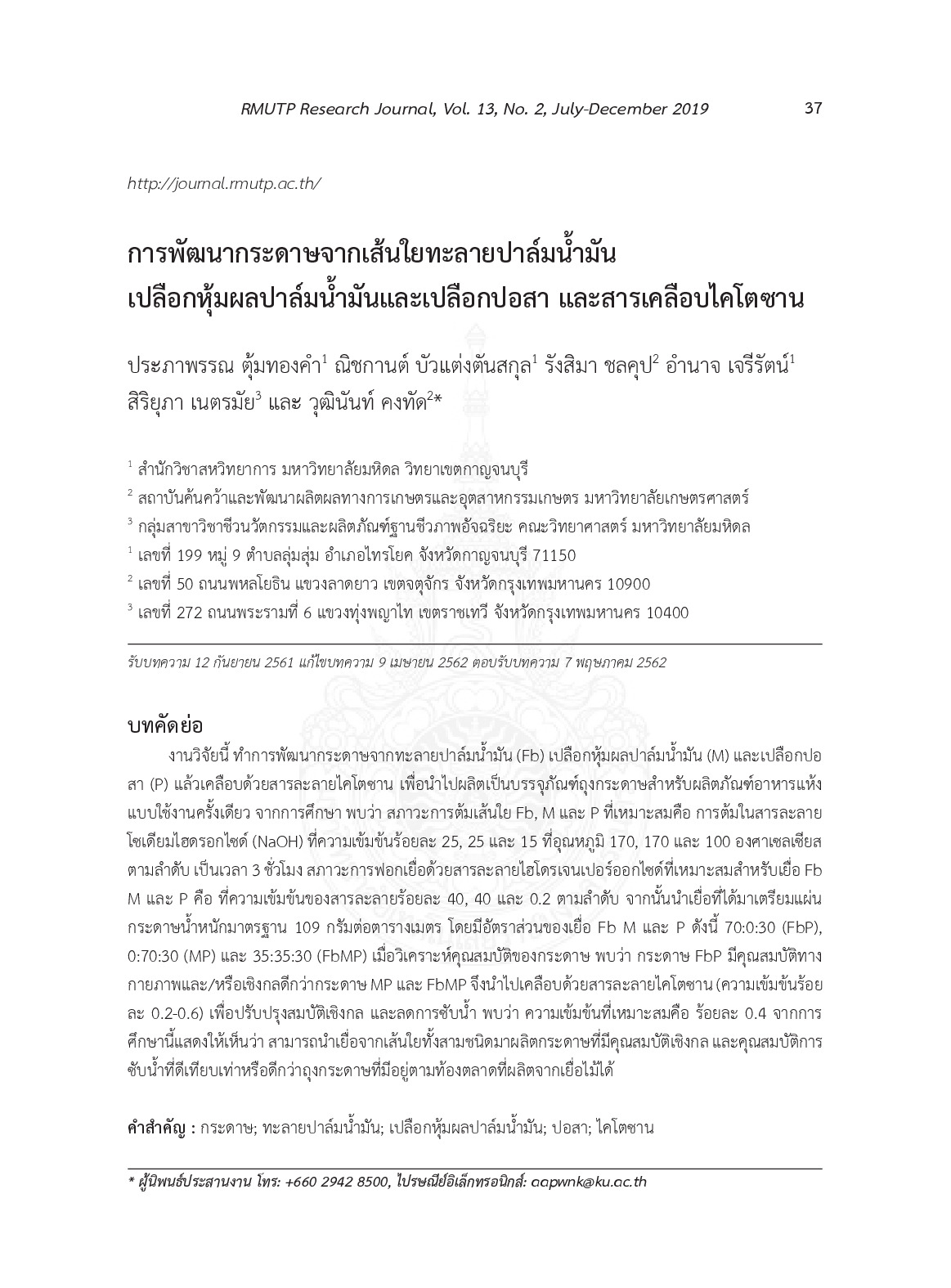
การพัฒนากระดาษจากเส้นใยทะลายปาล์มน้ำมันเปลือกหุ้มผลปาล์มน้ำมันและเปลือกปอสา และสารเคลือบไคโตซาน
This research aimed to develop paper from oil palm empty fruit bunch (Fb) oil palm mesocarp (M) and paper mulberry (P) with chitosan coating to be used as single-use paper bag for dry food products. The optimal pulp preparation conditions for Fb M and P fibers were boiling in 25 25 and 15% NaOH solution at 170 170 and 100°C for 3 hours respectively. The optimal H2O2 concentrations for bleaching of Fb M and P pulps were 40% 40% and 0.2% respectively. The obtained pulps were used to prepare papers with the basis weight of 109 g/m2 . The papers consisted of Fb M and P pulps at ratios of 70:0:30 (FbP) 0:70:30 (MP) and 35:35:30 (FbMP). It was found that FbP paper showed superior physical and/or mechanical characteristics than those of MP and FbMP. FbP papers were then coated with chitosan solutions (0.2-0.6%) to further improve their mechanical properties and reduce their water absorption characteristics. The optimal concentration of chitosan was 0.4%. This study showed that all three types of pulps could be used to produce papers that had equal or superior mechanical- and water adsorption properties as compared to those of commercially available paper bags made from wood pulp.