จำนวน Repository ( 98 )
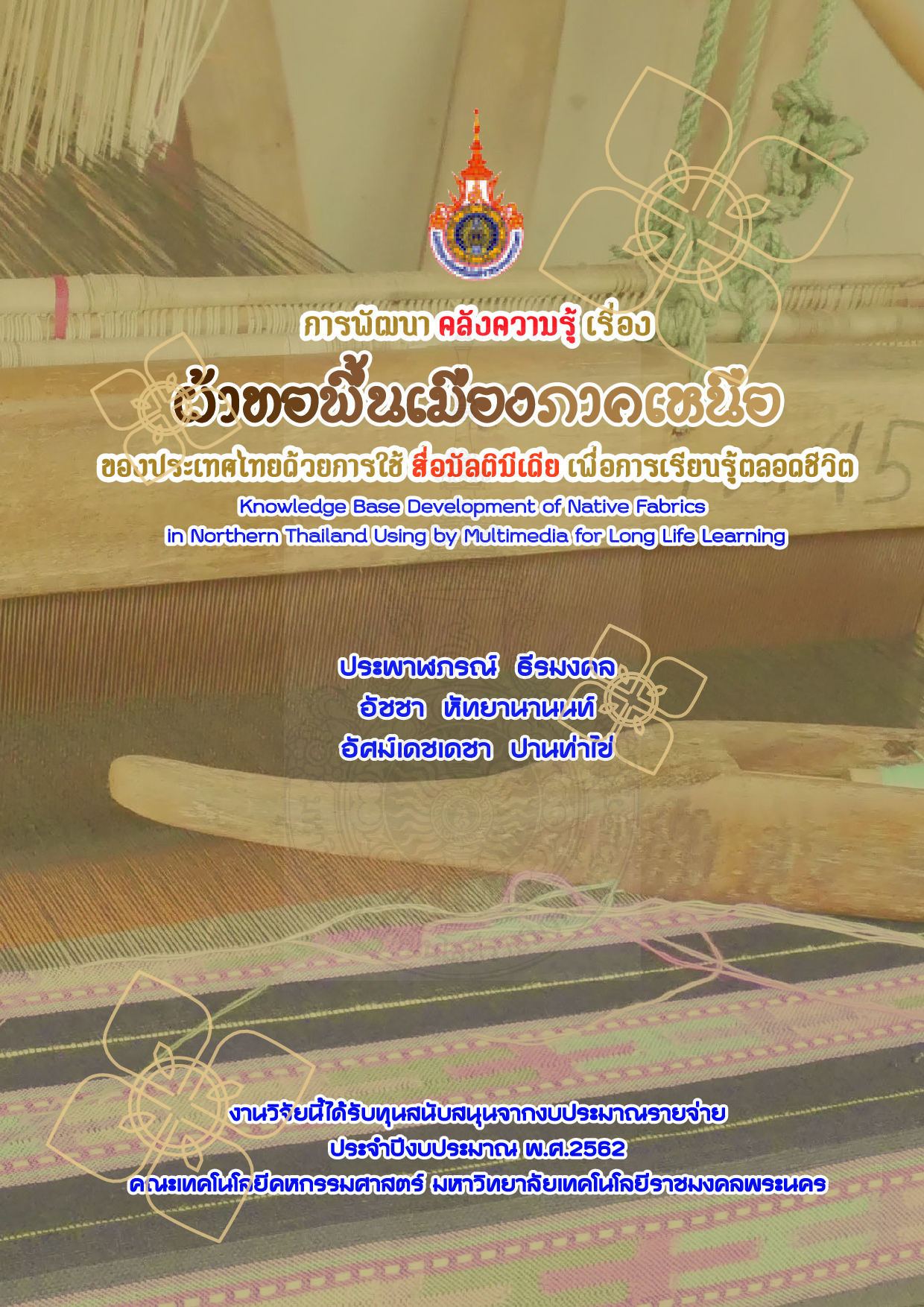
การพัฒนาคลังความรู้เรื่องผ้าทอพื้นเมืองภาคเหนือของ ประเทศไทยด้วย การใช้สื่อมัลติมีเดียเพื่อการเรียนรู้ตลอดชีวิต
This research is the development of the knowledge base on local textiles of northern Thailand by using multimedia for lifelong learning. The aim is to study compile and gather information of local cloths in northern Thailand. Develop a knowledge base by using multimedia on the local textiles of northern Thailand for lifelong learning and transferring knowledge and disseminating the knowledge base on northern Thai fabric by using multimedia for lifelong learning to the community. The research team proceeded to gather primary knowledge from the roots of the researchers who are interested in the local woven fabric. Therefore proceeding further knowledge in the upper reaches from literature reviews Including from field trips for data collection through in-depth interviews with important people Interviewing people who have knowledge about social context community local weaving characteristics weaving characteristics name of pattern type of fabric weaving technique of local textiles in northern Thailand in 9 provinces as well as studying primary data from textbooks textbooks and technical documents and in the internet. Thus the research shown that into 3 parts which are 1. Ethnic groups of Northern Thailand 2. Local woven fabric in northern Thailand and 3. Woven process and pattern. After that the knowledge library was developed by using multimedia on the local textiles of Northern Thailand for lifelong learning. This research can summarize the results in the form of a written description showing that the northern region of Thailand in the past was the Lanna Kingdom area. In the area of Xishuangbanna Before moving to the north of Thailand including the Tai Lue Tai Kheen Thai people Tai Yai people Meng (Mon) Lua people villages scattered throughout the highlands of the Lanna region such as Karen (Pak Kahen M) Mien (Yao) Hmong (Meo) Akha (Akha) Lahu (Mso) Lisu. In addition there are some groups in the Lanna fringe such as Khmu Labri (Tong Lueang). Each ethnic group has its own unique style especially Common skirt Has the same basis with the resin head the resin body and the resin tip but each part is not woven differently Have different colors Some ethnicities have a section called Lep which is the part that the weaver often weaves to keep the thread as for knowledge transfer. The research created a book Local woven cloth consists of videos from local knowledge sources and digital documents and to make the transfer of knowledge more complete Therefore held a forum and exhibition on the topic primary fabric of Lanna Kingdom as a medium for those interested in Local woven fabrics in the Lanna Kingdom of Thailand attended. Exchange ideas from various sources of knowledge from the research. While also receiving multimedia for lifelong learning from the inquiry regarding the satisfaction of the participants. The Keynote speakers are interesting and event condition caused the interest in the knowledge content that used to organize the exhibition. Overall the work is most satisfied.
การพัฒนาชุดสื่อประสมโดยการผสมผสานการเรียนรู้แบบทักษะปฏิบัติเดวีส์และการเรียนรู้แบบร่วมมือเพื่อพัฒนาทักษะการแก้ปัญหาสำหรับนักศึกษาทางสาขาวิชาชีพ
การวิจัยครั้งนี้ มีวัตถุประสงค์เพื่อพัฒนาและหาประสิทธิภาพชุดสื่อประสมโดย การผสมผสานการเรียนรู้แบบทักษะปฏิบัติเดวีส์และการเรียนรู้แบบร่วมมือเพื่อพัฒนาทักษะการแก้ปัญหาสำหรับนักศึกษาทางสาขาวิชาชีพ ทำการเปรียบเทียบผลสัมฤทธิ์ทางการเรียนด้วยชุดสื่อประสมระหว่างก่อนเรียนและหลังเรียนและเปรียบเทียบความสามารถในการแก้ปัญหาของนักศึกษา และศึกษาความพึงพอใจของนักเรียนที่มีต่อชุดสื่อประสมโดยการผสมผสานการเรียนรู้แบบทักษะปฏิบัติเดวีส์และการเรียนรู้แบบร่วมมือเพื่อพัฒนาทักษะการแก้ปัญหาสำหรับนักศึกษาทางสาขาวิชาชีพที่พัฒนาขึ้น กลุ่มตัวอย่างที่ใช้ในการวิจัยครั้งนี้ ได้แก่ นักเรียนระดับปริญญาตรี ชั้นปีที่ 3 แขนงวิชาวิศวกรรมอิเล็กทรอนิกส์และโทรคมนาคม จำนวน 27 คน ทำการสุ่มแบบเจาะจง (Purposive Sampling) สถิติที่ใช้ในการวิเคราะห์ข้อมูล ได้แก่ ค่าเฉลี่ย ค่าร้อยละ ส่วนเบี่ยงเบนมาตรฐาน และ ค่าสถิติ t-test ผลการวิจัยพบว่า 1. ผลการหาประสิทธิภาพชุดสื่อประสมโดยการผสมผสานการเรียนรู้แบบทักษะปฏิบัติเดวีส์และการเรียนรู้แบบร่วมมือเพื่อพัฒนาทักษะการแก้ปัญหาสำหรับนักศึกษาทางสาขาวิชาชีพ พบว่า ชุดสื่อประสมเรื่องสายอากาศไมโครสตริปที่พัฒนาขึ้นมีประสิทธิภาพเท่ากับ 73.58/70.74 ซึ่งสูงกว่าเกณฑ์มาตรฐานที่ตั้งไว้ร้อยละ 70/70 2. ผลการเปรียบเทียบผลสัมฤทธิ์ทางการเรียนด้วยชุดสื่อประสมโดยการผสมผสานการเรียนรู้แบบทักษะปฏิบัติเดวีส์และการเรียนรู้แบบร่วมมือเพื่อพัฒนาทักษะการแก้ปัญหาสำหรับนักศึกษาทางสาขาวิชาชีพที่พัฒนาขึ้นระหว่างก่อนเรียนและหลังเรียน พบว่า นักศึกษาที่เรียนด้วยชุดสื่อประสมที่พัฒนาขึ้นหลังเรียนสูงกว่าก่อนเรียนอย่างมีนัยสำคัญทางสถิติที่ระดับ .05 3. ผลการเปรียบเทียบความสามารถในการแก้ปัญหาของนักศึกษาหลังใช้ชุดสื่อประสมโดยการผสมผสานการเรียนรู้แบบทักษะปฏิบัติเดวีส์และการเรียนรู้แบบร่วมมือเพื่อพัฒนาทักษะ การแก้ปัญหาสำหรับนักศึกษาทางสาขาวิชาชีพที่พัฒนาขึ้น พบว่า นักศึกษามีความสามารถในการแก้ปัญหาของนักศึกษาที่เรียนด้วยชุดสื่อประสมที่พัฒนาขึ้นหลังเรียนสูงกว่าก่อนเรียนอย่างมีนัยสำคัญทางสถิติที่ระดับ .05 4. ผลการศึกษาความพึงพอใจของนักเรียนที่มีต่อชุดสื่อประสมโดยการผสมผสานการเรียนรู้แบบทักษะปฏิบัติเดวีส์และการเรียนรู้แบบร่วมมือเพื่อพัฒนาทักษะการแก้ปัญหาสำหรับนักศึกษาทางสาขาวิชาชีพที่พัฒนาขึ้น พบว่า ผู้เรียนมีความพึงพอใจต่อชุดสื่อประสม เรื่อง การวิเคราะห์คุณสมบัติและออกแบบสายอากาศแบบไดโพลด้านต่าง ๆ มีค่าเฉลี่ยของระดับความพึงพอใจอยู่ในระดับมาก
การกำกับดูแลการเผยแพร่เนื้อหาผ่านสื่อออนไลน์ของนักข่าวพลเมือง
This article discusses the offense of citizen journalists in presenting content through online media. The current form of communication in the online media changed from one-way communication to two-way communication. Recipients also change roles from news receptors only to simultaneously become a messenger. The change in communication patterns has resulted in citizen journalists who are responsible for presenting news around them. These journalists however generally preformed their jobs to a particular group of people through ออนไลน์ media such as blogs web sites and social media sites. Without the training in journalism. For the dissemination of content through online media citizen journalists have a great variety of contents and present them in the formats of messages pictures videos live broadcasts via many important social media such as Facebook Twitter etc. and the created websites. The content is published in either legal or illegal manner. The nature of the offense of the citizen journalists appearing in the online media can be identified as follows: 1) presenting false news in the online world 2) presenting political violence content 3) presenting erotic content 4) sexual and obscene 5) serious language expression 6) cyber bullying and cybercrimes: youth falling victim to cyber bullying; being threatened to the verge of scary annoyance and anger; being sexually harassed or abusive with obscenity 7) providing defamatory content and 8) providing offensive materials. In addition this article aims to present the ethics related to the offense of citizen journalists. The laws relating to the offense of four citizen journalists are the Constitution of the Kingdom of Thailand BE 2560 The Criminal Code Act BE 2496 the Act that shall apply the provisions of Part 1 of the Civil and Commercial Code 1992 and the Act on Offenses Against Computer (No. 2) BE 2560; and City Reduces Offender Law.
การพัฒนาสื่อการสอนมัลติมีเดียวิชาพื้นฐานงานประดิษฐ์ เรื่องดอกไม้ประดิษฐ์ สำหรับนักเรียนสาขาวิชาคหกรรมศาสตร์ วิทยาลัยอาชีวศึกษาเสาวภา
The purposes of this research are : 1) effectiveness of teaching of multimedia teaching materials Basic Subjects Inventions About Artificial Flowers for students of Home Economics Saowabha Vocational2) a study of student is satisfaction with teaching of multimedia teaching materials Basic Subjects Inventions About Artificial Flowers for students of Home Economics Saowabha Vocational and 3) the assessing is possibility and the usefulness of the medium of teaching of multimedia teaching materials Basic Subjects Inventions About Artificial Flowers for students of Home Economics Saowabha Vocational. The population of the study is that students of Home Economics Saowabha Vocational 1st year about 19. The instruments used in this research include multimedialearning assessment tests and questionnaires. The statistics used in this study include E1 / E2 average and the standard deviation. The research found that as follows: 1) students were evaluating during the study a performance fee equal to 80.68 and the assessment report. The performance was 85.74 indicating that the medium of instruction multimedia performance was in accordance with the specified criteria. 2) Student satisfaction with teaching the basics of multimedia creationThe flowers were ; 2.1) the invention of paper roses student was satisfacting the high level.The first two items in order from most to least found that the side with the highest mean score. The media was inferior to the benefits they were receiving from the media and the minimum content. 2.2) Artificial flowers from tissue paperstudent has been satisfacting the high level the first two items in order from most to least found that the side with the highest mean score. The benefits were receiving by the media followed by the media minimum and content and 3) the assessing possibility and the benefits of will have been learning the basics of multimedia creation. The Artificial Flowers Overall were experts opine that appropriate possibility and helpful the high level.
การพัฒนาสื่อมัลติมีเดีย เรื่องการเย็บตะเข็บผ้าพื้นฐานวิชาการงานอาชีพ สำหรับนักเรียนชั้นมัธยมศึกษาปีที่ 1 โรงเรียนสาธิตมหาวิทยาลัยศรีนครินทรวิโรฒ ประสานมิตร (ฝ่ายมัธยม)
The purpose of this research was to: 1) use Multimedia Development to instruct Secondary 1 students learning Basic Sewing in Home Economics subject 2) compare academic achievement of students taught with the multimedia instruction and students taught with the conventional method and 3) study student satisfaction of the Multimedia Development technique Basic Sewing in Home Economics subject. A sample of 60 secondary 1 students attending Sinakharinwirot University Prasanmit Demonstration School was chosen using Cluster Random Sampling and were classified into 2 groups of 30 students; the first being the experimental group instructed with the Multimedia Development technique and the second being the control group instructed with conventional methods. The instruments of this research include lesson plans multimedia an evaluation form to track the multimedia efficiency a practice evaluation form and a questionnaire surveying student satisfaction. The statistics used for the data analysis were percentages mean standard deviation and a t-test. The results were as follows: 1) using Multimedia Development to instruct Secondary 1 students learning Basic Sewing in Home Economics subject achieved the efficiency of 82.14/80.06 2) the students taught with the multimedia technique have greater after learning achievement than those taught with the conventional method; statistical significance was at the .05 level and 3) the student satisfaction of the Multimedia Development technique Basic Sewing in Home Economics subject in high level is (x̅ = 4.42S.D. = 0.54)