จำนวน Repository ( 3611 )
Effect on rancidity of chinese sausage by adding the extracted anthocyanin from black non-glutinous rice bran
The aim of this research was to studied on the optimization of adding the extracted anthocyanin from black non-glutinous rice bran for prolonging shelf-life of Chinese sausage. The study was done by adding the anthocyanin extracts of 2 and 3 % with the combination of sodium nitrite 0 and 1 % during the processing of Chinese sausage. The sensory attributes evaluated using a nine-point hedonic scale and by using ranking test. The physicochemical analysis of storage study was conducted for 4 weeks. All analysis were carried out in every weeks. The results showed that Chinese sausage with added anthocyanin extracts of 3 % with the combination of sodium chloride 2 % gave the lowest value of moisture content with significantly difference (p<0.05). Chinese sausage with added sodium nitrite 1 % with the combination of the anthocyanin extracts of 3 % gave the highest score of overall acceptability. The product can retard oxidation with the value of TBA lower than the control sample with significantly difference (p<0.05)
Effects of supplementation with tomato powder replace nitrite on physical, chemical, biological and sensory properties of frankfurter sausage
Effect of tomato powder as sodium nitrite replacer on qualities of Frankfurter was studied. The ratio of tomato powder: sodium nitrite were 0: 2 0.5: 1.5 1: 1 and 1.5: 0.5 respectively. Physicochemical microbiological and sensory properties during storage in vacuum seal at 4 ?C for 21 days were studied. The results were found that the optimum ratio of tomato powder: sodium nitrite was 1: 1 that produced the highest in a* and b* which was higher lycopene content than control. Furthermore it had the highest scores in appearance color and flavor. In addition the formula with the ratio of 1.5 : 0.5 had the highest total acidity and lycopene content but the lowest in hardness gumminess flavor taste texture and overall liking. The ratio of 1: 1 was increased in total acidity TBA and L* after longer storage. Whereas a* flavor taste and overall liking were decreased upon storage time. The sausage that storage before 14 days was accepted in physical chemical microbiological and sensory properties consumer acceptance.

การพัฒนาผลิตภัณฑ์อหารแปรรูปจากกากมะพร้าวที่เหลือใช้
แป้งขนมครกจากกากมะพร้าวกึ่งสำเร็จรูป มีวัตถุประสงค์เพื่อศึกษาการเตรียมแป้งขนมครก จากกากมะพร้าวกึ่งสำเร็จรูป ศึกษาการยอมรับของผู้บริโภค 100 คน และศึกษาอายุการเก็บรักษา ของผลิตภัณฑ์ เริ่มจากการศึกษาคัดเลือกสูตรพื้นฐาน และนำมาปรับสูตรผสมให้เป็นแป้งขนมครกกึ่ง สำเร็จรูป โดยศึกษาปริมาณกะทิผงในแป้งขนมครกกึ่งสำเร็จรูป 3 ระดับ (ตัวหน้า:ตัวแป้ง) คือ 100:100 150:150 และ200:200 กรัม ตามลำดับ พบว่าผู้ทดสอบชิมให้คะแนนความชอบสูตรที่ใส่ ปริมาณกะทิผงในอัตราส่วนของตัวหน้า:ตัวแป้ง 150:150 มากที่สุด การศึกษาปริมาณกากมะพร้าว ต่อแป้งข้าวเจ้า 3 ระดับ(กรัม) คือ 20:80 30:70 และ40:60 ตามลำดับ พบว่าผู้ทดสอบชิมให้ คะแนนความชอบสูตรที่ใส่ปริมาณกากมะพร้าวต่อแป้งข้าวเจ้าในอัตราส่วน 20:80 มากที่สุด การศึกษาการยอมรับของผู้บริโภค (Consumer test) ที่มีต่อผลิตภัณฑ์แป้งขนมครกจากกาก มะพร้าวกึ่งสำเร็จรูป โดย พบว่า ความพอใจชอบปานกลาง จากนั้นนำไปวิเคราะห์คุณภาพ เปรียบเทียบแป้งขนมครกกึ่งสำเร็จรูปกับแป้งขนมครกจากกากมะพร้าวกึ่งสำเร็จรูป โดยค่าสีของ ผลิตภัณฑ์แป้งขนมครกจากกากมะพร้าวกึ่งสำเร็จรูป มีค่าความสว่าง(L*) ค่าสีแดง(a*) และค่าสี เหลือง(b*) น้อยกว่าแป้งขนมครกกึ่งสำเร็จรูป ค่าปริมาณน้ำอิสระ(Aw) และค่าปริมาณความชื้นของ แป้งขนมครกจากกากมะพร้าวกึ่งสำเร็จรูป มีค่ามากกว่าแป้งขนมครกกึ่งสำเร็จรูป ส่วนค่าปริมาณ เส้นใยหยาบ ไขมัน และโปรตีน ของผลิตภัณฑ์แป้งขนมครกจากกากมะพร้าวกึ่งสำเร็จรูป มีมากกว่า แป้งขนมครกกึ่งสำเร็จรูป ร้อยละ 2.45 2.56 และร้อยละ 0.78 ตามลำดับ ค่าปริมาณคาร์โบไฮเดรต และเถ้าของผลิตภัณฑ์แป้งขนมครกจากกากมะพร้าวกึ่งสำเร็จรูป มีน้อยกว่าแป้งขนมครกกึ่งสำเร็จรูป ร้อยละ 6.42 และร้อยละ 0.51 ตามลำดับ จากการศึกษาอายุการเก็บรักษาผลิตภัณฑ์แป้งขนมครก จากกากมะพร้าวกึ่งสำเร็จรูปเป็นเวลา 3 สัปดาห์ พบว่า ค่าสี ค่าปริมาณน้ำอิสระและปริมาณ ความชื้น มีค่ามากเพิ่มขึ้น และทางจุลินทรีย์สามารถเก็บรักษาได้อย่างน้อยเป็นเวลา 3 สัปดาห์ โดย ปราศจากเชื้อจุลินทรีย์ทั้งหมด ยีสตและรา แสดงให้เห็นว่า ผลิตภัณฑ์แป้งขนมครกจากกากมะพร้าว มีความปลอดภัยและไม่เป็นอันตรายต่อผู้บริโภค
The study of shrinkage percentage HDPE based on the ASTM D955 Standard test method
The shrinkage depended on the product shape and the type of plastic used in injection melting temperature injection speed holding pressure and mold cooling. Different surroundings during the injection resulted in differences shrinkage so the exact shrinkage value hadn’t been known. This was the cause of Try out and error work that produced Injection products that were not in correct size. This research aims to find the shrinkage percentage based on the ASTM D955 standard test method from high density polyethylene (HDPE) which has partial crystalline structure and high shrinkage. The results were as follows: The specimen size 60x60 mm shrinkage was at 2.57 percentage and with 2 mm thickness the shrinkage was 3.60 percentage. The specimen size 12.7x127 mm shrinkage was between 2.76 percentage and 2.91 percentage with 3.20 mm thickness the shrinkage was 2.48 percentage. For the 100 mm circular specimen the shrinkage was from 4.35 to 4.39 percentage and with 3.20 mm thickness the shrinkage was 2.56 percentage
การถ่ายทอดเทคโนโลยีการสร้างตราสินค้าและบรรจุภัณฑ์เพื่อเพิ่มมูลค่าผลิตภัณฑ์จากเศษวัสดุสิ่งทอเหลือทิ้ง
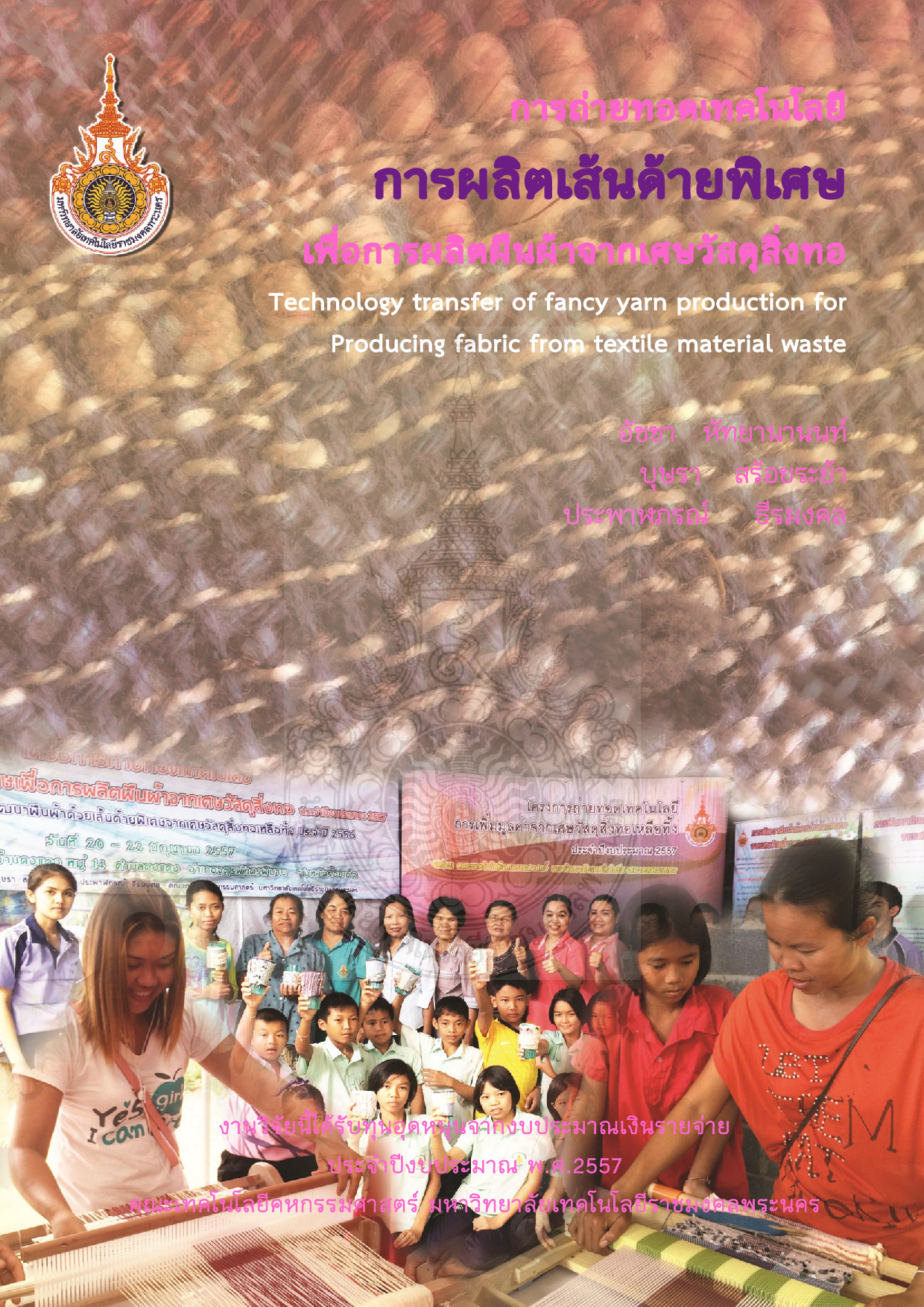
The research aimed to Technology transfer of fancy yarn production for producing fabric from textile material waste. The purpose is to technology transfer of fancy yarn production for producing fabric to people and community and to evaluate of technology transfer of fancy yarn production for producing fabric. The procedures were as follows target population for the transfer of knowledge and technology as Small and Micro community Enterprise--SMCE and individuals interested in Dang Dong sub-district Bang Bon district at Roi-Ed province. A total of 34 peoples and two days on 20 - 21 June 2557 and a satisfaction survey with a questionnaire after training. The data were analyzed using frequency percentage and mean. The results that general Information are female and younger than 21 years of education in elementary education as a student. A question that asking about their satisfaction with the course and to divide into three aspects: the purpose of the project The course structure and the contents of the course. The majority were satisfied with the very best. The purpose and the content are high level of satisfaction. In relation to technology transfer of fancy yarn production for producing fabric from textile material waste divided into three aspects: the process provides trainers and facilities was found that were satisfied at all of the 3 parts. The participants are mainly used to provide benefits to themselves for one month to apply the knowledge gained after the training. The participants modified using a new material and used local materials applied accordingly. Moreover a focus will be capped by the school to take courses and workshops and to teach another one for working out or as part of the courses taught at the school. Satisfaction with the benefits of technology transfer and utilization. Satisfaction at the highest level. The comments and suggestions of the participants found that they need for re-training again. They would like to have a longer period of training in order to gain more knowledge. All lecturer can transfer knowledge during the training as well.