จำนวน Repository ( 3611 )
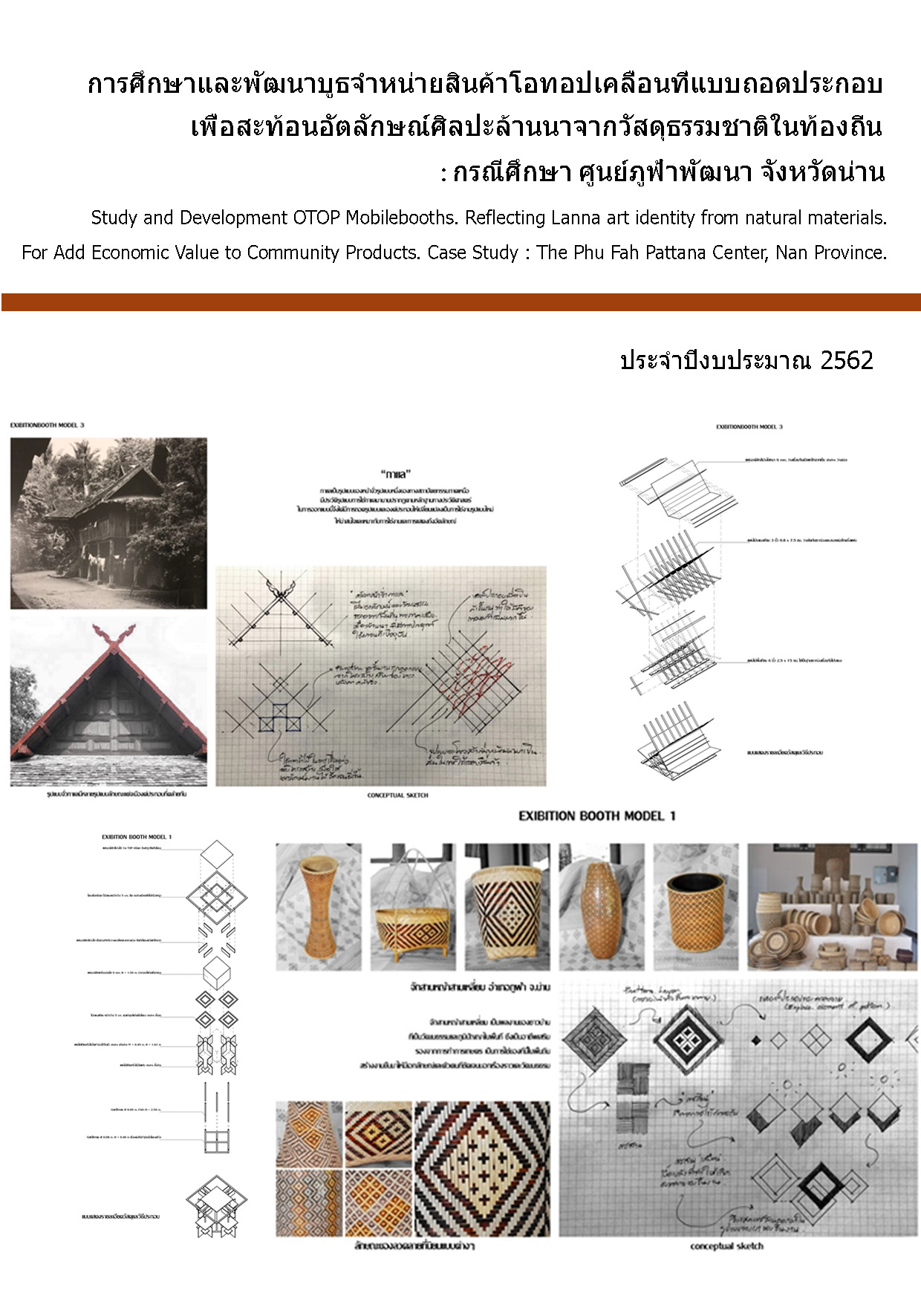
การศึกษาและพัฒนาบูธจำหน่ายสินค้าโอทอปเคลื่อนที่แบบถอดประกอบ สะท้อนอัตลักษณ์ศิลปะล้านนาจากวัสดุธรรมชาติในท้องถิ่นเพื่อเพิ่มมูลค่าทางเศรษฐกิจให้กับผลิตภัณฑ์ในชุมชน : กรณีศึกษา ศูนย์ภูฟ้าพัฒนา จังหวัดน่าน
This research aims to improve the booth model of OTOP products from Phu Fah Pattana Center Nan Province. To increase marketing channels by distributing products to various locations in order to increase sales to community products. The design must take into account the convenience of rapid assembly and dismantling for a limited time. The characteristics of the booth must be disassembled interesting in looks that reflect the identity of Lanna art. There is a beautiful strong structure to support the weight of the product. The size and proportion are suitable for the usage habits of consumers. Which will help promote products in the community that have higher sales stronger communities. Able to divide the product market in the country and can create marketing channels to other countries. It is a good result for the villagers in the community that will have the guarantee of self-sufficiency and sustainably sufficient lives. From the analysis of the Lanna Wisdom Identity Model there are 4 types of concepts which are The concept of the components of the house GalaeThe concept from the barn Concept of the components of the house Kwan Concept of triangular pattern woven grass. After that it was developed to the stage to interpret the meaning of space in form of booth. And then lead to the design of 4 booths. And conducted a questionnaire to find satisfaction with each type of booths that responded to various usability benefits including satisfaction with the appearance and usage characteristics that responded to the behavior of Most users. Conclusion Booths from the concept of Lanna house components called galae have the highest percentage of satisfaction in 3 aspects which are Percentage of satisfaction with the layout of the booth Percentage satisfaction with workpiece assembly and disassembling storage and transportation Percentage of satisfaction with the perception of Lanna identity. For the satisfaction with the size the proportion of use and the convenience of use the booth from the concept of the components of the house Kwan with the highest rate of percentage satisfaction.
การพัฒนาผลิตภัณฑ์ขนมอบปราศจากกลูเตนด้วยข้าวไทย
The product development of gluten-free Bake goods with Thai rice. The rice used in research is the product of the Baan Chanode community enterprise of Khlong Yong - Lan Tak Fa Community such as Nakhonchaisri brown rice and black rice. It is processed into rice flour as a substitute for wheat flour to make gluten-free pastry product contains cookies products Tuile cookies and tart dough. Product development of gluten-free pastries with Thai rice with Nakhonchaisri brown rice and black rice can be made into a gluten-free product. Products that contain more fiber. They have a natural color of rice at the same time it resulted in a lower products texture characteristic score. Which affects acceptance The proper packaging is beautiful the respondents rated it on a very satisfactory level. Consumer acceptance testing The development of gluten-free pastries made with 3 Thai rice of 100 people found that most of the testers more than 80% accepted the product development of gluten-free pastries with Thai rice.
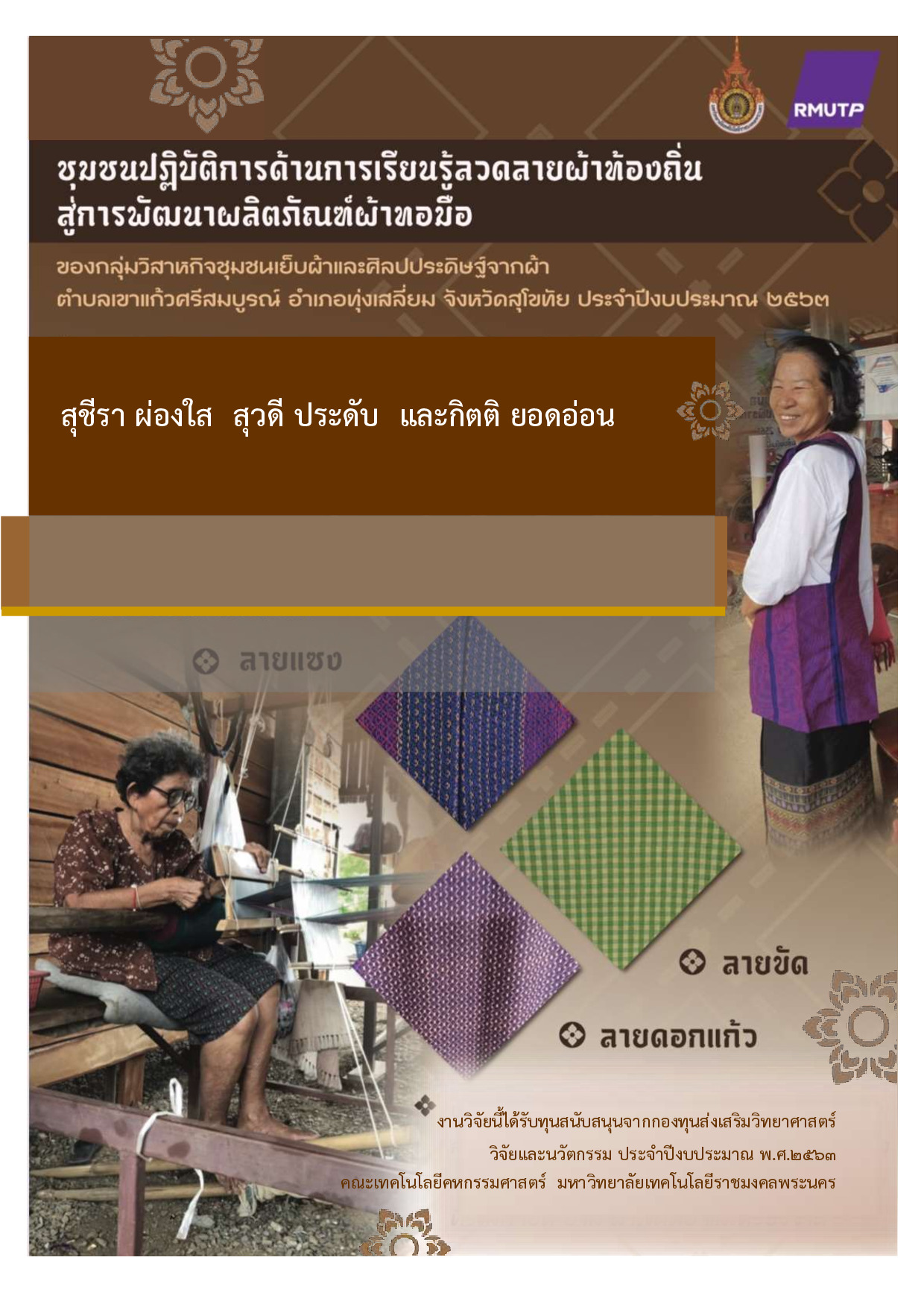
ชุมชนปฏิบัติการด้านการเรียนรู้ลวดลายผ้าท้องถิ่นสู่การพัฒนาผลิตภัณฑ์ผ้าทอมือของกลุ่มวิสาหกิจชุมชนเย็บผ้าและศิลปะประดิษฐ์ ตำบลเขาแก้วศรีสมบูรณ์ อำเภอทุ่งเสลี่ยม จังหวัดสุโขทัย
Research on the community of Participatory Learning Practice Fabric Pattern to Development of Local Hand-mend Cloth Products of Sewing Community Enterprise and Craft Khao of Sewing Khao Kaew Srisomboon Thung Saliam Sukhothai Province. The objectivity of this project is to study the patterns of cloth to develop hand-woven fabric products. The learning practice of local fabric patterns to develop 5 sets of hand-woven jewelry products then 5 sets of jewelry experts were asked to consider selecting suitable hand-woven jewelry sets for making. 3 sets of jewelry and asked 5 experts from the community state enterprise sewing and artificial arts to transfer the invention of handwoven jewelry to the community 1 set and to study the satisfaction of the target group of 30 people and analyze the data. By using statistics frequency percentage standard deviation and mean with the following analysis results. The findings of the study were as follows. It was found that Local fabric patterns Appeared in 3 traditional fabric patterns: Saeng pattern Plain pattern and Kaew pattern. Learning practice of local fabric patterns for the development of hand-woven fabric accessories. All 5 jewelry experts chose the style of jewelry set A set B and set D commenting that the style has suitable elements of jewelry. In particular the combination of local fabric patterns and geometric shapes creates a contemporary look. Size and proportion should be adapted to the proportion of the wearer. And the use of color always use the original color of the fabric especially red. Because it is a color that is unique when it comes to making the piece it will help make the jewelry more beautiful and dimension as well as indicate the identity of the people of Khao Kaew Srisomboon. The expert representative of the community enterprise group I chose the A Series because of the contemporary style. Can generate income for people in the community And the satisfaction of the target groups towards making jewelry sets it was found that the product Satisfaction with aesthetics was the highest at an average of 4.83 in terms of suitability of the fabricated material. The satisfaction of the materials used was interesting at an average of 4.67 in terms of utility. Satisfaction in wearing on various occasions at the average 4.66 and distribution. Satisfaction in the jewelry trade show at an average of 4.60 communities working on learning patterns of local fabrics to develop hand-woven products. Has given importance to the history the meaning use of color and the belief in cloth pattern hooves from shared memories of people in the community. Fabric patterns both Saeng pattern Plain pattern and Kaew pattern Therefore it is a reflection of the people in Khao Kaew Srisomboon community that has inherited the wisdom heritage that is more than precious. Rather it is the inheritance of intent from generation to generation.
การบูรณาการองค์ความรู้ในการพัฒนาศักยภาพผลิตภัณฑ์อาหารจากสับปะรด เพื่อเพิ่มมูลค่าทางการตลาด และความยั่งยืนเชิงพาณิชย์ระดับชุมชน
งานวิจัยนี้ได้ศึกษาการพัฒนาศักยภาพสับปะรดตกเกรดในการผลิตผลิตภัณฑ์อาหารแปรรูป ผลการศึกษา มีดังนี้ ศึกษาการสำรวจพฤติกรรมผู้บริโภคถึงผลิตภัณฑ์ที่ทำจากสับปะรดตกเกรด ที่ผู้บริโภคนิยมรับประทานถ้าจะนำสับประรดไปแปรรูปเป็นผลิตภัณฑ์ที่มีอยู่แล้วในท้องตลาด 3 ลำดับแรก ได้แก่ ขนมสับปะรด (ค่าเฉลี่ย 4.57) ข้าวเกรียบ (ค่าเฉลี่ย 4.30) และสับปะรดแผ่น ปรุงรส (ค่าเฉลี่ย 4.20) ตามลำดับ ศึกษากรรมวิธีการแปรรูปสับปะรดจากผลการสำรวจผลิตภัณฑ์ของผู้บริโภค กากสับปะรดเพิ่มในส่วนผสมของผลิตภัณฑ์ข้าวเกรียบ 40% ผู้ชิมให้การยอมรับ มากที่สุดในด้าน ลักษณะปรากฏ สี กลิ่น รสชาติ เนื้อสัมผัส และความชอบโดยรวม โดยมีค่าเฉลี่ย 8.10 8.83 7.95 8.03 7.95 และ 8.00 ตามลำดับ กากสับปะรดทดแทนกล้วยน้ำว้าบางส่วน 100% ผู้ชิมให้การยอมรับมากที่สุดในด้าน ลักษณะปรากฏ สี กลิ่น รสชาติ เนื้อสัมผัส และความชอบโดยรวม โดยมีค่าเฉลี่ย 8.45 8.48 7.98 8.20 8.23 และ 8.38 ตามลำดับ อุณหภูมิ และเวลาที่เหมาะสมในการสับปปะรดอบแห้ง คือ อุณหภูมิที่ 90 องศาเซลเซียส เป็นเวลา 4 ชั่วโมง การใช้ผงปรุงรสปาปิก้า 6% ผู้ชิมให้การยอมรับมากที่สุดในด้าน ลักษณะปรากฏ สี กลิ่น รสชาติ เนื้อสัมผัส และความชอบโดยรวม โดยมีค่าเฉลี่ย 8.05 7.95 8.18 7.98 7.95 และ 7.95 ตามลำดับ ศึกษาคุณภาพทางเคมี และคุณภาพทางกายภาพของผลิตภัณฑ์อาหารแปรรูปจากสับปะรดตกเกรด ผลิตภัณฑ์ข้าวเกรียบ พบว่า คุณภาพทางเคมีข้าวเกรียบ สูตรที่มีความากที่สุด ดังนี้ สูตรที่ 3 (40%) กรัม ความชื้นร้อยละ 3.30 สูตรที่ 2 (30%) ไขมันร้อยละ 21.37 สูตรที่ 3 (40%) เยื่อใยร้อยละ 8.38 สูตรที่ 1 (20%) เถ้าร้อยละ 2.00 สูตรที่ 2 (30%) โปรตีนร้อยละ 2.03 ส่วนคุณภาพทางกายภาพ พบว่า ความสว่าง (L*) สูตรที่ 1 (20%) กรัม มีค่ามากที่สุด 63.53 ค่าสีแดง (a*) และค่าสีเหลือง (b*) สูตรที่ 3 (40%) กรัม มีค่ามากที่สุด 3.14 และ 15.66 กากสับปะรดตกเกรดทดแทนกล้วยน้ำว้าบางส่วน พบว่า คุณภาพทางเคมีของกากสับปะรดตกเกรดทดแทนกล้วยน้ำว้าบางส่วน มีค่ามากที่สุด ดังนี้ สูตรที่ 2 (30%) กรัม ความชื้นร้อยละ 54.01 สูตรที่ 1 (20%) กรัม ไขมันร้อยละ 0.35 เยื่อใยร้อยละ 2.56 เถ้าร้อยละ 0.57 สูตรที่ 2 (30%) กรัม โปรตีนร้อยละ 3.93 ส่วนคุณภาพทางกายภาพ พบว่า ความสว่าง (L*) สูตรที่ 2 (30%) กรัม มีค่ามากที่สุด 69.75 ค่าสีแดง (a*) และ ค่าสีเหลือง (b*) สูตรที่ 3 (40%) กรัม มีค่ามากที่สุด -1.61 และ 12.67 อุณหภูมิที่เหมาะสมในการสับปปะรดอบแห้งคือ อุณหภูมิที่ 90 องศาเซลเซียส เป็นเวลา 4 ชั่วโมง ผู้ชิมให้การยอมรับมากที่สุดในด้าน ลักษณะปรากฏ สี กลิ่น รสชาติ เนื้อสัมผัส และความชอบโดยรวม โดยมีค่าเฉลี่ย 7.99 7.60 7.50 7.55 8.25 และ 7.95 ตามลำดับ ซึ่งมีค่าความชื้ที่เหมาะสมแก่การนำมาทำสับปะรดปรุงรสผงปาปิก้า สับปะรดตกเกรดอบแห้งปรุงรสปาปิก้า ผงปรุงรสค่ามากที่สุด ดังนี้ สูตรที่ 1 (2%) กรัม ความชื้นร้อยละ 8.02 สูตรที่ 3 (6%) กรัม ไขมันร้อยละ 0.68 สูตรที่ 2 (4%) กรัม เยื่อใยร้อยละ 12.34 สูตรที่ 1 (2%) กรัม เถ้าร้อยละ 9.49 และ โปรตีน ร้อยละ 8.84 ส่วนคุณภาพทางกายภาพ พบว่า ความสว่าง (L*) สูตรที่ 1 (2%) กรัม มีค่ามากที่สุด 80.03 ค่าสีแดง (a*) มีค่ามากที่สุด 9.24 และ ค่าสีเหลือง (b*) สูตรที่ 1 (2%) กรัม มีค่ามากที่สุด 24.76 ศึกษาการทดสอบผู้บริโภค (Consumer test) ที่มีผลต่อผลิตภัณฑ์อาหารแปรรูปจากสับปะรดตกเกรด ผลิตภัณฑ์ข้าวเกรียบ ผู้บริโภคให้ความพึงพอใจต่อผลิตภัณฑ์ข้าวเกรียบ ในระดับความชอบปานกลาง โดยให้ความรู้สึกต่อลักษณะผลิตภัณฑ์ ด้าน ลักษณะปรากฏ สี กลิ่น กลิ่นและรสชาติ อยู่ในระดับความชอบปานกลาง ผลิตภัณฑ์ขนมสับปะรดตกเกรด ในระดับความชอบปานกลาง โดยให้ความรู้สึกต่อลักษณะผลิตภัณฑ์ ด้าน ลักษณะปรากฏ สี กลิ่น กลิ่นและรสชาติ อยู่ในระดับความชอบปานกลาง ผลิตภัณฑ์สับปะรดตกเกรดอบแห้งปรุงรส ในระดับความชอบปานกลาง โดยให้ความรู้สึกต่อลักษณะผลิตภัณฑ์ ด้าน ลักษณะปรากฏ สี กลิ่น กลิ่นและรสชาติอยู่ในระดับความชอบปานกลาง ผลการถ่ายทอดเทคโนโลยีโครงการการพัฒนาศักยภาพสับปะรดตกเกรดในการผลิตผลิตภัณฑ์อาหารแปรรูป ดำเนินการจัดอบรม วันที่ 30 มิถุนายน -1 กรกฎาคม 2563 ณ กลุ่มวิสาหกิจชุมชนกลุ่มผู้ปลูกสับปะรดบ้านต้นเกตุ ตำบลห้วยทราย อำเภอเมืองประจวบคีรีขันธ์ จังหวัดประจวบคีรีขันธ์ ผู้เข้าอบรมจำนวน 45 คน ส่วนใหญ่เป็นเพศหญิงคิดเป็นร้อยละ 80.00 มีอายุ 36-45 ปี ผู้เข้ารับการอบรมมีความพึงพอใจของผู้รับบริการในกระบวนการให้บริการ อยู่ในระดับ มาก – มากที่สุด คิดเป็นร้อยละ 100 ผู้ตอบแบบสอบถามมีการนำความรู้ไปใช้ประโยชน์ จำนวน 45 คน คิดเป็นร้อยละ 100 และมีความพึงพอใจของผู้รับบริการวิชาการและวิชาชีพต่อประโยชน์จากการบริการของผู้เข้ารบรมอยู่ในระดับมาก – มากที่สุด คิดเป็นร้อยละ 100และผู้เข้ารับการอบรมมีความพึงพอใจบริการวิชาการและวิชาชีพต่อประโยชน์จากการบริการอยู่ในระดับ มาก-มากที่สุด คิดเป็นร้อยละ 94.67 การพัฒนาศักยภาพผลิตภัณฑ์เนื้อสัตว์แปรรูปเสริมกากสับปะรดที่เหลือจากการคั้นน้ำ กากสับปะรดที่นำมาใช้ในการวิจัยเป็นสายพันธุ์ปัตตาเวีย ทำการต้มเพื่อสกัดกรด และน้ำตาลออก มีลักษณะเป็นกากสด ผลิตภัณฑ์เนื้อสัตว์แปรรูปที่นำมาใช้ ได้แก่ ไส้กรอกหมูบดหยาบ ลูกชิ้น และหมู-ยอ การเสริมกากสับปะรดในไส้กรอกหมูบดหยาบสามารถเสริมได้ถึงร้อยละ 15 ลูกชิ้นหมูสามารถเสริมได้ถึงร้อยละ 20 และหมูยอสามารถเสริมได้ถึงร้อยละ 10 การเสริมกากสับปะรดผลิตภัณฑ์เนื้อสัตว์แปรรูปมีผลทำให้ผลิตภัณฑ์เนื้อสัตว์แปรรูปทั้ง 3 ชนิดมีปริมาณใยอาหารหยาบเพิ่มขึ้น ในขณะเดียวกันมีผลทำให้ผลิตภัณฑ์เนื้อสัตว์แปรรูปมีสีอ่อน และมีคะแนนคุณลักษณะด้านเนื้อสัมผัสลงลด ซึ่งส่งผลต่อการยอมรับ การทดสอบการยอมรับของผู้บริโภค การเสริมกากสับปะรดผลิตภัณฑ์เนื้อสัตว์แปรรูปมีผลทำให้ผลิตภัณฑ์เนื้อสัตว์แปรรูปทั้ง 3 ชนิด จำนวน 100 คน พบว่า ผู้ทดสอบส่วนใหญ่มากกว่าร้อยละ 95 ให้การยอมรับในผลิตภัณฑ์การเสริมกากสับปะรดผลิตภัณฑ์เนื้อสัตว์แปรรูปมีผลทำให้ผลิตภัณฑ์เนื้อสัตว์แปรรูปทั้ง 3 ชนิด สำหรับการถ่ายทอดเทคโนโลยีการพัฒนาศักยภาพผลิตภัณฑ์เนื้อสัตว์แปรรูปเสริมกากสับปะรดที่เหลือจากการคั้นน้ำ ณ คณะเทคโนโลยีคหกรรมศาสตร์ ผู้เข้ารับการอบรมมีความพึงพอใจมากที่สุดในทุกด้านของการถ่ายทอดเทคโนโลยี งานวิจัยนี้มีวัตถุประสงค์เพื่อศึกษากระบวนการผลิตที่เหมาะสมในการผลิตซอสผัดไทย ซอสหมี่กรอบ ซอสสามรสโดยใช้น้ำสับปะรดเป็นส่วนผสมหลักในสูตร เพื่อศึกษาคุณภาพของผลิตภัณฑ์ซอสสำเร็จรูปจากสับปะรด และเพื่อศึกษาการยอมรับของผู้บริโภค (Consumer test) ที่มีต่อผลิตภัณฑ์ซอสสำเร็จรูปจากสับปะรด ผลการพัฒนาสูตรการผลิตที่เหมาะสมในการผลิตซอสผัดไทย จากผลการประเมินคุณภาพทางประสาทสัมผัสของซอสผัดไทยด้วยวิธีการชิม 9 ระดับ (9 point Hedonic scale) พบว่าผู้ชิมให้การยอมรับปริมาณน้ำสับปะรดที่เหมาะสมในการผลิตซอสผัดไทยที่ร้อยละ 30 ในคุณลักษณะทุกด้าน ได้แก่ ลักษณะปรากฏ สี กลิ่น รสชาติ เนื้อสัมผัส และความชอบโดยรวม โดยมีคะแนนเฉลี่ย 8.08 7.83 7.93 8.15 8.05 และ 8.13 ตามลำดับ ซึ่งอยู่ในระดับความชอบมาก ผลการประเมินคุณภาพทางประสาทสัมผัสของซอสหมี่กรอบ พบว่าผู้ชิมให้การยอมรับปริมาณน้ำสับปะรดที่เหมาะสมในการผลิตซอสหมี่กรอบที่ร้อยละ 75 ในด้านลักษณะปรากฏ สี กลิ่น รสชาติ เนื้อสัมผัส และความชอบโดยรวม โดยมีคะแนนเฉลี่ย 7.89 7.79 7.88 8.03 7.98 และ 7.93 ตามลำดับ ซึ่งอยู่ในระดับชอบมาก ผลการประเมินคุณภาพทางประสาทสัมผัสของซอสสามรส พบว่าผู้ชิมให้การยอมรับปริมาณน้ำสับปะรดที่เหมาะสมในการผลิตซอสสามรสร้อยละ 100 ในด้านลักษณะปรากฏ สี กลิ่น รสชาติ เนื้อสัมผัส และความชอบโดยรวม โดยมีคะแนนเฉลี่ย 8.35 8.04 8.25 8.22 8.15 และ8.24 ตามลำดับ ซึ่งอยู่ในระดับชอบมาก ผลการศึกษาคุณภาพของผลิตภัณฑ์ซอสผัดไทย ซอสหมี่กรอบ และซอสสามรสที่ใช้น้ำสับปะรดเป็นส่วนผสมหลัก พบว่า การเพิ่มปริมาณน้ำสับปะรดมีผลต่อค่าความเป็น กรด - ด่าง ของผลิตภัณฑ์ ผลิตภัณฑ์ซอสทั้ง 3 ชนิด มีค่าความเป็น กรด - ด่าง อยู่ในช่วงกรด คุณภาพด้านจุลินทรีย์ของซอสทั้ง 3 ชนิด ผ่านเกณฑ์มาตรฐานผลิตภัณฑ์ชุมชน กระทรวงอุตสาหกรรมกำหนดไว้ ผลการศึกษาการยอมรับของผู้บริโภคที่มีต่อผลิตภัณฑ์ซอสสำเร็จรูปจากสับปะรด ผู้บริโภคส่วนใหญ่เป็นเพศหญิง ส่วนใหญ่มีอายุอยู่ในช่วง 19 - 29 ปี และในช่วงอายุ 40 - 49 ปี ด้านการศึกษาของผู้ตอบแบบสอบถามส่วนใหญ่มีการศึกษาต่ำกว่าปริญญาตรี และระดับปริญญาตรี ด้านสถานะภาพการสมรสผู้ตอบแบบสอบถามส่วนใหญ่สมรสแล้ว อาชีพของผู้ตอบแบบสอบถาม ส่วนใหญ่มีอาชีพลูกจ้างรายวัน และรับราชการ/รัฐวิสาหกิจ รายได้ส่วนใหญ่ของผู้ตอบแบบสอบถามต่ำกว่า 20000 บาท ผู้บริโภคชอบคุณลักษณะของผลิตภัณฑ์ซอสสำเร็จรูปจากสับปะรด ทั้ง 3 ชนิด ในระดับชอบมากถึงชอบมากที่สุด และผู้บริโภคส่วนใหญ่ยอมรับผลิตภัณฑ์ซอสสำเร็จรูปจากสับปะรด ทั้ง 3 ชนิด ถ้าวางจำหน่ายผู้บริโภคส่วนใหญ่ซื้อเพราะสะดวกในการใช้/ลดขั้นตอนการทำ ราคาผลิตภัณฑ์ซอสสำเร็จรูปจากสับปะรดทั้ง 3 ชนิด ที่ผู้บริโภคยอมรับอยู่ที่ราคา 50 บาท/ขวด โครงการวิจัยนี้มีวัตถุประสงค์เพื่อดำเนินการถ่ายทอดเทคโนโลยีการแปรรูปสับปะรดตกเกรดให้มีศักยภาพ เกิดมูลค่าเพิ่มมากขึ้นเป็นการพัฒนาศักยภาพสับปะรดตกเกรดในผลิตภัณฑ์น้ำพริกสำเร็จรูปพร้อมบริโภค เพื่อให้กลุ่มชุมชนที่มีปัญหาด้านผลผลิต ด้านรายได้ และด้านองค์ความรู้เกี่ยวกับการแปรรูปผลิตภัณฑ์อาหารนั้นได้รับความรู้สามารถนำเอาไปปฏิบัติได้จริงเป็นการกระจายองค์ความรู้สู่ชุมชนเพื่อให้เห็นถึงกระบวนการ ขั้นตอน วิธีการผลิต และการนำผลผลิตในท้องถิ่นไปพัฒนาเป็นสินค้าที่ช่วยสร้างความมั่นคงให้แก่ชุมชนอย่างยั่งยืน โดยกำหนดกลุ่มเป้าหมาย ประชากรและกลุ่มเป้าหมายในการถ่ายทอดคือกลุ่มวิสาหกิจชุมชนผู้ปลูกสับปะรดบ้านต้นเกตุ และบุคคลที่สนใจ ตำบลห้วยทราย อำเภอเมือง จังหวัดประจวบคีรีขันธ์ จากสับปะรดตกเกรดซึ่งเป็นพืชหลักที่สร้างรายได้ให้แก่ชุมชน โดยมีจำนวนผู้เข้าร่วมรับการฝึกอบรม คณะกรรมการดำเนินงานและวิทยากร รวมจำนวนทั้งสิ้น 63 คน ระยะเวลาในการอบรม 2 วัน ระหว่างวันที่ 5-6 เดือนกรกฎาคม พ.ศ.2563 และสำรวจความพึงพอใจในการฝึกอบรมด้วยแบบสอบถามความพึงพอใจ การเก็บรวบรวมข้อมูล นำข้อมูลที่ได้มาวิเคราะห์ค่าทางสถิติโดยใช้ค่าความถี่ และค่าร้อยละ ผลการวิเคราะห์ข้อมูล พบว่าส่วนของข้อมูลทั่วไปกลุ่มตัวอย่างหรือผู้เข้ารับการอบรมส่วนใหญ่เป็นเพศหญิง มีอายุอยู่ในช่วง 36-45 ปี ส่วนผลของความพึงพอใจเป็นข้อคำถามที่ใช้สอบถามความพึงพอใจเกี่ยวกับโครงการถ่ายทอดเทคโนโลยี เรื่องการพัฒนาศักยภาพสับปะรดตกเกรดในผลิตภัณฑ์น้ำพริกสำเร็จรูปพร้อมบริโภค โดยแบ่งออกเป็น 5 ด้าน คือ ด้านการบริการของเจ้าหน้าที่ ด้านวิทยากร ด้านกระบวนการ/ขั้นตอนการให้บริการ ด้านสิ่งอำนวยความสะดวก ด้านประโยชน์จากการรับบริการ และความพึงพอใจในภาพรวมของโครงการ พบว่าผู้เข้ารับการอบรมมีความพึงพอใจทั้ง 5 ด้านในระดับความพึงพอใจมากที่สุด ติดตามผลการถ่ายทอดเทคโนโลยีไปใช้ประโยชน์ ผู้เข้าร่วมอบรมส่วนใหญ่ได้นำองค์ความรู้และเทคโนโลยีที่ได้รับไปใช้ให้เกิดประโยชน์ต่อตนเองและชุมชน โดยมีส่วนน้อยที่ไม่ได้นำไปใช้ประโยชน์ ด้านระยะเวลาในการที่ผู้เข้ารับการอบรมได้รับหลังการอบรมไปใช้พบว่านำเอากลับไปใช้ภายในเวลา 1 เดือนหลังจากรับการอบรม และด้านความพึงพอใจต่อประโยชน์ที่ได้รับจากการอบรมคือ ด้านการบริการของเจ้าหน้าที่ ด้านวิทยากร ด้านกระบวนการหรือขั้นตอนการให้บริการ ด้านสิ่งอำนวยความสะดวก ด้านประโยชน์จากการรับบริการ และความพึงพอใจในภาพรวมของโครงการถ่ายองค์ความรู้และเทคโนโลยีนำไปใช้ประโยชน์พบว่ามีความพึงพอใจมากที่สุด
การออกแบบตราสินค้าและบรรจุภัณฑ์ เพื่อส่งเสริมผลิตภัณฑ์วิสาหกิจชุมชน กลุ่มเย็บผ้าและศิลปะประดิษฐ์ ต.เขาแก้วศรีสมบูรณ์ อ.ทุ่งเสลี่ยม จ.สุโขทัย
The objectives of this study were to 1) explore problems and needs on the product brand and packaging of the sewing and craft community enterprise 2) design brand and packaging to promote products of the sewing and craft community enterprise and 3) research consumers satisfaction on the brand and packaging of the sewing and craft community enterprise of Khao Kaeo Srisomboon Thung Saliam District Sukhothai Province. This is a mixed research consisting of qualitative and quantitative research. The qualitative study was executed through related document research and visiting the area for interviewing members of community enterprises to collect basic product information operated by the community enterprise which identified problems and demands for brand and packaging via structured interviews. Quantitative research scrutinized opinions through a survey approved by five experts assessing the suitability of the brand and packaging and the satisfaction of the consumer survey. The sample groups were 100 community enterprise tourist consumers. The data obtained were analyzed by using the frequency percentage mean presented in the form of a table. The results of the study revealed as follows. 1) There were five types of products including artificial flowers womens wears souvenirs jewelry accessories and household products. Each type of product was entirely fabricated with sewing techniques. The community enterprise was in need of a new logo to be beautifully outstandingly modernly designed to be easily remembered and reflected their unique sewing. The community enterprise name also had to be included to represent Sukhothai Province a needle and a thread reel which was different from the former one that did not have the community identification. Normally the community enterprise used a clear plastic bag to pack the products; however the use of such packaging resulted did not meet up with the Community Product Standards (NIA). Also it did not attract the attention and did not add extra value to the product. It was also unfriendly to the community environment. Therefore the community enterprise would like to develop a package which its cost was economic with more eye-catching design to help make the product more attractive in addition with the information such as the name of the community enterprise phone number QR code Facebook etc. displayed on the product tag label. 2) The experts had chosen the logo number 9 showing the symbol of flicking letters writing the Community Enterprise and the province names as well as a spool of thread and a sewing needle. As for the flower package most experts chose the package number 2 showing a white paper box with the handle and a clear plastic space. In terms of the women’s wear most chose number one pattern of a brown spun cloth bag with the community logo on while the souvenir packaging number three was mostly chosen for its glossy white paper bag branded with community enterprise logo and local woven pattern (stripes) on the bag. However the experts suggested using brown paper for the reason of its lower cost. In terms of jewelry packaging the experts had chosen the third style showing a rectangular shaped white paper box packaging with the printed logo on the top cover. The experts recommended changing the color of the packaging to be more attractive. Regarding the household products the experts selected packaging number two of a brown paper bag with the community logo and local woven pattern (stripes) on the bag. 3) Most respondents’ satisfaction with the brand and the packaging revealed that they were satisfied and impressed with the creativity at the highest level with an average of 4.47. In terms of artificial flower packaging design the satisfaction was high due to the design of the packaging structure and its easy handling at the average of 4.25. The satisfaction on the graphics design of the packaging which could fitly reflect the identity of Sukhothai was at the highest level at the average of 4.25. In terms of womens wear packaging satisfaction the respondents were pleased with the design of the packaging structure which could be easily carried or picked up gaining the average of 4.35. The respondents’ satisfaction with the graphic design of the colorful and beautiful packaging was in the average of 4.34. In terms of the jewelry packaging they were satisfied with the packaging structure and its easy handling at the average of 4.32. The respondents’ satisfaction with the graphic design in the overall was consistent at the highest level of the average at 4.37. Concerning the household product packaging they were satisfied with the design of the overall packaging structure at the average of 4. 25.Finally the respondents’ satisfaction was on the design of packaging graphics pictures decorative patterns beautifully appropriate in the average of 4. 24..